Elon Musk's Starlink joins Ebola fight in Africa with 150 internet kits for outbreak zones
As East Africa battles a growing Ebola outbreak, Elon Musk's Starlink is stepping into the response effort with the deployment of 150 satellite internet kits to some of the region's hardest-to-reach areas.
 Black News

As East Africa battles a growing Ebola outbreak, Elon Musk's Starlink is stepping into the response effort with the deployment of 150 satellite internet kits to some of the region's hardest-to-reach areas.
- Elon Musk's Starlink has provided 150 satellite internet kits to Africa CDC to aid in the Ebola outbreak response in eastern Democratic Republic of the Congo.
- The kits will help frontline medical teams in remote and hard-to-reach areas maintain stable, high-speed internet connectivity during emergency operations.
- Reliable internet access is expected to improve real-time disease surveillance, information sharing, and emergency coordination among health workers.
- Infrastructure gaps and poor internet access in the region have previously hampered outbreak containment and data transmission efforts.
Elon Musk and his satellite internet firm, Starlink, have delivered 150 high-speed internet connection kits to the Africa Centres for Disease Control and Prevention to assist frontline medical teams actively responding to a severe Ebola outbreak in the eastern regions of the Democratic Republic of the Congo.
The technological partnership was confirmed publicly on social media by the Starlink organization, which stated that the 150 hardware kits were specifically donated to provide medical responders in the affected territories with the stable connectivity required to perform their daily operations.
Shortly after the corporate announcement, company founder Elon Musk shared the update with his own online audience to spotlight the satellite network's direct involvement in supporting the ongoing international public health emergency response.
The initiative aims to strengthen communication links for health workers, improve disease surveillance, and support emergency coordination in communities where unreliable internet access can hamper outbreak response efforts.
DON'T MISS THIS: Congo becomes the latest African country to grant a license to Elon Musk's Starlink
These emergency communication units are being sent out to give doctors and responders a dependable way to connect to the internet in remote healthcare zones where standard phone and mobile networks are completely unavailable or severely broken.
Infrastructure Gaps in the Congo Ebola Crisis
Poor internet connectivity across rural eastern Democratic Republic of Congo has long hampered efforts to contain disease outbreaks, creating major challenges for humanitarian and healthcare teams operating on the frontlines.
Health workers have often struggled to track infections in real time, transmit critical medical data to central authorities, and coordinate emergency logistics in areas with weak or non-existent communications infrastructure.
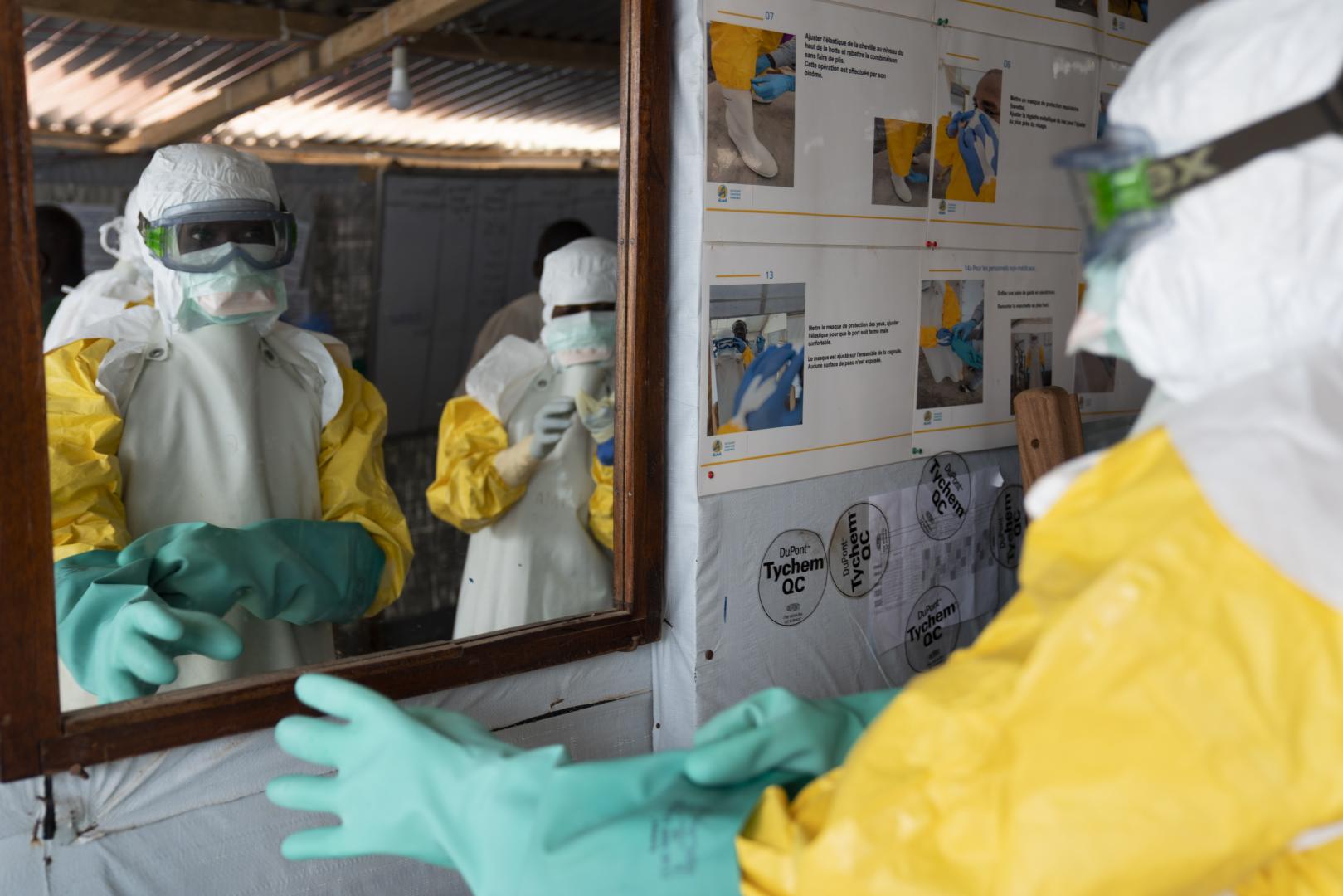
The challenge is particularly acute in the DRC, where only about 30% of the population had internet access as of 2023. While the country approved Starlink's satellite internet service in May 2025, the technology is now being deployed as part of efforts to strengthen communications in Ebola-affected areas.
The rollout of satellite internet kits to remote clinics and isolation centres is expected to significantly improve outbreak response capabilities. Reliable connectivity will allow frontline health teams to report new cases faster, maintain constant contact with command centres, and order essential medical supplies and protective equipment without lengthy delays.
For health officials battling the spread of Ebola in hard-to-reach communities, the ability to share information instantly could prove as important as medical supplies themselves.
The Push for Digital Lifelines
Africa CDC officials stressed that reliable internet connectivity is essential to managing disease outbreaks, particularly in remote areas where communication challenges can slow emergency response efforts.
"High-speed connectivity is not a luxury, but a critical baseline requirement to ensure we can effectively contain this outbreak and save lives," the agency said.
DON'T MISS THIS: U.S. cements position as top Ebola donor with over $212 million for Africa's outbreak response
Africa CDC Director-General Dr. Jean Kaseya said outbreak control depends on the ability of frontline teams to access and share information in real time.
"Outbreak control depends on speed, coordination and information," Kaseya said, noting that the donated Starlink kits would allow health workers to report cases more quickly, coordinate response efforts more effectively, and access technical support in some of the hardest-hit communities.
He described the donation as a timely boost to Africa CDC's emergency response capabilities and thanked Starlink for supporting efforts to help affected countries contain the outbreak and protect lives.
Victor Awogbemila