Ghana mining lease disputes raise fears over Gold Fields investment
Ghana’s push to tighten control over its mining sector is beginning to unsettle investors, with industry leaders warning that uncertainty around mining leases could damage confidence in Africa’s largest gold-producing nation.
 Black News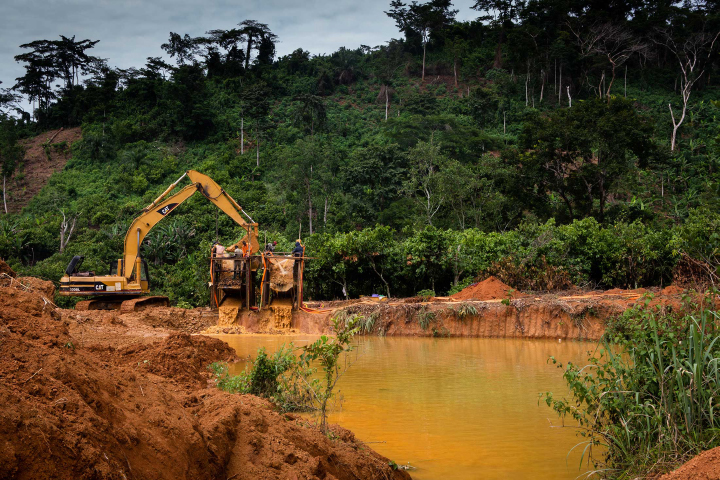

Ghana’s push to tighten control over its mining sector is beginning to unsettle investors, with industry leaders warning that uncertainty around mining leases could damage confidence in Africa’s largest gold-producing nation.
- Ghana’s mining policy changes are worrying investors and major gold producers.
- Industry leaders say delayed lease renewals and revoked permits are hurting confidence.
- The dispute centres on Gold Fields’ key Tarkwa and Damang mines.
- Miners warn policy uncertainty could weaken future investment in Ghana’s gold sector.
The warning comes as Ghana increases pressure on foreign mining firms while trying to secure a bigger share of soaring global mineral revenues.
Kenneth Ashigbey, chief executive of the Ghana Chamber of Mines, said recent government actions, including revoked leases, delayed renewals and shifting mining policies, are creating concerns about whether mining companies can rely on long-term protections in the country.
Speaking to Reuters, Ashigbey said the situation risks sending a dangerous message to global investors that “security of tenure in Ghana is not guaranteed.”
At the centre of the dispute is the future of the Tarkwa mine operated by Gold Fields, one of the company’s most important assets globally.
The mine produced roughly 427,000 ounces of gold in 2025 and remains a major contributor to Ghana’s export earnings and government revenue.
Gold Fields previously described Tarkwa as a “cornerstone asset” within its global portfolio.
Although the lease expires in 2027, industry officials say discussions over renewal have made little progress, increasing anxiety within the sector.
The concerns intensified after Ghana declined to renew the lease for Gold Fields’ Damang mine and later handed control of the operation to local mining firm Engineers & Planners (E&P).
That decision formed part of a broader government strategy aimed at increasing local participation in mining and ensuring Ghana captures more value from record-high gold prices.
In recent months, Ghana has introduced or proposed a series of reforms that have unsettled major mining companies.
These include plans for a sliding royalty regime that could raise royalty payments as gold prices rise, the removal of long-term mining stability agreements, and directives requiring more mining operations to shift to Ghanaian-owned contractors.
The proposed royalty structure has drawn resistance from some of the world’s biggest miners, including Gold Fields, Newmont and AngloGold Ashanti, as well as diplomatic missions from the United States, China, Britain, Australia and South Africa.
Mining executives argue that while governments have legitimate reasons to seek higher revenues during commodity booms, unpredictable policy changes could discourage future investment in new projects.
The uncertainty is especially sensitive because Ghana’s mining industry remains one of the backbone sectors of its economy, generating billions of dollars annually through exports, taxes and royalties.
Gold production in Ghana reached a record six million ounces in 2025, driven by strong bullion prices and expanding artisanal mining activity.
However, industry groups have warned that future output growth could be threatened if investor confidence weakens.
An Accra-based policy group, the Institute for Economic Affairs, recently argued that Ghana should avoid renewing the Tarkwa lease and instead transfer the asset to local operators, a proposal strongly criticised by the Chamber of Mines.
Ashigbey said such moves could undermine the long-term stability required for large-scale mining investment.