Ghana Unveils Emergency Support Package for Citizens Fleeing Xenophobic
The Ghanaian government has announced a sweeping emergency support package for citizens returning from South Africa following renewed fears of xenophobic violence targeting foreign nationals. The intervention, described by officials as one of the country’s most comprehensive diaspora protection measures in recent years, will provide financial assistance, evacuation support, reintegration allowances, and psychological care for [...]
 Black News
The Ghanaian government has announced a sweeping emergency support package for citizens returning from South Africa following renewed fears of xenophobic violence targeting foreign nationals.
The intervention, described by officials as one of the country’s most comprehensive diaspora protection measures in recent years, will provide financial assistance, evacuation support, reintegration allowances, and psychological care for Ghanaians choosing to leave South Africa amid escalating tensions.
The move comes as several African countries raise concerns over reports of attacks, intimidation, looting, and anti-foreigner rhetoric in parts of South Africa — incidents that have reignited painful memories of previous waves of xenophobic unrest across the country.
For many Ghanaian migrants, traders, students, and workers living in South Africa, the growing insecurity has created fear and uncertainty about their future.
Now, Accra says it is stepping in.
ALSO READ: Ghana and Nigeria Evacuate Citizens as Xenophobic
A Four-Part Rescue and Reintegration Plan
According to government officials, the support package is designed not only to evacuate vulnerable citizens safely, but also to help them rebuild their lives after returning home.
Emergency Financial Support
Returning citizens will receive direct financial assistance intended to help them cover immediate living expenses upon arrival in Ghana.
Officials say the grants are meant to cushion returnees who may have lost businesses, property, savings, or livelihoods during the unrest.
The financial aid is also expected to support temporary accommodation, transportation within Ghana, and basic household needs during the transition period.
While the exact amounts have not yet been disclosed, authorities insist the support will be structured to prevent returnees from falling into hardship immediately after arrival.
Government-Funded Evacuations
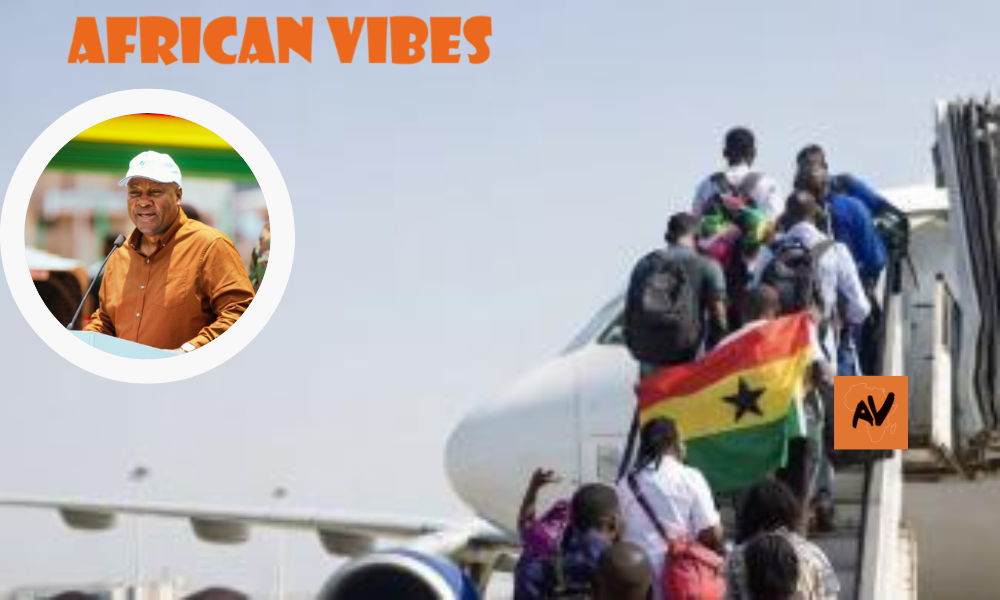
One of the most significant parts of the plan is the state-sponsored evacuation programme.
The Ghanaian government says it is coordinating with South African authorities and diplomatic missions to facilitate safe departures for citizens who wish to return home.
Measures include:
- Free transportation for affected citizens and immediate family members
- Coordinated evacuation logistics
- Processing centres for registration and documentation
- Diplomatic coordination to ensure safe movement during departures
Officials say removing transportation costs is essential, especially for vulnerable migrants who may otherwise be trapped in unsafe conditions due to financial limitations.
Reintegration Support for Returnees
Beyond emergency evacuation, Ghana is also focusing on long-term reintegration.
Authorities acknowledge that many returnees are leaving behind years of work, businesses, homes, and established lives in South Africa.
To ease that transition, the government plans to provide:
- Reintegration allowances
- Relocation assistance
- Skills training opportunities
- Employment and vocational support
- Housing support for vulnerable returnees
The programme is expected to work closely with local authorities and community organisations across Ghana to help returnees settle into new environments.
Government officials say the goal is not simply to bring citizens home, but to ensure they can rebuild with dignity and stability.
ALSO READ: Diplomatic Tensions Flare as Xenophobia Unrest Grips South Africa
Mental Health Support Recognised as Critical
In what analysts describe as one of the programme’s most notable features, Ghana is also prioritising psychosocial and mental health care.
Many returnees are expected to have experienced trauma linked to violence, displacement, threats, or economic destruction.
The government plans to establish:
- Professional counselling services
- Trauma support programmes
- Mental health assessments
- Family reintegration counselling
- Community support networks
Mental health experts have long warned that survivors of xenophobic violence often suffer lasting emotional and psychological effects that can continue long after physical relocation.
By including psychosocial care in the response, Ghana appears to be taking a more holistic approach than many previous emergency repatriation efforts seen across the continent.
Registration Database to Coordinate National Response
Authorities are also building a centralised database to register all returning citizens.
The system will help government agencies:
- Track arrivals and settlement locations
- Coordinate financial support
- Monitor reintegration progress
- Connect citizens with counselling and employment services
- Develop future migration and diaspora policies
Officials say the database will also help improve transparency and accountability in distributing aid.
Citizens returning from South Africa are being encouraged to register through Ghanaian diplomatic missions and designated government channels.
South Africa’s Long History of Xenophobic Violence
South Africa has faced repeated outbreaks of xenophobic violence over the years, often targeting migrants from other African countries.
Foreign-owned businesses have frequently been looted or destroyed during periods of unrest, while migrants have faced assaults, threats, and displacement.
Many African governments have previously evacuated citizens during major flare-ups, including Nigeria, Zimbabwe, Malawi, and Mozambique.
The latest tensions have once again sparked debate across the continent about migration, economic inequality, unemployment, and pan-African solidarity.
Critics argue that foreign Africans are often unfairly blamed for economic hardship and crime, despite evidence showing migrants contribute significantly to local economies and informal trade sectors.
South African authorities have repeatedly condemned xenophobic violence and insisted that criminal acts should not be interpreted as official government policy.
Ghana Balances Diplomacy and Citizen Protection
Despite the tensions, Ghana has avoided direct diplomatic confrontation with South Africa.
Instead, officials say both countries are working together to coordinate humanitarian assistance while preserving bilateral relations.
Analysts say this reflects a careful diplomatic balancing act: protecting citizens abroad without escalating political tensions between two of Africa’s most influential economies.
The situation also highlights growing pressure on African governments to develop stronger protections for citizens living and working across the continent.
A Defining Test for African Governments
Ghana’s response could become a model for how African nations manage future migration crises involving their diaspora populations.
The scale and effectiveness of the programme may influence how other governments approach:
- Emergency evacuations
- Diaspora welfare policies
- Reintegration programmes
- Mental health support for displaced citizens
- Continental cooperation during migration crises
At the same time, the initiative will test Ghana’s own economic and institutional capacity.
Successfully reintegrating large numbers of returnees will require sustained funding, job creation, and long-term social support.
For Returning Citizens, a Message of National Solidarity
For many Ghanaians in South Africa, the announcement carries emotional significance beyond financial assistance. It signals recognition.
Recognition of fear. Recognition of loss. Recognition that citizens abroad remain part of the national community, even when living thousands of kilometres from home.
In a continent where migration increasingly shapes economies and families, Ghana’s response sends a powerful message: citizenship does not end at the border.