Ghana’s Reparations Moment Is the New Face of Pan-African Liberation
In Accra this June, the reparations debate moved from remembrance towards political architecture. Over three days, Ghana hosted the High-Level Consultative Conference on the “Next Steps” to the landmark United Nations resolution on the trafficking of enslaved Africans. The venues told their own story: technical deliberations at the Ministry of Foreign Affairs, a high-level session at the Kempinski Hotel Gold Coast City, and a Juneteenth commemoration at Christiansborg Castle, also known as Osu Castle, a 17th-century fortress on the Atlantic coast that served as a slave-trade hub. That movement, from diplomacy to political endorsement to historical reckoning, captured the deeper […] The post Ghana’s Reparations Moment Is the New Face of Pan-African Liberation appeared first on African Arguments.
 Black News

In Accra this June, the reparations debate moved from remembrance towards political architecture.
Over three days, Ghana hosted the High-Level Consultative Conference on the “Next Steps” to the landmark United Nations resolution on the trafficking of enslaved Africans. The venues told their own story: technical deliberations at the Ministry of Foreign Affairs, a high-level session at the Kempinski Hotel Gold Coast City, and a Juneteenth commemoration at Christiansborg Castle, also known as Osu Castle, a 17th-century fortress on the Atlantic coast that served as a slave-trade hub.
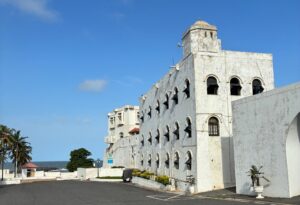
Osu Castle (Christiansborg) in Accra.
That movement, from diplomacy to political endorsement to historical reckoning, captured the deeper meaning of the conference. Accra was not simply hosting another commemorative gathering. It was helping to turn Pan-African memory into an institutional agenda for reparatory justice.
The meeting followed a Ghana-led UN General Assembly resolution, adopted in March 2026, recognising the trafficking of enslaved Africans and racialised chattel enslavement as the gravest crime against humanity and calling for reparations. The resolution passed with 123 states in favour, three against and 52 abstentions, including the UK and EU member states. The resolution was not legally binding, but it moved reparations further into the formal language of international diplomacy.
Accra sought to give that momentum a structure. African and Caribbean leaders adopted a 19-point global framework for reparatory justice, calling for formal and unconditional apologies, fair compensation, the return of cultural property and human remains, debt relief, legal accountability and broader measures to address the continuing effects of enslavement, colonialism and racial injustice.
This is why the Accra conference matters. Too often, reparations are reduced to a narrow argument about money. The framework adopted in Ghana offered something more ambitious: a politics of repair that joins apology, restitution, development justice, memory, law and global governance. It asks not only what former slave-trading and colonial powers owe, but what kind of international order was built through African dispossession, and what would be required to repair it.
Ghana’s president, John Dramani Mahama, captured the tone of the moment when he told delegates: “History does not ask us to inherit guilt, but it asks us to inherit responsibility.” That distinction is important. Reparatory justice is not about assigning personal guilt to present generations. It is about recognising historical responsibility and present-day consequences.
This is also where Ghana’s Pan-African history gives the moment added force. Ghana did not fight colonialism only to win a flag. When Ghana became independent in 1957, Kwame Nkrumah tied the country’s freedom to the total liberation of Africa. Nearly seven decades later, Ghana is again helping to internationalise an African demand for justice. Then, Accra was a meeting place for anti-colonial thinkers, activists and liberation movements. Today, that same inheritance is being redirected towards reparatory justice.
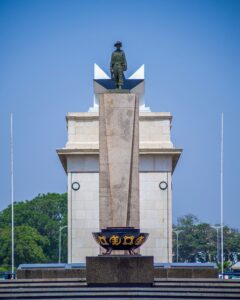
Accra’s Independence Arch and the Black Star Square memorial, symbols of Ghana’s 1957 independence and Nkrumah’s Pan-African vision.
But the new struggle is different. The anti-colonial generation fought for political sovereignty. Today’s reparatory justice movement is fighting over memory, law, debt, cultural restitution, racial inequality and the structure of global power. Ghana’s role is therefore not only symbolic. It is diplomatic.
What is emerging is a form of reparative diplomacy: the use of historical memory, diaspora networks, Pan-African solidarity and multilateral institutions to press claims for justice. Reparative diplomacy marks a shift from moral advocacy to institutional strategy, where memory becomes a resource, diaspora networks become political infrastructure, and Pan-African solidarity becomes a diplomatic instrument. In Accra, this could be seen in the establishment of three global panels: an Advisory Panel on Reparatory Justice, an Expert Panel on Restitution of Cultural Artefacts and a Legal Panel for Reparatory Justice. Mahama said the panels were meant to support the move “from recognition to implementation.”
That shift from recognition to implementation is the central challenge. Reparatory justice cannot remain a moral appeal alone. It must become policy, legal strategy and diplomatic pressure.
The Africa-Caribbean connection is especially important here. The Caribbean was one of the regions most violently shaped by the transatlantic slave trade. When African and Caribbean leaders now stand together on reparations, they are not merely reconnecting histories that slavery tried to separate. They are building a transcontinental political strategy.
CARICOM’s long-standing Ten-Point Plan has already made reparations a regional agenda. Reuters reported that the Ghana meeting allowed CARICOM and the African Union to merge their separate efforts into a single document for presentation at the next UN General Assembly. Barbados Prime Minister Mia Amor Mottley used the conference to call for unity of purpose, insisting that “repair comes after recognition.”
The inclusion of legal and civil society voices also matters. Ruth Ogbewekon of the Pan African Lawyers Union, who supported preparation of the framework, said the process consulted representatives from Africa, the African diaspora and non-African allies. Her point speaks to a wider truth: reparations cannot be built by states alone. They require governments, lawyers, historians, activists, diaspora communities and institutions working across borders.
Ghana’s diaspora initiatives belong to this wider story. The Year of Return and Beyond the Return have often been read mainly through tourism, heritage and emotional homecoming. Those elements matter. But Accra points to a more demanding possibility. Homecoming must be connected to policy. Memory must be connected to law. Diaspora belonging must be connected to political mobilisation.
Resistance will come. Former colonial and slave-trading powers may reject formal responsibility. Others will argue that the past is too distant or that today’s states should not answer for historical crimes. The United States and the European Union have already expressed concerns about aspects of the UN resolution, including whether it creates a hierarchy among crimes against humanity or applies international law retroactively.
These objections cannot simply be dismissed. Legal frameworks matter. Historical complexity matters. But none of this removes the central question: can today’s global inequalities be honestly discussed without confronting the histories that helped produce them?
The past is not truly past when its effects still shape who is wealthy and who is poor, whose history is honoured and whose is erased, whose institutions are strong and whose were weakened by centuries of extraction. Reparatory justice is not about closing history with a cheque. It is about opening a serious global conversation on responsibility, repair and the future of international order.
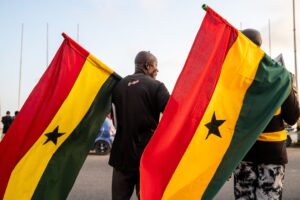
That is why Ghana’s reparations moment should be understood as the new face of Pan-African liberation. The struggle is no longer only for flags, borders and formal independence. It is also for historical truth, economic justice, cultural restitution and a fairer global system.
In 1957, Ghana declared that its independence was tied to Africa’s liberation. In 2026, Ghana is helping to declare that Africa’s liberation remains incomplete without reparatory justice.
Accra’s message was clear: remembrance is not enough. Recognition is not enough. The long arc of slavery and colonialism must bend towards repair, not as charity, but as justice; not as closure, but as the foundation of a fairer international order.
The post Ghana’s Reparations Moment Is the New Face of Pan-African Liberation appeared first on African Arguments.