How Jackson’s Former Mayor Went From Progressive Star to Guilty Plea
Jackson, Mississippi, resident and social justice organizer Danyelle Holmes saw up close the scrutiny and efforts by the state’s top leaders to remove her friend and former Mayor Chokwe Antar Lumumba from office during his tenure. Lumumba consistently fought back against lawmakers and the governor for refusing to fix the city’s crumbling infrastructure, she said, […] The post How Jackson’s Former Mayor Went From Progressive Star to Guilty Plea appeared first on Capital B News.
 Black News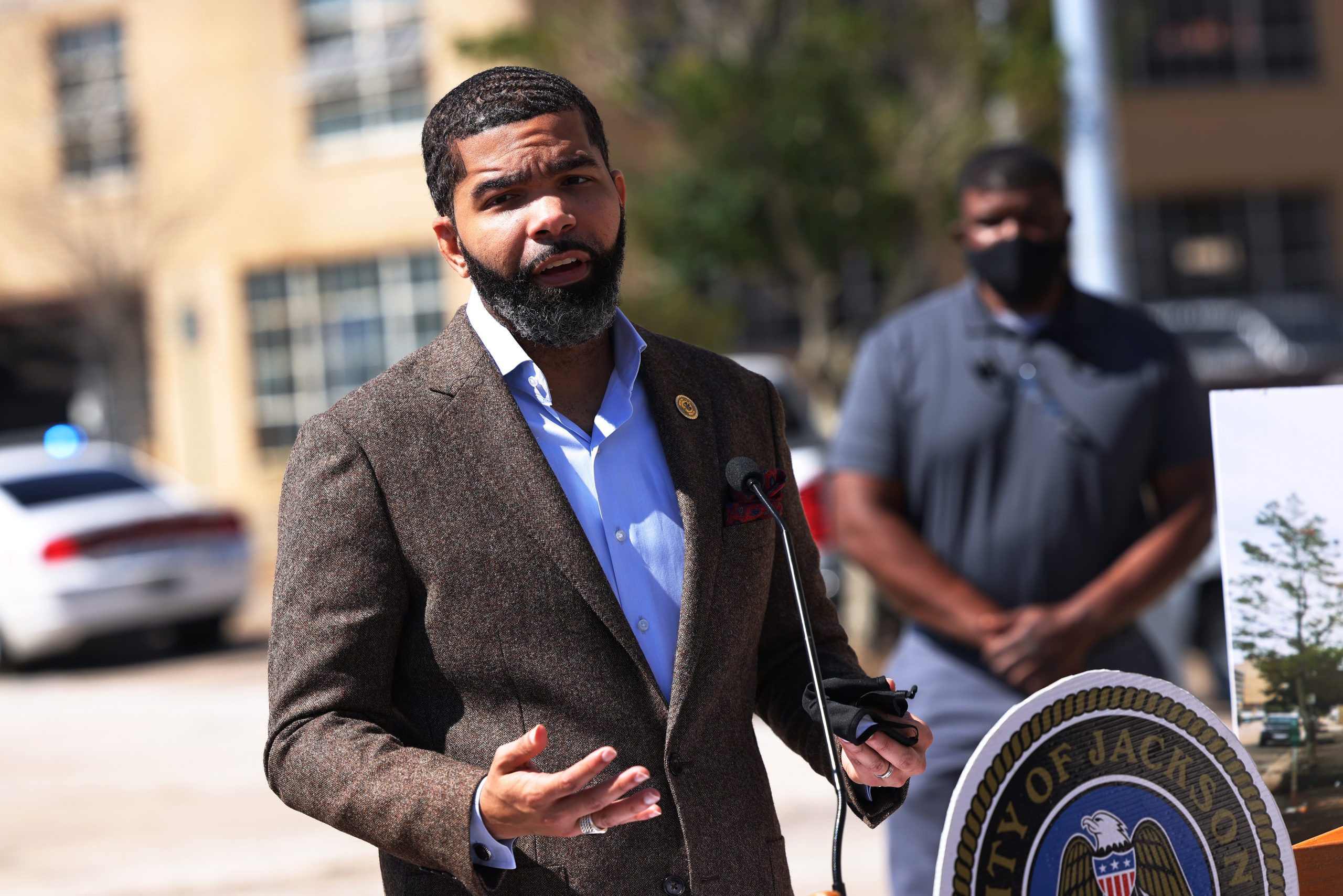

Jackson, Mississippi, resident and social justice organizer Danyelle Holmes saw up close the scrutiny and efforts by the state’s top leaders to remove her friend and former Mayor Chokwe Antar Lumumba from office during his tenure.
Lumumba consistently fought back against lawmakers and the governor for refusing to fix the city’s crumbling infrastructure, she said, forcing him to find alternative routes for funding and support. Holmes said she believes there’s always been “a scheme to entrap him” because of his radical imagination and power he possessed to move Jackson forward.
“They knew they wouldn’t get him by accusing him of stealing from the city because his principles wouldn’t allow him to do that,” she said.
Now she believes the effort to take him down has succeeded.
Lumumba pleaded guilty Monday to one count of conspiracy in a bribery scheme that marks a striking reversal for one of the country’s most prominent Black progressive politicians. Federal prosecutors allege that Lumumba accepted $50,000 — disguised as five $10,000 campaign contribution checks — from undercover FBI agents posing as real estate developers in exchange for helping them gain an advantage in a construction project Lumumba’s administration wanted.
The Democrat entered his plea only days before his July 13 corruption trial was slated to begin. Aaron Banks, a former Jackson city councilman involved in the monthslong scandal, also pleaded guilty Monday. Before stepping down from his post more than a week ago, former Hinds County District Attorney Jody E. Owens II also entered a guilty plea in connection to the case. Their sentencing hearings have been set for Oct. 15.
The three Black former elected officials could face up to five years in prison and fines of $250,000.
Lumumba has long been seen as a bright light in the Democratic Party. To his supporters, he embodied an ambitious vision of what Black political leadership could accomplish in the Deep South, as he helped the Blackest city in the U.S. to navigate a drinking water crisis, public safety issues, and other major challenges.
Now, his guilty plea raises difficult questions not only about how history might remember a mayor whose reputation stretched beyond Jackson, but also about how Black elected officials navigate claims of uneven scrutiny. U.S. Attorney Baxter Kruger of the Southern District of Mississippi pushed back on allegations that Banks, Lumumba, and Owens were targeted because of their race.
“There are no racial issues here,” Kruger said, referencing a recent jury conviction of a white official who was sentenced to 12 years in prison last year for conspiracy to commit bribery.
Kruger also disputed claims by some in Jackson that Lumumba and others received lenient sentences.
“They had to admit their guilt, and that’s consistent with the charges that we levied against them,” Kruger told reporters at Jackson’s federal courthouse on Tuesday.
In office from 2017 to 2025, Lumumba pushed the legacy of his father, also named Chokwe Lumumba, forward. The elder Lumumba was a revered and radical organizer, lawyer, and former Jackson mayor. He passed away in February 2014, eight months into his term.
After failing to win the seat in a special election, the younger Lumumba made history in 2017, when, at the age of 34, he became Jackson’s youngest mayor. He pledged to make Mississippi’s capital the “most radical city on the planet.” His victory was seen as a high-water mark for Black governance in the former domain of Jim Crow.
For Holmes, Lumumba’s contributions cannot be denied. He successfully won a nearly $90 million settlement for the city after suing Siemens for failed work on Jackson’s water-sewer infrastructure and billing system. His administration worked to reduce gun violence rates. For years, he fought back against the state Republicans for trying to take over the city’s airport.
“He went into the courtroom, but his legacy didn’t go in the courtroom with him,” she added. “You can’t handcuff his legacy.”
Othor Cain, a community advocate who has covered Lumumba’s administration, said that this case will become an “undeniable stain” on his legacy. Many thought that he had the potential to be an incredible leader — but feel that he tried to prove that he wasn’t his father, he said.
“A lot of people, for the most part, valued his father and held his father in high regard with high esteem, and I think a lot of those same people kind of hoped for the same from him and didn’t get that,” Cain told Capital B. “We’re ultimately disappointed by that. Whether right, wrong, or not, his legacy will be defined by this.”
Black leadership under scrutiny
Holmes remembered Lumumba as a young organizer, thrust into the national spotlight as he marched for the rights of workers to unionize at the Nissan plant.
“We believe in human rights for human beings and you cannot support human rights if you’re not prepared to support workers’ rights,” Lumumba said at the time.
She recalled the tension brewing between him and Gov. Tate Reeves, who was lieutenant governor at the time. When he entered office, the challenges for Lumumba continued. Jackson’s yearslong water emergency exposed decades of disinvestment in crucial city infrastructure, while he routinely clashed with Mississippi’s Republican-controlled state legislature over their delayed efforts to provide aid to help to fix the failing water system. Reeves even blamed Lumumba, saying the crisis stemmed from the “absolute and total incompetence of this mayor and his administration.”
The battle with lawmakers persisted beyond the water crisis. Lumumba pushed back against a slew of bills that would have removed local control and allowed the state to take over the city’s water operations and judicial systems. This led to the creation of a separate, state-appointed court — which increased police presence — and a federal receivership over the water system.
Despite the guilty plea, Lumumba’s support remains strong. The National Conference of Black Lawyers has defended the embattled former mayor, arguing that the case says more about double standards in the justice system than about Lumumba’s legacy.
“Mayor Lumumba accepted responsibility for the count before the Court,” the group said in a July statement. “That decision should not obscure the broader historical reality that Black elected officials have too often exercised leadership under a level of prosecutorial scrutiny and political pressure that is neither equally applied nor equally experienced.”
Black mayors and scandals

While the FBI has denied that it’s targeting Black leaders, Lumumba joins a growing list of Black current and former mayors who have been mired in scandal.
LaToya Cantrell: In 2025, federal prosecutors indicted the New Orleans mayor on charges related to fraud. She has denied the charges, and her trial has been pushed to 2027. Cantrell’s predecessor, Ray Nagin, who led the city through the aftermath of Hurricane Katrina, was convicted in 2014 on bribery, fraud, and money laundering charges. He was sentenced to 10 years in prison.
Kasim Reed: In Atlanta, the former mayor spent years under federal investigation over allegations involving city contracts and campaign finances. Prosecutors ultimately never charged him with a crime.
Catherine Pugh: In 2020, the former Baltimore mayor was sentenced to three years for fraud and tax evasion charges. She resigned in 2019. Pugh’s transgressions emerged during the monthslong scandal over her self-published “Healthy Holly” books. Prosecutors said she fraudulently sold to local nonprofit organizations in order to obtain more than $800,000 to fund her campaign and enrich herself.
Kwame Kilpatrick: The former Detroit mayor was sentenced to 28 years in federal prison in 2013 after he was convicted on racketeering, extortion, bribery, and fraud charges. He was granted clemency by President Donald Trump in 2021.
Marion Barry: In Washington, D.C., the longtime mayor was sentenced to six months in federal prison in 1991 for drug possession during the crack cocaine epidemic. He would be reelected to office in 1995, and later served on the City Council. To some in Washington, he was an embarrassment. But to some Black residents, he was still a hero, someone unfairly persecuted for personal failures. He died in 2014.
The post How Jackson’s Former Mayor Went From Progressive Star to Guilty Plea appeared first on Capital B News.