How Adivasi communities are keeping Odisha’s fermentation traditions alive
Across they state, they are preserving generations of knowledge through fermented drinks made from rice, millets, mahua flowers and palm sap.
 Black News

Across Odisha, Adivasi communities are preserving generations of knowledge through fermented drinks made from rice, millets, mahua flowers and palm sap, with women playing a central role in keeping these traditions alive.
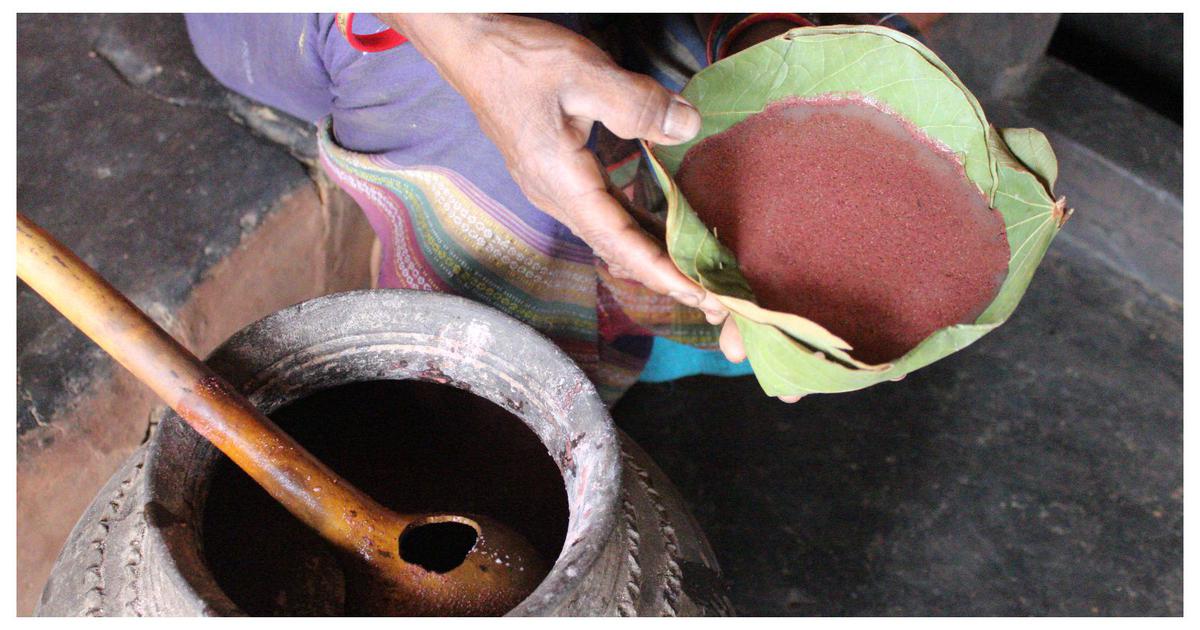
Above the kitchen hearth in a Kutia Kondh home in Odisha’s Kandhamal district, a small cake of millet hangs wrapped in sal leaves. It has been there for weeks, absorbing the heat and smoke. By the time it is ready, the raw little millet has changed into kena, a pink-reddish starter cake that will help turn cooked millet porridge into katul, a mildly intoxicating drink.
The process is slow and requires knowledge passed down through generations. Women are the keepers of this knowledge. They know how the millet should be prepared and how long the brew should ferment.
Once the kena is crushed and mixed with cooked little millet, the mixture is left for about three days. The result is a wine-red drink, traditionally consumed around the beginning of summer and served during marriages, community feasts and festivals such as Tanko Jatra and Anaka Puja.
For the Kutia Kondh, the continued place of katul in community life has also helped sustain the cultivation of little millet at a time when many minor millets have declined elsewhere.
Katul is...