If the OAS did not exist, it could not be created today
By Sir Ronald Sanders I have spent a decade in the councils of the Organization of American States. I have watched governments come and go, seen some crises handled well and others handled badly, sat through more commemorative meetings than sessions discussing pressing issues, and occasionally had the satisfaction of watching this Organization do exactly […] The post If the OAS did not exist, it could not be created today appeared first on Caribbean News Global.
 Black News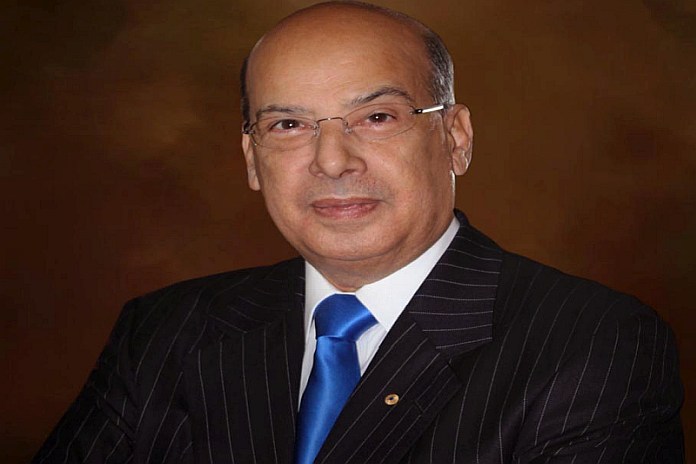
By Sir Ronald Sanders
I have spent a decade in the councils of the Organization of American States. I have watched governments come and go, seen some crises handled well and others handled badly, sat through more commemorative meetings than sessions discussing pressing issues, and occasionally had the satisfaction of watching this Organization do exactly what it was built to do: bring governments together to tackle problems that none of them could solve alone. In that time, I have chaired the Permanent Council on three occasions, led OAS delegations to Haiti in 2016 and Guatemala in 2023 to help resolve political crises, and engaged closely with the questions of Charter compliance raised by the withdrawal of Venezuela and Nicaragua from the Organization. It gives me a clear-eyed sense of what this institution is, what it could be, and what is genuinely at stake.
As member states gather in Panama for the 56th Regular Session of the General Assembly, from 22 to 24 June, what follows is a reflection on all this.
If we did not have the OAS, we could not create it today. The architecture of hemispheric multilateralism is a remarkable inheritance. It includes 34 member states (32 active), a shared Charter, a permanent secretariat, obligations on democracy and human rights, and institutions through which citizens can seek recourse. It was built over decades through compromise, setbacks and hard lessons. The idea that we could assemble that consensus from scratch in today’s fragmented and sceptical world is, frankly, fanciful. That is not a reason for complacency — it is a reason to take what we have seriously and work to make it better.
Increasingly, we have heard representatives of one government or another remark that “the OAS is not fit for purpose.” Usually, that means the OAS is not fit for the purpose of the government making the remarks.
Asymmetry of power among member states often overrides the Charter’s commitment to equality of membership. But in a world organised around power and scale, the OAS is one of the few places in the hemisphere where nations — large and small — can gather to consider critical issues and try to build a consensus for action. It does not always happen, but that is good reason for persistence. The basis for this Organization is worth preserving – the pursuit of peace and prosperity.
As the OAS meets in Panama, its financial picture alone should concern anyone paying attention. The Organization’s core operating fund is under strain. Its reserves — the buffer meant to protect it against shocks — have been depleted. To keep basic operations running, the Secretariat has had to rely on limited internal cash resources. Meanwhile, member states have restricted new mandates, reduced staff, and have not provided the resources to adequately carry out even the reduced tasks they have approved. The approved budget ceiling for 2027 stands at USD 95.6 million — less in real purchasing-power terms than the Organization’s budget fifteen years ago.
This is not a technical problem; it is a political problem that requires a political decision. Governments that genuinely value the OAS must be prepared to sustain it. If the General Assembly in Panama is to mean anything beyond ceremony, member states must have an honest conversation about what predictable, adequate financing requires — and then commit to it. No government benefits from an Organization too constrained to do its job well.
Closely related is a question that receives less public attention but is no less consequential: the independence of the Secretary General and the international civil service created by the Charter. The secretary general is not the representative of one government, nor should the office be treated as subject to the preferences of the political moment. The Charter creates it as part of the institutional balance of the Organization itself — a structural requirement if the OAS is to serve all its members fairly.
Accountability is essential in any healthy institution. But it must be pursued through the Organization’s established mechanisms: the Inspector General, the external auditors, the relevant oversight bodies, and the political organs in which member states collectively sit. Those mechanisms can always be strengthened, but they should not be bypassed or replaced by less formal and less even-handed means.
Governments change, priorities shift, and the OAS must be flexible enough to accommodate the full range of views that democratic elections produce across 34 member states. But that flexibility must operate within the framework of the Charter, the Inter-American Democratic Charter, and the rules and procedures that all member states have accepted. Those rules are what make orderly cooperation possible across differences of size, ideology and influence — and they protect every government, regardless of its moment of influence.
Defending institutional independence does not, however, mean defending the status quo in all things. Reform is necessary. Its Permanent Council spends a disproportionate amount of time on commemorations, symbolic resolutions and procedural exercises, while the issues that most directly affect the peoples of the hemisphere receive less focused attention than they deserve. Migration, organised crime, democratic fragility, climate vulnerability, food and water security, digital governance — these are the matters that shape the daily lives of our peoples and the stability of our governments. They do not respect borders and cannot be addressed by any country acting alone. The Organization should be spending the majority of its working time, at all levels, on exactly these kinds of questions, building practical cooperation rather than reading out established positions.
The most underappreciated asset of the OAS is the forum for dialogue it provides. In a hemisphere as diverse and occasionally fractious as ours, having a permanent, rules-based space where governments can speak to one another — even in disagreement, even in tension — is of immense value. That space should be enhanced, not undermined. It is through dialogue, conducted with mutual respect and anchored in agreed rules, that confidence is built and practical progress becomes possible.
Over a long diplomatic career, I have had to learn patience with multilateral institutions. They move slowly; that is partly a virtue. It forces deliberation and guards against impulsive decisions. But patience is not the same as passivity. There are moments when those who believe in an institution must say plainly that it needs correction, renewal and investment. This is such a moment.
The OAS faces real strain — financial, institutional, and in its focus. That is not a reason to disparage it. It is a reason to resolve to improve it. The OAS is not perfect, but a hemisphere without any such common table is so obviously worse. Panama is a fitting place to have a conversation about connecting divides in ways that deliver prosperity.
The post If the OAS did not exist, it could not be created today appeared first on Caribbean News Global.