In A World Full Of Targets, The WNBA Needs To Be A Costco
Congressional Republicans are twisting legal frameworks to force the WNBA into a strategic retreat, mirroring corporate attacks on diversity while turning the hardwood into a political proxy war.
 Black News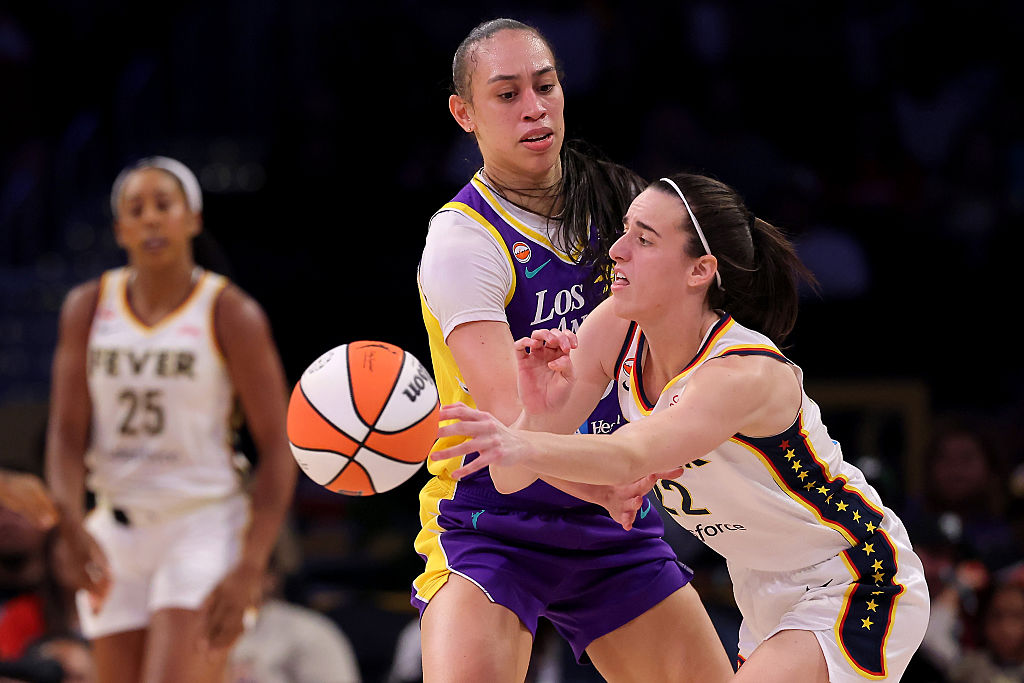
There is an old saying that when white America catches a cold, Black America catches the flu. It is a piece of wisdom that crystallizes how a broader systemic shift at the top of a hierarchy often results in the deepest harm to Black communities. This reality is currently impacting the Black women players who make up the majority of the WNBA’s workforce.
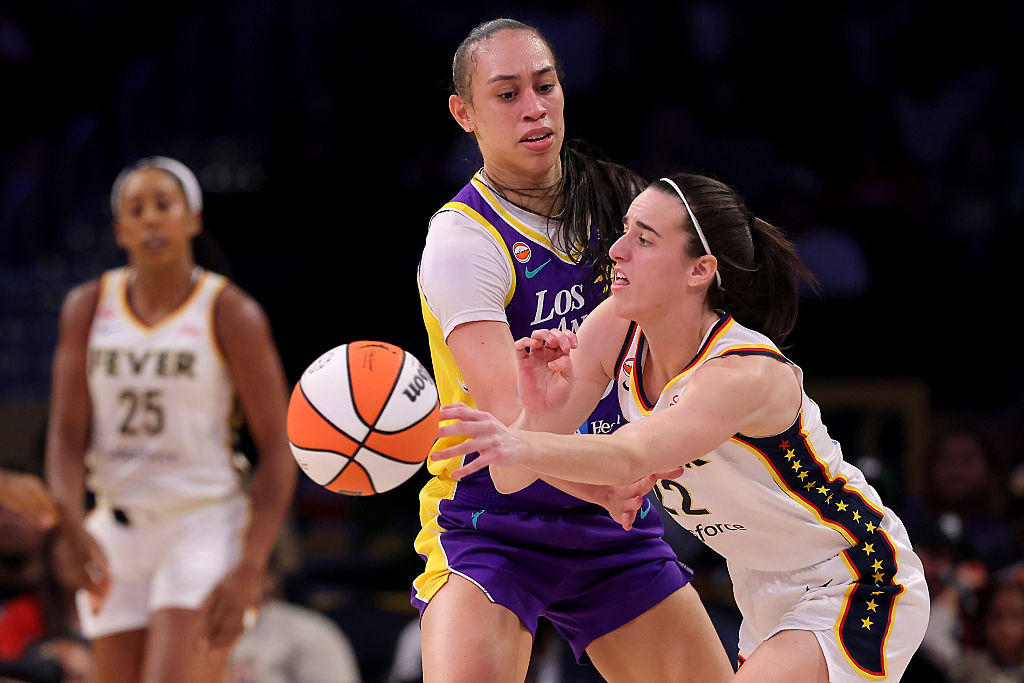
This week, Congressional Republicans threatened to launch a federal civil rights investigation into how the WNBA has handled one of its players, Indiana Fever guard Caitlin Clark. This is not the first time lawmakers have targeted the league. Conservative politicians fired a very similar warning shot at the front office back in 2024.
That initial warning shot arrived at a critical inflection point. Clark entered the W as a rookie that year, just as the league was growing in popularity, as political winds in America were shifting strongly to the right, and as corporate America began to amend its policies to match them.
The WNBA did what a lot of corporate America did. It invested in its business using a strategy that would bring it into political alignment. For the WNBA, that strategy was Caitlin Clark.
Clark’s Iowa background combined with a well-documented history of on-court complaints during her collegiate career made her a perfect pawn for a highly specific political narrative. Her persona fit squarely within a framework that an emerging audience of conservative acolytes found deeply appealing.
Far-right commentators, internet trolls, and right-wing media figures transformed her on-court frustration into a manufactured story of white grievance, painting her as a victim of a league that refused to embrace her because of her whiteness.
Because the league has always been predominantly Black, queer, and unabashedly activist, creating this false narrative of persecution was the only surefire way for a new, conservative, and politically weaponized fanbase aligned with anti-diversity rhetoric to gain a foothold in the league.
This manufactured victimization directly generated a new base of fans from a coveted demographic who see their perceived racial and cultural displacement in their own lives reflected in how Clark shows up as a basketball player surrounded by Black women. That alignment manifests daily in digital spaces and in arenas around the country, where Clark’s devotees are more invested in cheering on and fighting on behalf of their proxy than in making a long-term investment in the WNBA.
What is happening on the hardwood is a macrocosm of the political incentives and pressures that shape executive decision-making inside Fortune 500 boardrooms everywhere. It is no secret that the way of the White House often becomes the way of corporate America, forcing executives to shift their language and priorities to align with whatever political party is in power.
When the political guard changed in Washington, D.C., corporate hierarchies were forced to make a choice. Costco stood firm on its diversity commitments, recognizing that protecting an inclusive workforce is simply good business. Target capitulated, pulling Black-owned brands from its shelves to appease right-wing temper tantrums.
The economic impact of those corporate decisions showed that consumers are paying close attention to how companies navigate diversity and these political times. While Costco’s choices earned it deep community loyalty, Target faced immediate backlash and a nationwide boycott from a Black consumer base that refuses to accept the rollbacks.
Today, Target continues to pay lip service to diversity by offering scaled-back, performative product lines during Black History Month. But Black folks have made it clear that we are not going back to accepting crumbs from corporations like Target that abandon us the moment the political winds shift.
The WNBA is committing its own form of lip service with its plans to hold some of its All-Star events at former President Barack Obama’s new presidential center in Chicago. Being on the grounds of the brand-new center is an undeniable milestone for the league’s players and fans. For corporate headquarters, booking this historic venue will likely be weaponized and touted as a public-relations win that allows an executive like Commissioner Cathy Engelbert to engage in diversity-washing.
The front office can point directly to this partnership in an attempt to claim authentic allyship, all the while deflecting from a league where Black women players are routinely left to fend for themselves on the court as well as through an unprecedented number of racial harassment and threats.
Because identity and social justice are baked into its core foundation, the WNBA is uniquely positioned to feel the friction of a hostile political administration much faster and in ways many other companies don’t.
The sudden threat of a congressional audit marks a dangerous escalation for the league. By suggesting that the Department of Justice and the Equal Employment Opportunity Commission investigate, conservative lawmakers are taking legal frameworks originally designed to protect marginalized communities from systemic discrimination and twisting them to protect a white player while reinforcing a single, highly profitable but dangerous narrative for all the Black players on the court playing against her.
This political theater amounts to a literal hijacking of civil rights protections. It turns the very language of equity into a weaponized defense of white comfort. By manufacturing a false crisis of reverse discrimination, what’s being obscured is the impact this will have on players on the court. The court will be transformed into a true battlefield, creating an environment in which the narrative and on-court refereeing are heavily policed.
This engineered panic also exerts immense regulatory pressure on the league office to alter how games are called, creating an environment in which uneven officiating becomes the norm rather than the exception. Referees will be pressured to overcorrect whenever a Black player guarding Clark matches the same physical, defensive intensity they experience and that has always defined the WNBA.
The letter from Republicans frames the issue as an isolated problem unique to one player, completely disregarding the reality that Black players face intense physical play every night without receiving the benefit of a federal rescue squad.
The WNBA’s front office needs to decide who it is going to stand up for. Its most immediate test is saddled in how it responds to the congressional demand. It’s time for the league to stand up for Black women. The WNBA cannot continue to deflect while Black women in its employ catch the flu.
In a corporate world full of Targets, it is time for Cathy Engelbert and the WNBA to dig deep for executive courage and become a Costco.
SEE ALSO:
Alyssa Thomas Gets 1-Game Suspension For Hitting Caitlin Clark’s Throat
The Unraveling: How Reality Caught Up With The Cult Of Caitlin Clark
Caitlin Clark Was On Stage With Country Music Singer Morgan Wallen
Caitlin Clark Lost Her Footing, So Her Fans Called 911