In photos: Lebanon’s women against a backdrop of war
Where Do I Go? لوين روح — As war breaks out in the Middle East once again, we spotlight Rania Matar’s powerful new photobook, which empowers women of her home country through portraiture.
 Black News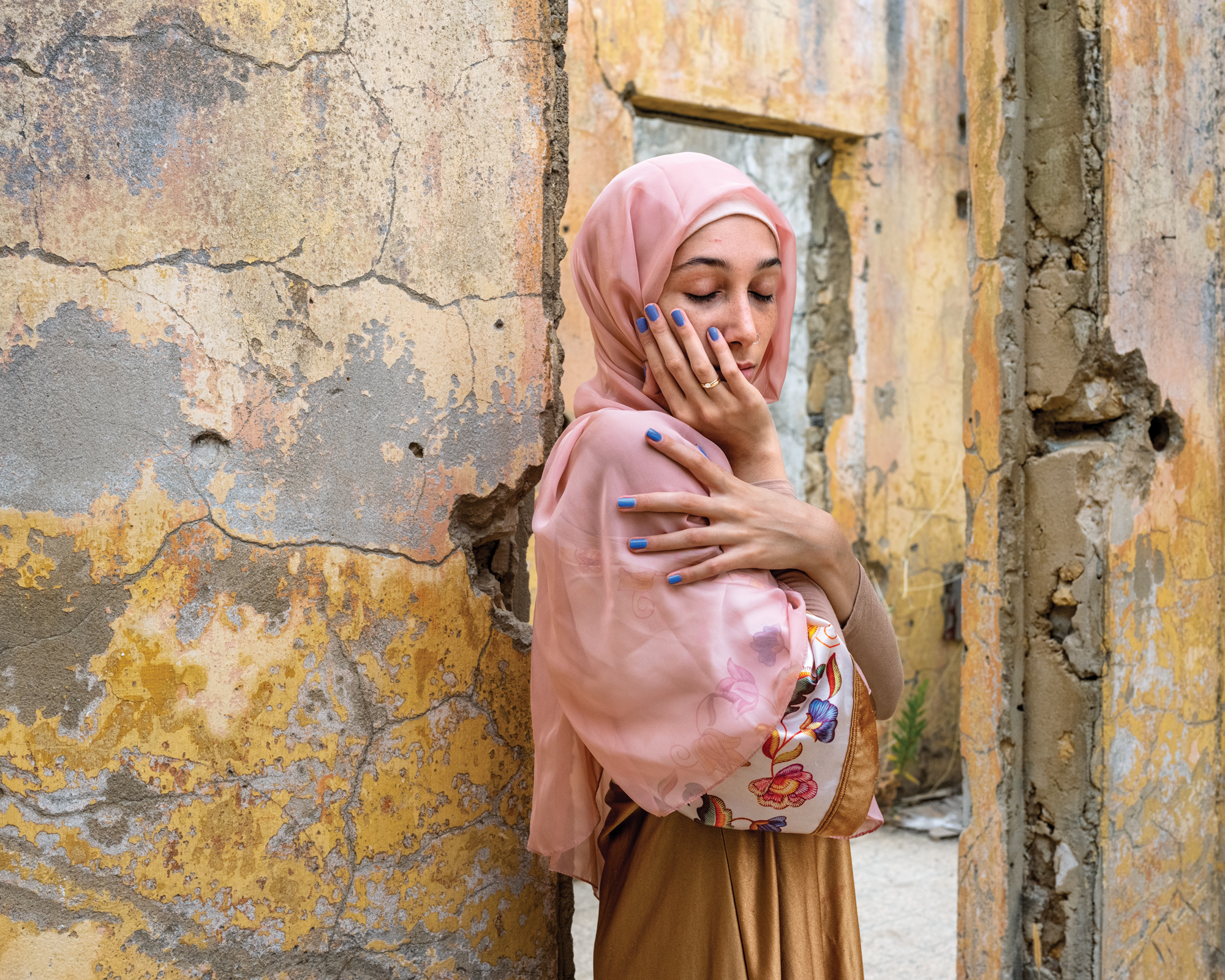
Where Do I Go? لوين روح — As war breaks out in the Middle East once again, we spotlight Rania Matar’s powerful new photobook, which empowers women of her home country through portraiture.
After the Beirut Port explosions of August 2020, photographer Rania Matar returned to her native land of Lebanon. “My son wanted to volunteer, and I thought I would document what’s going on,” she says. “I found myself in awe of the women working in reconstruction, so I started photographing them. I realised many of them were trying to find a way to leave the country, and then it hit me: history is repeating itself.”
Matar was just 20 years old when she left Lebanon in 1984 to study in the United States, where she would later build her home, family, and career as a portrait photographer chronicling the lives of girls and young women in both the east and the west. “I saw my younger self in these women and know how hard it is to make the decision to leave,” she says.
Matar’s environmental portraits are rooted in a collaborative practice, where she creates space for her sitters to explore deep connections between identity and place. She remembers accompanying one woman to an abandoned building and seeing the writing on the wall. In Arabic, someone has scrawled the words, لوين روح (‘where do I go?’). At that moment, Matar knew the story only she could tell, placing that question at the center of her new book and exhibition, now on view at the Sidney and Lois Eskenazi Museum of Art in Bloomington, Indiana.
Where Do I Go? لوين روح is a majestic portrait of a people and a place as seen through the eyes of one who has lived this life themselves. Each portrait is a history of people and place layered over countless generations in the landscape. Amid ancient ruins are scenes of destruction that remain following the 1975 Lebanese Civil War, and more recently the Israeli invasion of Southern Lebanon.
And today, March 3, news broke that the cycle which has afflicted the Middle East region for so long has restarted, with Israeli air strikes hitting Beirut and killing 52 people according to the country’s disaster management unit. It comes after Hezbollah launched rockets into Israel in retaliation against the assassination of Iran’s Supreme Leader Ayatollah Ali Khamenei by Israeli and US on Saturday, February 28. Uncertainty has returned, with the Middle East once again facing the prospect of war, displacement and destruction.
For Matar, Where Do I Go? لوين روح is a question deeply embedded in her family’s history. “My parents are Palestinian,” she says. “They came to Lebanon separately when they were children in 1948. My mother was nine years old from Jerusalem, and my father was 12 from Jaffa. They met at the American University of Beirut and got married.”
Then tragedy struck. When Matar was three years old, her mother died from a brain tumour. “My father raised me single-handedly, so it’s interesting that all my work is about women,” she says. “Maybe I’m looking for my mom on some level, but my hero in life was my father. When the civil war broke out in Lebanon, my father used to tell me as a child: ‘You’re Lebanese. The Palestinian problem is mine, and not yours.’ He wasn’t denying his identity, he was protecting me.”
Matar’s father died shortly before the genocide in Gaza began on October 7, 2023, leaving her unable to yet deliver on his final wish: to have his ashes returned to Jaffa. The confluence of events brought Matar back to the legacy of her roots, of suppressed identities born of exile and survival. “You have to decide if you will leave everything you know and you work from scratch, or stay in a place that’s flawed,” she says. “It’s becoming harder for these young women to come to the US, but I also realised that they love Lebanon. Looking back, I realised how much I love it too. I keep going back. I’m not able to give up on it.”
Where Do I Go? لوين روح is a story of collective memory sustained by the current generation. The women alternately chose to be photographed in Lebanon’s verdant mountains, rolling orchards, and luminous sea, or amid the ruins of a great civilisation as a deeply immersive form of therapy.
Matar points to a portrait of a young woman standing barefoot in broken glass, surrounded by shattered windows that have yet to be rebuilt. “She said it was a closure to a traumatic experience, and the next day she got a tattoo of broken glass.” Matar says. “I completely give them agency over the process. I would never ask somebody to take off their clothes or step in glass. They’re like my daughters.”
Rania Matar: Where Do I Go? لوين روح on view at the Sidney and Lois Eskenazi Museum of Art in Bloomington, Indiana, from March 5 - August 2, 2026. The book is published by Kaph/Eskenazi Museum of Art.
Miss Rosen is a freelance arts and photography writer, follow her on X.
Buy your copy of Huck 82 here.
Enjoyed this article? Follow Huck on Instagram for more from the cutting edge of sport, music and counterculture.
Support stories like this by becoming a member of Club Huck.