Kenya court clears way for $1.6 billion US-backed health deal despite privacy concerns
Kenya’s Court of Appeal has temporarily cleared the way for the implementation of a controversial $1.6 billion health partnership with the United States, handing President William Ruto’s administration a major victory in a legal battle over healthcare funding, constitutional oversight and data privacy.
 Black News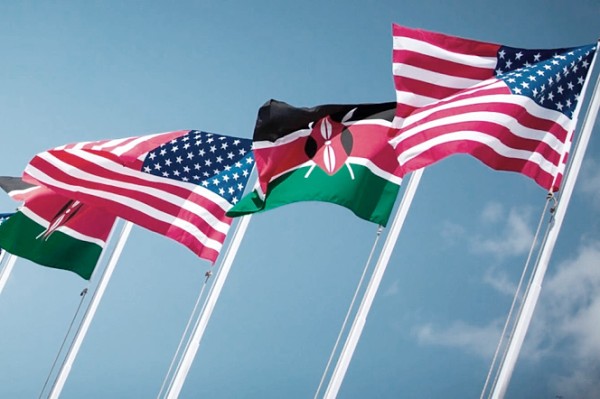

Kenya’s Court of Appeal has temporarily cleared the way for the implementation of a controversial $1.6 billion health partnership with the United States, handing President William Ruto’s administration a major victory in a legal battle over healthcare funding, constitutional oversight and data privacy.
- Kenya’s Court of Appeal has temporarily allowed the government to proceed with a $1.6 billion US-backed health partnership after suspending an earlier court block.
- The deal aims to strengthen Kenya’s fight against HIV, malaria and other diseases while expanding healthcare access over five years.
- Critics argue the agreement may require parliamentary approval and have raised concerns over public participation, sovereignty and health data privacy.
- The government insists only anonymised data will be shared, as broader constitutional questions over the deal continue in court.
A three-judge bench suspended earlier High Court conservatory orders that had blocked implementation of the framework pending the hearing of an appeal.
The judges; Luka Kimaru, Sila Munyao and Dr Okoth Okello, said detailed reasons for the decision would be provided when the court delivers its full ruling on October 30.
The framework, signed in Washington in December 2025, seeks to strengthen Kenya’s response to HIV, malaria, tuberculosis and emerging infectious diseases while helping the country build a more self-reliant healthcare system.
Under the agreement, the US is expected to provide about $1.6 billion over five years to support medical equipment supply, healthcare commodities, expansion of the health workforce and wider insurance coverage.
The Kenyan government argued that the suspension had created uncertainty in the health sector at a time of increased disease risks linked to population movement, including among children and pregnant women.
Attorney-General Dorcas Oduor and the Ministry of Health told the court the framework was part of Kenya’s constitutional duty to progressively guarantee citizens access to quality healthcare.
The dispute was triggered by a petition filed by Busia Senator Okiya Omtatah, who questioned whether the agreement should be treated as an international treaty requiring parliamentary approval under Kenya’s Constitution.
Mr Omtatah also argued that the government failed to conduct sufficient public participation before signing the framework and raised concerns over fiscal accountability, sovereignty and protection of citizens’ medical data.
DON'T MISS THIS: FULL LIST: African countries that signed Trump’s controversial health deals
Consumer rights group Cofek separately warned that transferring Kenyan health and epidemiological data abroad could expose citizens to irreversible privacy risks if the information were misused outside Kenya’s jurisdiction.
The government has rejected those concerns, insisting that the framework does not permit the sharing of sensitive personal information.
“It is, therefore, imperative to clarify that, as expressly recognised under the Data Sharing Agreement, the Government of Kenya shall not share any sensitive personal data of its citizens but shall instead share only aggregated data for the purposes of implementing the Cooperation Framework,” the government said in court filings.
The Attorney-General further stated that the agreement complies with Kenya’s Digital Health Act and Data Protection Act because only anonymised and aggregated information would be shared for programme monitoring purposes.
She also said Kenyan law would prevail in the event of any conflict involving foreign data-sharing regulations under the framework.
The case has drawn national attention because it comes at a time when several African countries are grappling with uncertainty over donor funding for healthcare programmes, especially those targeting HIV and malaria.
Kenya is among the biggest recipients of US-backed health assistance in Africa, including support from the US President’s Emergency Plan for AIDS Relief (PEPFAR), which has financed HIV treatment and prevention programmes across the continent for more than two decades.
The dispute also reflects growing concerns across Africa over digital sovereignty and how governments manage citizens’ health data in partnerships involving foreign governments and international organisations.
For now, the appellate court’s decision allows the Kenyan government to continue implementing the programme while broader constitutional questions surrounding the agreement remain before the courts.