‘Michael’ Reignites The Complexity Of The Black Nose — Why Black Women Are Still Under The Knife Of Eurocentric Beauty Standards [Op-Ed]
The rise of ethnic rhinoplasty among Black women reflects more accessibility and growing social acceptance toward artificial aesthetic enhancement. But how does it impact our notions of beauty, identity, and ancestry? The post ‘Michael’ Reignites The Complexity Of The Black Nose — Why Black Women Are Still Under The Knife Of Eurocentric Beauty Standards [Op-Ed] appeared first on MadameNoire.
 Black News
 ![‘Michael’ Reignites The Complexity Of The Black Nose — Why Black Women Are Still Under The Knife Of Eurocentric Beauty Standards [Op-Ed]](https://madamenoire.com/wp-content/uploads/sites/9/2026/04/17770595404097.jpeg?quality=80&strip=all&w=1024&crop=0,0,100,683px#)


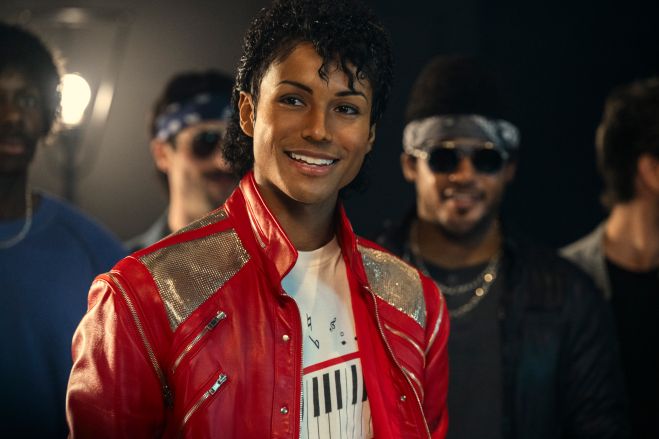
The highly anticipated biopic Michael finally hits theaters today, April 24. When the teaser dropped last November, fans and critics alike immediately reacted to the music, choreography, cast, and which parts of his labyrinthine life would be depicted. But in addition to all the fanfare, there was a lot of chatter around “the nose.” The infamous nose. And just like that, once again, Michael Jackson’s nose was under public scrutiny.
In the film, Michael’s real-life nephew Jaafar Jackson takes on the role of the King of Pop, wearing a prosthetic nose during his depiction of Michael’s early years. And most people agreed the nose was not good.
RELATED CONTENT: Colman Domingo, Nia Long & Juliano Valdi Break Down The Magic Behind ‘Michael’ With MadameNoire’s Managing Editor Danica Daniel
“That nose is my ONLY problem, honestly he walks (Moon), talks and sounds like Michael Jackson—except that nose,” one person commented.
“I think they overdid the prosthetics here but i kinda forgot how powerful michael jackson’s nose was before the nose job,” wrote another.
The comment that resonated with me the most said, “This being the exact reason why Michael was so insecure of his looks and wanting to change his appearance [broken heart emoji].”
To which another person replied, “Ikr? Like the irony is, he’d be horrified that people are scrutinizing his appearance and features this much.”
Michael was very open about being deeply self-conscious about his nose before undergoing his first nose surgery in 1979, after he broke it in a fall off stage. His insecurities stemmed, in part, from being mercilessly teased and bullied about his nose by his own father, Joe Jackson, who Michael alleged often called him “big nose” or compared their facial features based on proximity to whiteness.
“You are so Black. You don’t look like my child. Your nose is so big,” Michael recalled his father saying to him during his adolescent years. “You didn’t get it from me.”
The emotional abuse the “Childhood” singer alleges he endured from his father over his nose, combined with his claims of brutal physical abuse, it’s no wonder that throughout his tortured life, Michael underwent several extreme rhinoplasties in pursuit of a nose less “big” and “Black.”
The post ‘Michael’ Reignites The Complexity Of The Black Nose — Why Black Women Are Still Under The Knife Of Eurocentric Beauty Standards [Op-Ed] appeared first on MadameNoire.