NIGERIA’S FIREFIGHTING CULTURE: NEED FOR REASSESSMENT
A section of the Office of the Head of the Civil Service of the Federation (OHCSF) in Abuja was on Monday, the 9th of March, 2026, gutted by fire, raising fresh concerns about Nigeria’s persistent firefighting challenges and emergency response system. Although the exact cause of the incident has not yet been confirmed, preliminary reports […]
 Black News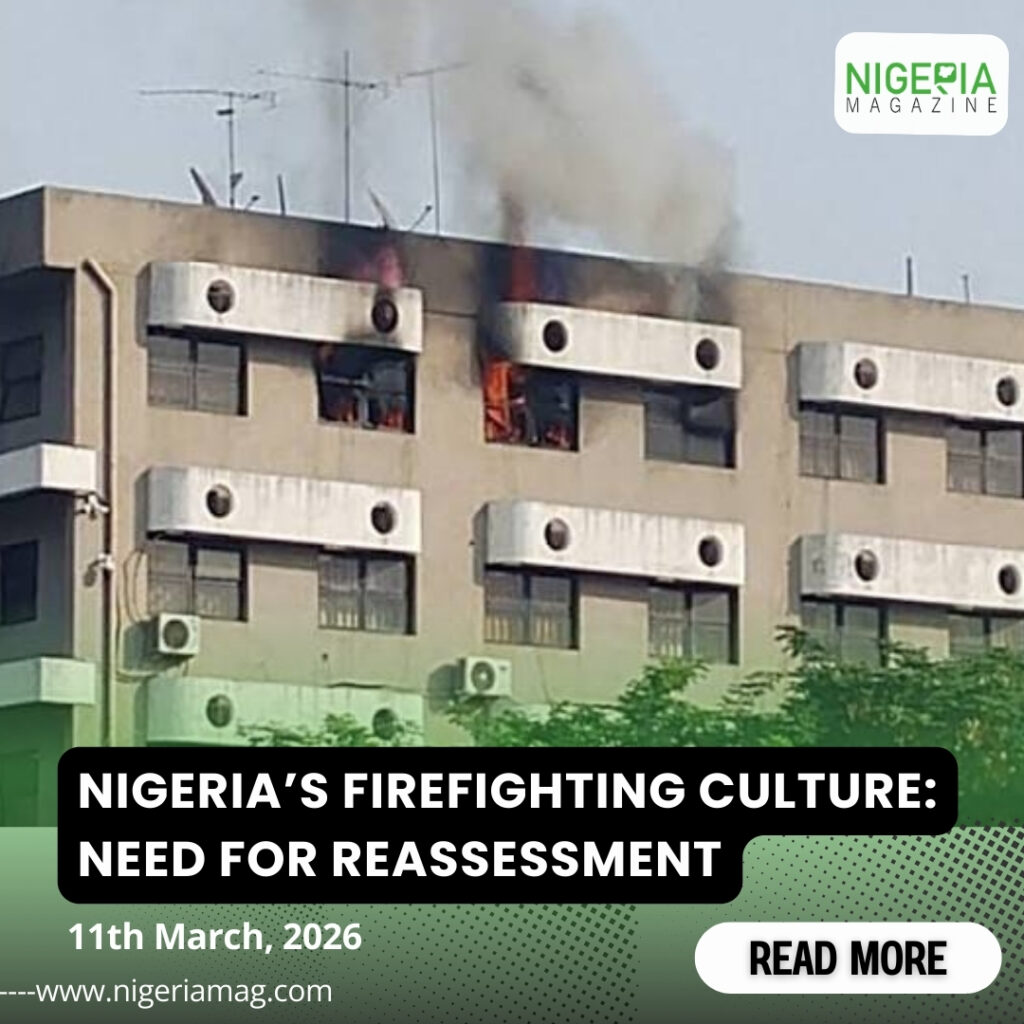
A section of the Office of the Head of the Civil Service of the Federation (OHCSF) in Abuja was on Monday, the 9th of March, 2026, gutted by fire, raising fresh concerns about Nigeria’s persistent firefighting challenges and emergency response system.
Although the exact cause of the incident has not yet been confirmed, preliminary reports suggest that the fire may have been triggered by a power surge. Firefighters were immediately deployed to the scene and worked to contain the flames and prevent the spread to other sections of the building.
The incident is yet another reminder of Nigeria’s recurring fire outbreaks in both public and private facilities, often linked to electrical faults, poor safety compliance, and delayed emergency response.
Rising Fire Incidents in Nigeria
Available data from the Federal Fire Service shows that Nigeria recorded 1,866 fire incidents in 2025, resulting in 114 deaths and nearly ₦74.75 billion worth of property destroyed. However, firefighters were able to save 2,106 lives and protect property valued at over ₦934.7 billion during emergency operations across the country.
These statistics indicate that, on average, about five fire incidents occur daily across Nigeria, highlighting the frequency of such disasters and the need for stronger preventive measures.
Urban centres appear to be the most affected. For example, Lagos recorded over 1,600 fire incidents in 2025, with significant losses in residential buildings, markets, and commercial facilities.
Similarly, reports show that markets and residential buildings account for the majority of fires nationwide, with electrical faults responsible for nearly 70 percent of recorded outbreaks.
Firefighting Culture and Response Challenges
Despite the efforts of firefighters, Nigeria’s firefighting culture still faces several systemic challenges.
First is the reactive approach to fire emergencies. In many cases, authorities respond only after a fire has escalated, rather than focusing on preventive safety systems such as building inspections, fire alarms, hydrants, and safety drills.
Second is limited firefighting infrastructure. Many communities lack functional fire stations, modern firefighting equipment, and accessible water hydrants. In several cases, firefighters arrive at fire scenes only to struggle with water supply or poor access roads.
Third is public safety negligence.
Carelessness in electrical installations, improper handling of cooking gas, and overcrowded market structures contribute significantly to the high number of fire outbreaks.
Improving Nigeria’s Fire Safety System
Experts argue that Nigeria must urgently reassess its firefighting strategy to reduce the frequency and impact of fire disasters.
One critical step is strengthening preventive regulations. Government agencies should enforce strict building safety standards, ensure routine inspections, and compel businesses to obtain fire safety certification.
Public awareness is also essential. Many Nigerians lack basic fire safety knowledge such as how to use fire extinguishers, detect electrical faults, or respond quickly during emergencies. Community education programmes can significantly reduce preventable incidents.
Another key area is investment in modern firefighting technology and infrastructure. Expanding fire stations, providing rapid-response vehicles, installing hydrant systems in urban areas, and deploying digital emergency reporting platforms would improve response time.
A Wake-Up Call
The fire incident at the Office of the Head of the Civil Service of the Federation may have been contained, but it once again highlights the urgent need for Nigeria to rethink its approach to fire prevention and emergency management.
Without stronger safety culture, modern infrastructure, and public awareness, fire outbreaks will continue to threaten lives, businesses, and public institutions across the country.
For a nation striving for development and urban expansion, effective fire safety systems are no longer optional, they are essential.
Ubong Usoro for Nigeria Magazine