NYC Health Commissioner On Federal Government Limiting Treatment For Opiod Use: “These Federal Changes Now Threaten That Progress”
Photos: YouTube Screenshots|Wikimedia Commons NEW YORK, NY — NYC Health Commissioner Dr. Alister Martin issued the following statement responding to federal changes limiting access to treatment for opioid use: “The federal government is shifting away from evidence-based treatment and towards deadly abstinence-based approaches in addressing the country’s overdose epidemic, rolling back years of life-saving progress. New recommendations against long-term medication for opioid use disorder and removal of a national provider database are just the latest attempts to gut resources and put up barriers to life-saving treatment. This comes in addition to cutting nearly two-thirds of Substance Abuse and Mental Health Services Administration staff and proposing $753 million in cuts to the agency, $165 million in cuts to addiction research at the NIH, and $3 billion in cuts to the CDC, including funds to track overdoses and provide overdose reversal medications. “We are finally seeing a decrease in overdose deaths, and these federal changes now threaten that progress. This has been hard-won by increasing access to harm reduction tools like naloxone, and to medication and treatment like Buprenorphine, while prioritizing the hardest hit communities. As an ER doctor, I’ve witnessed the impacts firsthand, as patients stopped coming to the ER in the midst of an overdose and started their journey to recovery. These federal actions disrupt that progress, eliminating resources proven to prevent overdoses. We can’t afford another step back from treatment that works to instead experiment with people’s lives. “In New York City, we help patients navigate options for treatment and work closely with our state partners to connect people to additional care. The NYC Health Department remains committed to expanding low-barrier access to lifesaving medications like buprenorphine and methadone, alongside stigma-free programs that keep people alive and engaged in care during their recovery. Anyone looking to access substance use services in NYC can call or text 988.” For more information about treatment options in New York, visit oasas.ny.gov/treatment.
 Black News
Photos: YouTube Screenshots|Wikimedia Commons
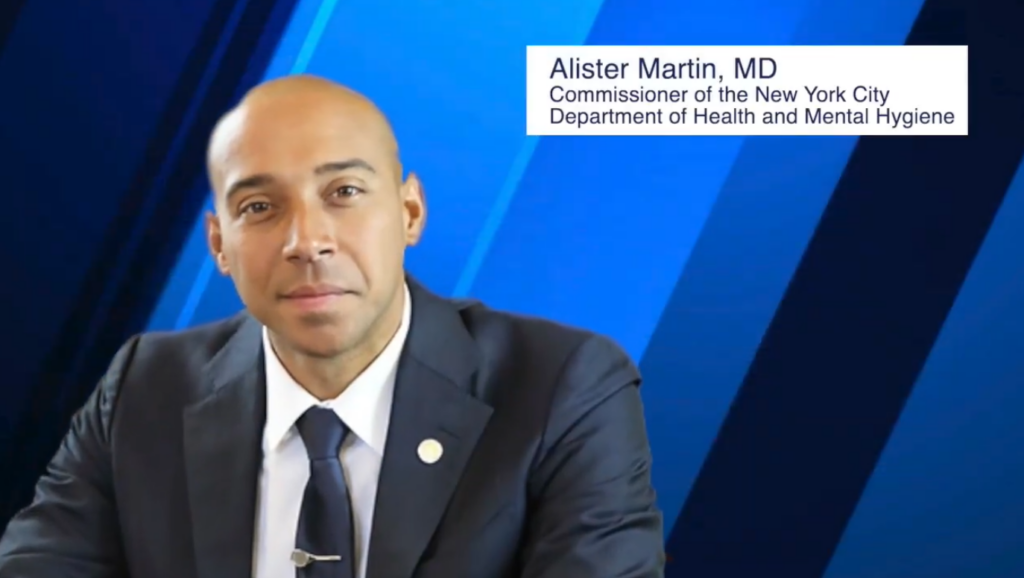
NEW YORK, NY — NYC Health Commissioner Dr. Alister Martin issued the following statement responding to federal changes limiting access to treatment for opioid use:
“The federal government is shifting away from evidence-based treatment and towards deadly abstinence-based approaches in addressing the country’s overdose epidemic, rolling back years of life-saving progress. New recommendations against long-term medication for opioid use disorder and removal of a national provider database are just the latest attempts to gut resources and put up barriers to life-saving treatment. This comes in addition to cutting nearly two-thirds of Substance Abuse and Mental Health Services Administration staff and proposing $753 million in cuts to the agency, $165 million in cuts to addiction research at the NIH, and $3 billion in cuts to the CDC, including funds to track overdoses and provide overdose reversal medications.
“We are finally seeing a decrease in overdose deaths, and these federal changes now threaten that progress. This has been hard-won by increasing access to harm reduction tools like naloxone, and to medication and treatment like Buprenorphine, while prioritizing the hardest hit communities. As an ER doctor, I’ve witnessed the impacts firsthand, as patients stopped coming to the ER in the midst of an overdose and started their journey to recovery. These federal actions disrupt that progress, eliminating resources proven to prevent overdoses. We can’t afford another step back from treatment that works to instead experiment with people’s lives.
“In New York City, we help patients navigate options for treatment and work closely with our state partners to connect people to additional care. The NYC Health Department remains committed to expanding low-barrier access to lifesaving medications like buprenorphine and methadone, alongside stigma-free programs that keep people alive and engaged in care during their recovery. Anyone looking to access substance use services in NYC can call or text 988.”
For more information about treatment options in New York, visit oasas.ny.gov/treatment.