Pedagogy of Absence: Sexuality Education and Social Inequality in China
One night during my fieldwork in 2019, I was hanging out with friends in Beijing. Shortly after we sat down at a street food hall, the waitress offered us some packets of hand wipes that were packaged like condoms (see Figure 1). Neither the English nor the Japanese text on the cover made sense. The […] The post Pedagogy of Absence: Sexuality Education and Social Inequality in China appeared first on Made in China Journal.
 Black News
One night during my fieldwork in 2019, I was hanging out with friends in Beijing. Shortly after we sat down at a street food hall, the waitress offered us some packets of hand wipes that were packaged like condoms (see Figure 1). Neither the English nor the Japanese text on the cover made sense. The Chinese words, prominently displayed in the centre of the packet, simply said: ‘Shut up, let’s go [have sex] [别逼逼, 约].’
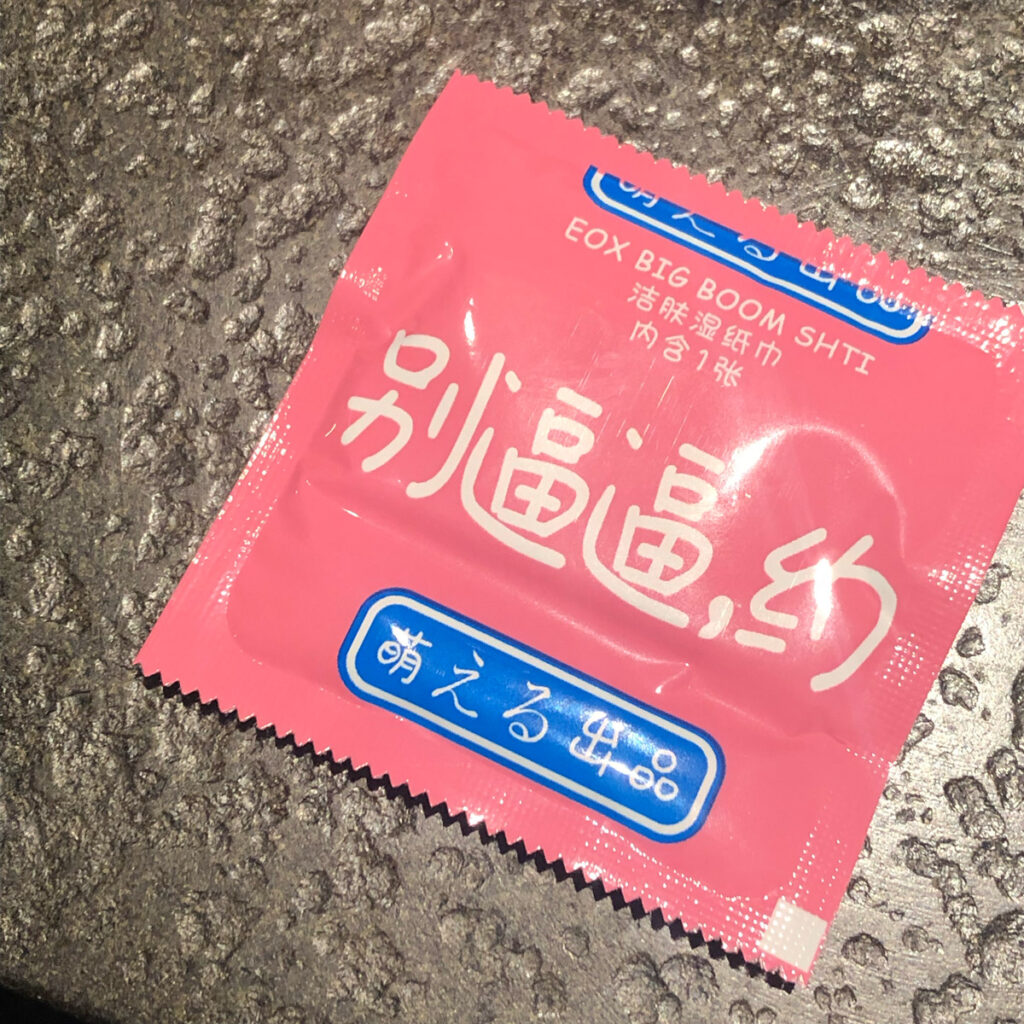
I was shocked by the explicit message, but my friends found it unremarkable. This moment captured an irony at the heart of growing up in today’s China: young people are saturated with various types of sexual messages in daily life yet receive virtually no evidence-based sexuality education at school. This has created a pedagogical predicament where young people must navigate complex sexual landscapes without institutional guidance.
In my research, I set out to understand how young people make sense of sexuality in the gap between this saturation and the near-total absence of sexuality education at school. I employed qualitative methods using 28 semi-structured interviews with students, plus seven teacher interviews at one vocational school and one academic school. Rather than conceptualising sexuality education as a fixed curriculum, I take it as fluid and evolving within China’s societal, political, cultural, and historical landscapes. The students I interviewed revealed vastly different understandings shaped by their class positions. For example, Fangting, a vocational school student, saw sexuality education as basic information about anatomy and reproduction, while Mila, an academic school student, envisioned a broader curriculum including relationships, marriage, and puberty concerns.
My research shows that young people’s experiences of sexuality education in China are shaped by intersections of class and gender, exacerbated by systemic institutional failures, and mediated through everyday cultural practices. The analysis reveals that sexuality education is not a technical problem with curriculum design but a site where structural inequalities are reproduced and contested through four interconnected layers: structural inequalities in China’s stratified education system; institutional failures, from policy vacuums to implementation gaps; young people’s lived experiences navigating these constraints; and pathways towards better sexuality education through comprehensive reform.
Structural Inequalities
China’s stratified education system produces class and gender inequalities through the regulation of young people’s sexuality. The High School Entrance Examination channels students into academic or vocational high schools, effectively assigning them to divergent futures of success and adulthood. I conceptualise class primarily as a future-oriented process shaped by institutional sorting, while also recognising that students enter the education system with different socioeconomic backgrounds. This conceptualisation highlights how the education system not only reflects existing inequalities but also actively produces them (Woronov 2016; Kipnis 2011). Among the 28 student participants, more than half those in academic schools came from middle-class backgrounds, while all the vocational school students came from working-class backgrounds. Amid these inequalities, gender does not operate as a separate axis from class but is fundamentally intertwined with it (Louie 2009). It is in their intersection that sexuality becomes a key site where these divergent trajectories are enforced, through the moral frameworks that the education system attaches to different pathways.
The regulation of sexuality operates less through prohibition than through disciplined deferral tied to respectability, risk, and future life trajectories. This is particularly visible in how the ideal of the ‘scholarly gentleman’ in contemporary China symbolises an aspirational, elite masculinity in which educational achievement becomes a key marker of moral worth (Song and Hird 2014). This ideal not only shapes educational aspirations but also disciplines male sexuality in classed ways. For young men in academic schooling, self-discipline—both academically and sexually—becomes a sign of readiness for a middle-class future. For example, Xiangzhi, a male academic school student, described pursuing postgraduate study as his primary goal, implicitly aligning personal ambition with moral self-cultivation, at the expense of romantic relationships. In contrast, for young men in vocational pathways, for whom such scholarly ideals are less accessible, masculinity is negotiated through different registers. Linbo, a vocational school student, expressed admiration for PhD-educated individuals while simultaneously questioning his own worth, reflecting his distance from this sort of ‘ideal’. Such divergence is also reflected in sexual practices. While some academic school students emphasise restraint and defer romantic relationships as part of demonstrating self-discipline and moral refinement, vocational students more often frame sexuality in casual or experiential terms as a way of negotiating masculinity outside academic ideals.
This gendered and classed hierarchy impacts young women differently. Middle-class daughters face the paradox of having to achieve academically in the same way as sons to ensure middle-class futures while simultaneously facing heteronormative expectations surrounding respectability, marriage, and reproduction (Xie 2021). Bingbing, a middle-class daughter at the academic school, told her boyfriend she would not engage in any sexual intercourse before university, explaining that she could not afford the risks and that academic success, particularly performing well in the university entrance examination, must take priority. She also emphasised a sense of responsibility towards her parents, framing sexual restraint as part of not letting them down. Intimacy itself is often reconfigured within this framework. Mila, another middle-class daughter at the academic school, described how the top-performing student in her class was in a romantic relationship with the top student from another class, which she viewed positively because the relationship allowed them to support each other academically and aim for better universities. Here, romantic relationships are not rejected but incorporated into a broader logic of self-improvement and future-oriented achievement. In this context, young women’s sexuality is shaped within a success-oriented framework closely aligned with the ideal of the ‘scholarly gentleman’, where moral self-discipline and the postponement of intimacy become markers of educational ambition and future respectability.
Working-class young women, on the other hand, experience a double marginalisation in which educational exclusion and sexual regulation reinforce one another. Lulu, a female vocational school student, repeatedly echoed her father’s injunction against premarital sex during our interview and emphasised that she was still a virgin because she saw herself as a ‘good daughter’. Unlike her academic school counterparts, who could locate respectability in deferred institutional achievement, Lulu’s sense of sexual respectability rested on paternal authority and protectionist discourse. At the same time, the moral expectations placed on Lulu were not shared by her male partner, Jiahao. He described their relationship as ‘just for fun’ and spoke openly about his sexual experience, while simultaneously stating that he would eventually marry a virgin. The asymmetry is clear: sexual experience enhanced Jiahao’s masculine status, while, for Lulu, it carried the risk of moral devaluation and loss of respectability.
These cases illustrate how class and gender operate not additively but multiplicatively across different educational pathways. For middle-class young women, sexuality is regulated through self-discipline, deferral, and the alignment of intimate life with educational achievement. For working-class young women, by contrast, sexual respectability becomes a key site of regulation precisely because pathways to upward mobility are more constrained, exposing them to heightened moral surveillance. A parallel differentiation operates among young men: academic-track men are encouraged towards refinement through self-restraint and the postponement of desire, while vocational-track men more often navigate sexuality through registers less aligned with institutional ideals of respectability. In this sense, sexuality is not merely shaped by class and gender but becomes a central mechanism through which classed futures are produced and inequalities reproduced within the stratified education system.
Institutional Challenges
Currently, China has no nationally approved sexuality education curriculum (Liu et al. 2023). This is not an oversight, but deliberate policy shaped by what can be called ‘sexuality education with Chinese characteristics’—a governing strategy using cultural conservatism, exam-oriented priorities, and heteronormative ideology to maintain social control while avoiding accountability. The Law of the People’s Republic of China on the Protection of Minors mentions sexuality education but provides no pedagogical guidance or assessment criteria, creating what Songli, an academic school mental health teacher, described to me as a system in which schools simply tick boxes to avoid being held accountable by local education bureaus and higher-level authorities.
Schools face contradictory pressures: they are held responsible if students experience harm yet receive no support or guidance for providing sexuality education. Dongfang, a teacher and moral education officer at an academic school, rationalised this through nationalist exceptionalism, arguing that sexuality education would distract from academic focus, so the country’s top-level design wisely, in his view, avoids mentioning it to prevent leading young people astray. This rhetorical move dismisses any call for evidence-based sexuality education as insufficiently sensitive to China’s unique situation or as Western cultural imperialism.
The only educational content on sexuality all Chinese students receive is a single biology session on human reproduction in the second year of middle school. Every participant mentioned this session, and all described it negatively. Weihang, a male student participant, recalled that the teacher was stern, his classmates were embarrassed and laughing, and he paid little attention. Aihua, a female student participant, described boys mostly giggling while the teacher grew angry and threatened punishment. The implications are profound. Teachers are uncomfortable with the topic; students learn that sexuality is shameful, with the boys disrupting the class and girls remaining silent; and biological facts are the only legitimate knowledge in this regard.
Young people also learn that sexuality education is incompatible with an exam-oriented system. Xiangzhi, a male academic school student, observed that he had never seen any test questions about sexuality or even the human reproductive system. He claimed to have once heard this was because the Ministry of Education wanted to protect students’ mental health. Knowledge that cannot be tested becomes devalued in a system in which exam scores are paramount, effectively marginalising sexuality education within the hierarchy of legitimate knowledge. In this context, sexuality education is often perceived as a distraction from the central goal of academic achievement. Mengwan, an academic school mental health teacher, went further, noting that students in academic high schools are generally better than those in vocational high schools and the goal of helping the former reach universities is not negotiable.
This marginalisation of sexuality education within the exam system does not eliminate it entirely but reshapes the forms it takes. When schools do provide sexuality education beyond the single session in biology class, it typically takes the form of abstinence-focused lectures invoking traditional culture and national development. Guangyuan, a male middle-class academic school student, described a lecture at his prestigious middle school during which the invited expert told them to reduce masturbation frequency as much as possible so it would not harm their health and academic performance. At the same time, in a separate session for girls at the same middle school, Saya, a female student at the same school, sat at the back where it was too noisy to hear anything from the guest speaker, and her class teacher required students to complete an examination paper during the lecture. The gendered messaging is stark: boys must control their sexuality to achieve academic success and a refined masculinity, while girls need not even pay attention, their sexuality presumed to be passive and therefore unproblematic, their primary duty being academic accomplishment to secure a middle-class future.
This approach reflects deeper political anxieties. Dongfang, the teacher and moral education officer, explicitly connected sexuality education to regime legitimacy, noting the ‘fascinating’ fact that in many foreign countries people can access porn sites freely and legally but in China they cannot. He argued that China’s way of conducting sexuality education is better because it benefits young people’s growth, both physically and mentally, and praised the leadership of the Chinese Communist Party. Here, the absence of sexuality education is framed as a positive feature of Chinese governance—a manifestation of state wisdom protecting youth from Western decadence. The policy vacuum is seen not as a failure but as a deliberate strategy.
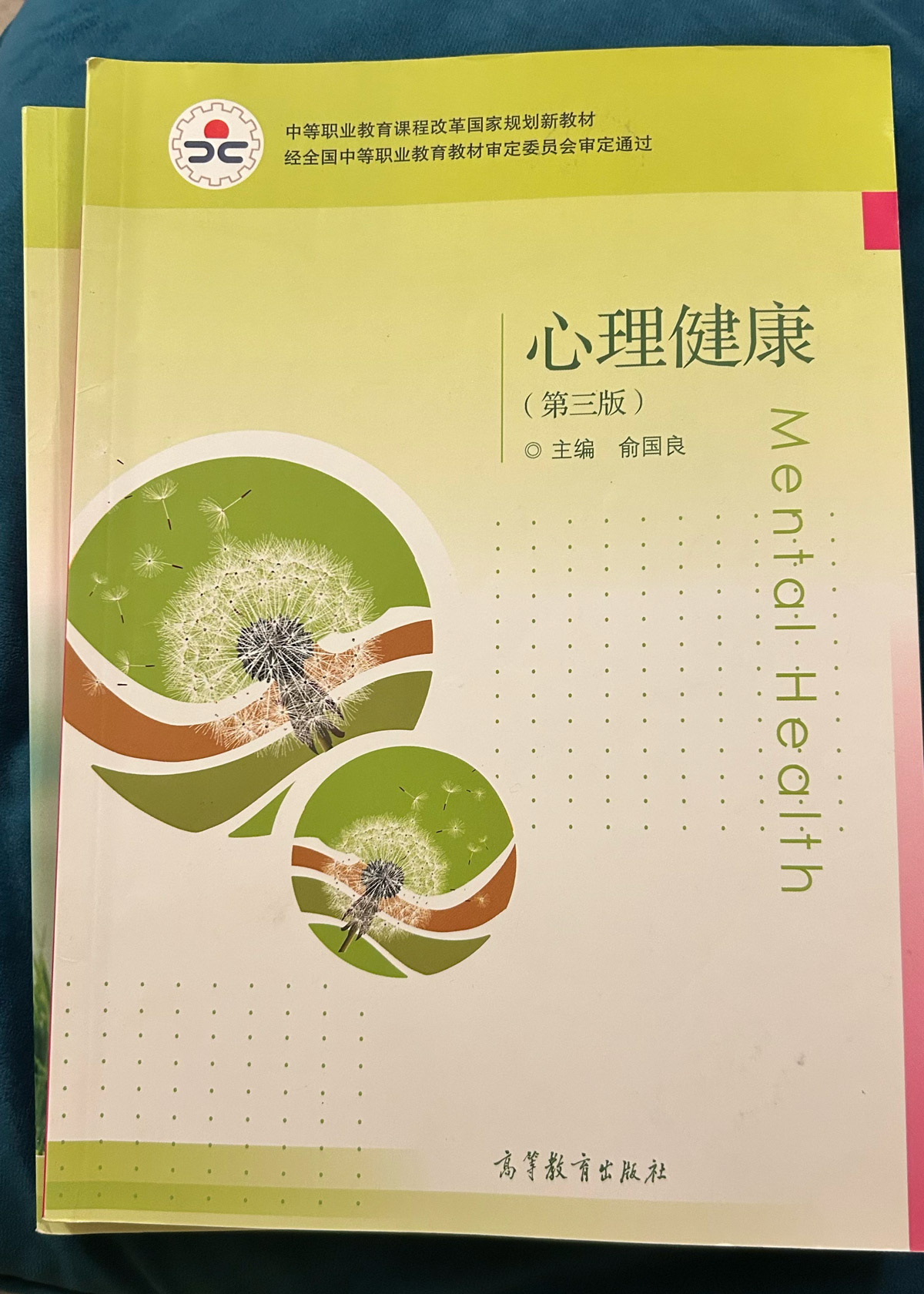
The differentiated institutional response to this policy vacuum reveals the depth of class bias. While academic schools largely ignore sexuality education, vocational schools receive a specialised mental health textbook explicitly designed for their students (Yu 2018) (see Figure 2). The rationale is that vocational students are presumed to be at greater risk of sexuality-related problems. In the foreword, the textbook claims it aims to ‘help vocational students understand and deal with mental health and behaviour problems during growth, studying, living, job-seeking, and working’. This is not evidence-based sexuality education but moralistic risk management targeting presumed problem students.
The textbook includes activities such as one called ‘water exchange’ (换水) (see Figure 3), in which coloured water is used as a metaphor for bodily purity. Students are encouraged to ‘cherish their bodies as they would cherish clean water’ and to observe how the water becomes darker when mixed with others. While presented in ostensibly gender-neutral terms in the student-facing materials, the gendered moral logic of the activity becomes more explicit in the accompanying teachers’ guidebook (Yu and Li 2018). Educators are instructed to reinforce the exercise through statements such as ‘impulsive sex is always unsafe sex’ and ‘people who do not have a good reputation with sex-related issues are despised’ (Yu and Li 2018: 103), alongside case studies focusing on girls who have had abortions. The guidebook also includes seemingly gender-balanced statements such as ‘men should be as responsible as women regarding contraception’ (Yu and Li 2018: 103), which nonetheless presuppose women’s primary responsibility for sexual consequences.
This asymmetry is not incidental. It reflects a broader pedagogical logic in which gendered sexual norms are selectively downplayed at the level of student discourse, while being actively mobilised through instructional guidance for teachers. Taken together, these materials construct sexual activity as a form of moral contamination the consequences of which are disproportionately borne by women, making female sexuality a measure of shame, respectability, and social value. This institutional messaging is even embedded as personal conviction in certain teachers: Dapeng, a vocational schoolteacher and moral education officer, argued that, for girls, sex should not be entertainment and that sexually active girls are at a significant disadvantage in relationships because, when it is time to marry, men should still demand virginity.
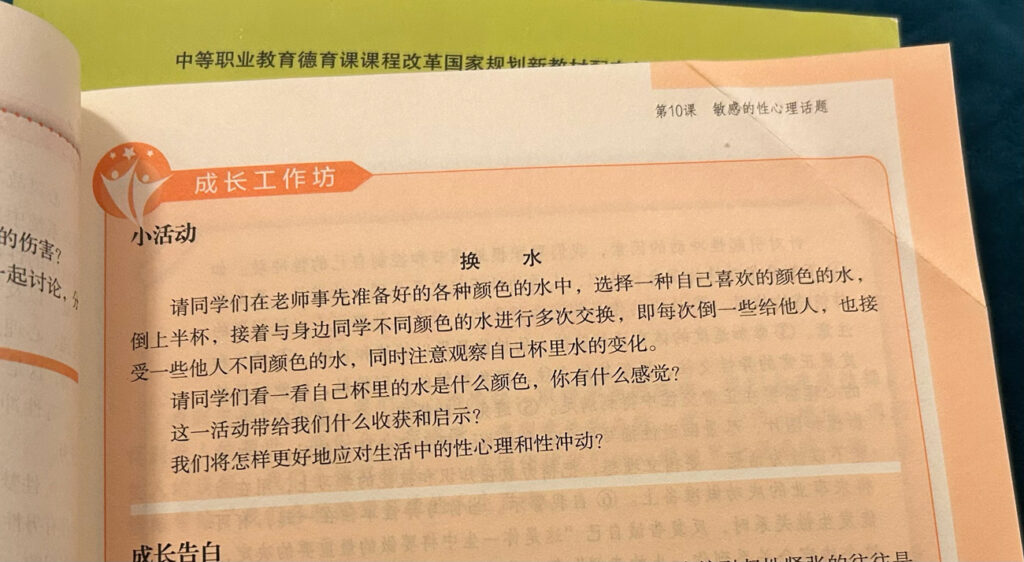
Figure 3: The original text of the water-exchange activity in the mental health textbook used in vocational schools, 2025. Photo by the author.
These pedagogical logics do not remain at the level of curriculum materials and personal convictions but are enacted and negotiated in everyday classroom interactions. Jinru, a vocational school mental health teacher, complained about boys in the class stirring up trouble when she was teaching this module. One male student asked her what sexual intercourse is and she dodged the question by saying she would explain later, privately wondering why they could not simply watch porn to learn. Her frustration reveals a complex power dynamic: vocational students—perceived as lacking scholarly refinement—can challenge their teacher’s authority in ways inflected by both class and gender. This moment illustrates a more immediate institutional reality: teachers in vocational schools are expected to manage sexual knowledge without adequate pedagogical preparation or support, while facing classroom dynamics already shaped by gendered and classed assumptions about students. In this sense, sexuality education operates less as a coherent pedagogical project than as a fragmented system of governance, in which absence, regulation, and differentiation coexist. It is within this uneven landscape that young people make sense of sexuality in practice.
Young People’s Lived Experiences
With evidence-based sexuality education absent from schools, many young people navigate their sexuality by turning to informal sources—such as pornography, relationships, and family members—that largely end up reproducing the inequalities that the education system created. Pornography is a popular information source in this respect (Peterson et al. 2023; Cheney et al. 2017). In my research, nearly half the participants mentioned pornography without prompting, discussing it with surprising openness. Jiahao, a male vocational school student, described his thrill the first time he watched Japanese role-play porn featuring a nurse in the first year of middle school. Linbo, another vocational student, explained that watching porn helped him learn new sex skills and positions.
However, pornography consumption is deeply classed and gendered in several ways (Daskalopoulou and Zanette 2020; Böhm et al. 2015; Trautner 2005). In contrast with the familiarity and ease among the vocational school students I interviewed, academic school students consume pornography with anxiety and guilt. Shangfu, a male working-class academic school student aspiring to middle-class status, described how his life was completely ‘fucked up’ after he started watching porn at age eleven. He stopped because he had self-control, reminding himself that girls may find boys who watch porn disgusting. His narrative mirrors discourse circulating among China’s online sexual abstinence community, in which young men frame sexual restraint as a prerequisite for success (Liu and Huang 2025). The ability to control oneself and avoid lewdness becomes proof of a refined masculinity and readiness for middle-class achievement (Song and Hird 2014).
Young women navigate pornography differently to men. Aihua, a working-class academic school student, described watching heterosexual pornography with female friends, particularly Japanese porn that was abusive. Finding it disgusting, they turned to boys’ love (BL) comics and gay pornography, which she started consuming in middle school and still enjoys. For young women, gay porn and BL offer an alternative to the degrading representation of women in heterosexual pornography, providing a space to explore sexuality without internalising objectification, though it carries its own problematic dynamics of fetishisation.
Yet even this informal learning reproduces heteronormativity. Despite consuming diverse pornography, Linbo maintained rigid boundaries, finding anal sex disgusting and insisting that normal sex should only be heterosexual with ‘insertion of a man’s erect penis into a woman’s vagina’. Such policing of what counts as ‘normal’ sex leaves no room for non-heterosexual desire, and none of the young people I interviewed encountered any acknowledgement of LGBTQIA+ experience in their schooling. Without critical media literacy or evidence-based sexuality education, pornography becomes pedagogy but one that often reinforces precisely the gender hierarchies and heteronormative assumptions that evidence-based sexuality education should challenge.
Romantic relationships function as perhaps the most powerful informal sexuality education, as lived experiences in which young people negotiate knowledge, desire, power, and intimacy without institutional guidance (Shannon 2022). The asymmetry in Lulu and Jiahao’s vocational student relationship—where sexual experience enhanced his status while undermining her respectability—reflected norms that they actively learned and rehearsed through the relationship itself. The strict boundaries that Bingbing, a female middle-class academic school student, maintained with her boyfriend also demonstrated a similar reproduction of norms through their relationship. Bingbing’s caution stemmed from her class teacher having publicly humiliated girls in romantic relationships, forecasting their ruined futures and calling them shameless. This led Bingbing to believe intercourse would interrupt her attendance and performance at the university entrance examination. She internalised this to such an extent that she experienced shame during her middle-school biology class and did not dare look at others during the session, as she felt only uncivilised people would pay attention to such embarrassing content. She buried her head in her arms and fell asleep, and the teacher let her.
Young people also learn from intergenerational conflicts (Dean et al. 2017; Peltola et al. 2017; Hirst 2004). Yahuan, a male working-class vocational school student, described confronting his parents when they told him they did not like the idea of sexuality education on the grounds that he was still so young and that learning about sex would be harmful to his health and physical development. He told them they were entitled to their own opinions, but they had grown up in a very different era. For Yahuan, sexuality education mattered because he believed it would help him find a girlfriend and get married, reflecting the pressure for a heteronormative marriage facing working-class young men who do not have access to middle-class resources or a perceived scholarly quality.
Guangyuan, a middle-class academic student, also contested parental silence. When he was little and asked how he was born, his dad told him he was born from ‘the place people pooped’. Guangyuan figured since his parents were born decades earlier and must know less than him about sexuality education, their ignorance was understandable. His generosity towards his parents belies the real burden young people carry: society has failed to provide evidence-based sexuality education, leaving them to patch together knowledge from embarrassed teachers, moralistic lectures and textbooks, pornography, peers, and their own trial and error.
Reform Pathways
Rather than equipping young people with the knowledge and resources necessary for sexual health, autonomy, and wellbeing, sexuality education in China operates through strategic absence and moral regulation. The absence creates not just a neutral void. Instead, it also creates a mechanism through which sexuality becomes a site of gendered and classed governance. Without institutional guidance, young people are left to navigate sexuality through fragmented and unequal sources, while schools and teachers reproduce moral hierarchies that differentially regulate bodies. Academic school students are encouraged to defer sexuality as a marker of respectability and self-discipline, aligning them with imagined middle-class futures. Vocational school students, by contrast, are constructed as sexually irresponsible and subject to intensified surveillance, reinforcing their positioning within working-class trajectories. Gendered double standards legitimise male sexual entitlement while constraining female sexuality through protectionist discourse. Heteronormative assumptions—evident in how young people themselves police the boundaries of ‘normal’ sex—render LGBTQIA+ experiences invisible and unsafe. Together, class distinctions and heteropatriarchy are moralised and reproduced.
Meaningful reform must therefore move beyond piecemeal curricular adjustments and be grounded in the principles of inclusivity, comprehensiveness, and active participation. Sexuality education must recognise diverse gender identities, sexual orientations, and classed life trajectories, and address not only risk and prevention but also consent, intimacy, desire, power, and media literacy.
Perhaps most fundamentally, reform must recognise young people as experts in their own lives rather than passive recipients of adult wisdom. Participants in my research demonstrated remarkable critical thinking and agency, yet they have no voice in curriculum design, no mechanism for feedback, and no recognition of their expertise. Participatory approaches can include co-designing curricula with diverse youth representatives, including young people from different social backgrounds and with different sexual orientations, creating student advisory boards for ongoing curriculum evaluation, training peer educators who can address sensitive topics in age-appropriate language, and establishing confidential feedback mechanisms so students can report inadequate or harmful teaching. Young people deserve evidence-based sexuality education as a fundamental right. It is not a reward for middle-class status, remedial intervention for presumed problem students, or a nationalist tool for demonstrating Chinese exceptionalism, but a recognition of their humanity and dignity.
Featured Image: Empty Classroom, Anthony Albright (CC).
References
Böhm, Maika, Philipp Franz, Arne Dekker, and Silja Matthiesen. 2015. ‘Desire and Dilemma—Gender Differences in German Students’ Consumption of Pornography.’ Porn Studies 2(1): 76–92.
Cheney, Kristen, Annah Kamusiime, and Anteneh Mekonnen Yimer. 2017. ‘Feeling “Blue”: Pornography and Sex Education in Eastern Africa.’ IDS Bulletin 48(1).
Daskalopoulou, Athanasia, and Maria Carolina Zanette. 2020. ‘Women’s Consumption of Pornography: Pleasure, Contestation, and Empowerment.’ Sociology 54(5): 969–86.
Dean, Judith, Marion Mitchell, Donald Stewart, and Joseph Debattista. 2017. ‘Intergenerational Variation in Sexual Health Attitudes and Beliefs among Sudanese Refugee Communities in Australia.’ Culture, Health & Sexuality 19(1): 17–31.
Hirst, Julia. 2004. ‘Researching Young People’s Sexuality and Learning about Sex: Experience, Need, and Sex and Relationship Education.’ Culture, Health & Sexuality 6(2): 115–29.
Kipnis, Andrew B. 2011. Governing Educational Desire: Culture, Politics, and Schooling in China. Chicago, IL: University of Chicago Press.
Liu, Chong, and Qiqi Huang. 2025. ‘“Abstinence Is Panacea”: Reconstructing the Ideal of Chinese Masculinity through Online Community.’ Sexualities 28(3): 1028–47.
Liu, Mingxuan, Yiyi Niu, Jialu Tang, and Chujin Xu. 2023. ‘The Implementation of Sex Education for Secondary School Students in China.’ Journal of Education, Humanities and Social Sciences 8: 1789–98.
Louie, Kam Louie. 2009. Theorising Chinese Masculinity: Society and Gender in China. Cambridge, UK: Cambridge University Press.
Peltola, Marja, Suvi Keskinen, Veronika Honkasalo, and Päivi Honkatukia. 2017. ‘Intergenerational Negotiations on (Hetero)Sexuality and Romantic Relationships—Views of Young People and Parents in Multi-Ethnic Contexts.’ Journal of Youth Studies 20(5): 533–48.
Peterson, Amy J., Gillian K. Silver, Heather A. Bell, Stephanie A. Guinosso, and Karin K. Coyle. 2023. ‘Young People’s Views on Pornography and Their Sexual Development, Attitudes, and Behaviors: A Systematic Review and Synthesis of Qualitative Research.’ American Journal of Sexuality Education 18(2): 171–209.
Shannon, Barrie. 2022. ‘Friends, Family and Romance as Sex(Uality) Education.’ In Sex(Uality) Education for Trans and Gender Diverse Youth in Australia. Cham, Switzerland: Springer.
Song, Geng, and Derek Hird. 2014. Men and Masculinities in Contemporary China. Leiden, Netherlands: Brill.
Trautner, Mary Nell. 2005. ‘Doing Gender, Doing Class: The Performance of Sexuality in Exotic Dance Clubs.’ Gender & Society 19(6): 771–88.
Woronov, Terry Ellen. 2016. Class Work: Vocational Schools and China’s Urban Youth. Stanford, CA: Stanford University Press.
Xie, Kailing. 2021. Embodying Middle Class Gender Aspirations: Perspectives from China’s Privileged Young Women. Singapore: Palgrave Macmillan.
Yu, Guoliang 俞国良, ed. 2018. 心理健康 (第三版) [Mental Health (3rd Edition)]. Beijing: Gaodeng Jiaoyu Chubanshe.
Yu, Guoliang 俞国良, and Li Yuan 李媛, eds. 2018. 心理健康教学参考书 (第三版) [Teaching Reference Book for Mental Health (3rd Edition)]. Beijing: Gaodeng Jiaoyu Chubanshe.
The post Pedagogy of Absence: Sexuality Education and Social Inequality in China appeared first on Made in China Journal.