Reverend Nontombi Tutu speaks at Asbury UMC’s annual Women’s Day Service
By D. Kevin McNeirSpecial to The AFRO By her own admission, the Reverend Nontombi Naomi Tutu, daughter of the late Archbishop Desmond Tutu, struggled against accepting the call to ministry for most of her life. But you couldn’t tell, based on the reactions of worshipers at Asbury United Methodist Church (UMC) on Sunday, April 2, […] The post Reverend Nontombi Tutu speaks at Asbury UMC’s annual Women’s Day Service appeared first on AFRO American Newspapers.
 Black News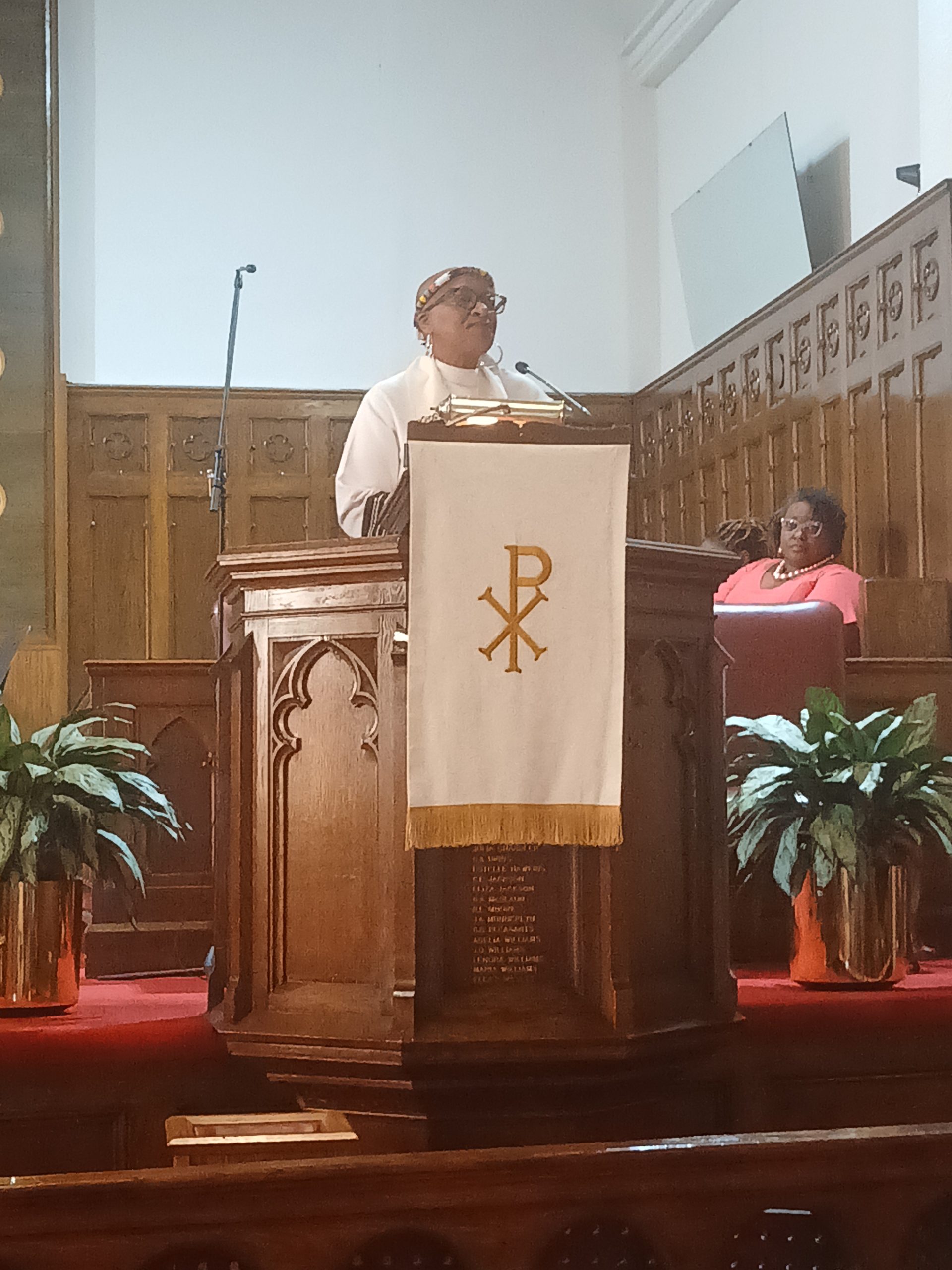


By D. Kevin McNeir
Special to The AFRO
By her own admission, the Reverend Nontombi Naomi Tutu, daughter of the late Archbishop Desmond Tutu, struggled against accepting the call to ministry for most of her life.
But you couldn’t tell, based on the reactions of worshipers at Asbury United Methodist Church (UMC) on Sunday, April 2, in Washington, D.C., during the church’s annual Women’s Day service.
During her sermon, “Empowered by Faith, Women Lived Courageously,” Rev. Tutu reminded Asbury women that they represent a legacy of devoted women who have been members of the church since its founding 190 years ago.

“I chose the account in the Gospel of John (19:25; 20:1-16) about Mary Magdalene because she believed, before anyone else, in Christ’s resurrection,” Rev. Tutu shared with The AFRO. “When the disciples ran away, hid, and doubted Jesus’ words, she returned to the empty tomb. Mary refused to be dehumanized by those in power. Women today must do likewise – and we have.”
The foundation of Rev. Tutu’s life as a human rights activist is rooted in her birth as a Black female in South Africa during the Apartheid era. She said those experiences taught her that the whole human family loses when we accept situations of oppression and division.
“It was my grandmother who taught me that when I look in the mirror, I see God, because the Bible says we are created in God’s image,” Rev. Tutu said, adding that it was her grandmother, and not her famous father and recipient of the Nobel Peace Prize, to whom she turned when societal norms caused her to question her self-worth.
“When God was done with creating the world, God said, ‘It is good.’ So, we are as good as anyone else,” she told the congregation. “It’s faith in that belief that empowered women like Harriet Tubman, Sojourner Truth, and Albertina Sisulu.”
Sisulu was a South African anti-apartheid activist, often referred to as a “Mother of the Nation.”

Rev. Tutu said it’s only been God’s love for her that has helped her maintain her sanity – both during her formative years in apartheid South Africa and following her move to America.
“Apatheid in my home country and racism in America are kith and kin – they’re like friends, neighbors, relatives,” she said. “So, Blacks in both countries know what it’s like to have your communities demolished, your rights denied, and to be attacked by Whites. It doesn’t matter whether the attacks are lodged by White nationalists, the military or the government. It all feels the same.”
Rev. Tutu said one reason for her reluctance to accept her calling, which she delayed until well into her 50s, was due to the way women in the church were routinely devalued in the church.
“The Anglican Church of England did not ordain women as priests until 1994, compared to the U.S. Episcopal Church which officially authorized the ordination of women in 1976,” she said. “So, I often asked myself where would I fit? Back home, the women of our church once considered taking a Sunday off to illustrate that the many roles we play in the life of the church are essential. I wanted to do more than just help set up for communion, keep children from misbehaving, or assist the male priest. I wanted a voice in church governance.”
When asked about the possibility of a female U.S. president being elected in her lifetime, Rev. Tutu said she remains “cautiously optimistic.”
“I was surprised when Americans chose Donald Trump over Hillary Clinton in his first try for the White House,” she said. “Then, given the disastrous job he did, I was even more surprised when Americans returned Trump to office despite the differences in education, experiences and abilities that existed between him and Kamala Harris.
“I have a favorite T-shirt that I often wear which says, ‘if they had only listened to Black women.’ No matter what we have faced, Black women have always found a way to make our voices heard. I just pray that we will keep coming and keep speaking out. Eventually, the world will have no other choice but to heed our words.”
The post Reverend Nontombi Tutu speaks at Asbury UMC’s annual Women’s Day Service appeared first on AFRO American Newspapers.