Somalia faces renewed famine threat as humanitarian funding plunges from $2.2 billion to just $300 million
Somalia is confronting another potentially devastating hunger crisis with a fraction of the international funding available during its last near-famine emergency, as drought, conflict and sweeping foreign aid cuts leave millions struggling to find enough food.
 Black News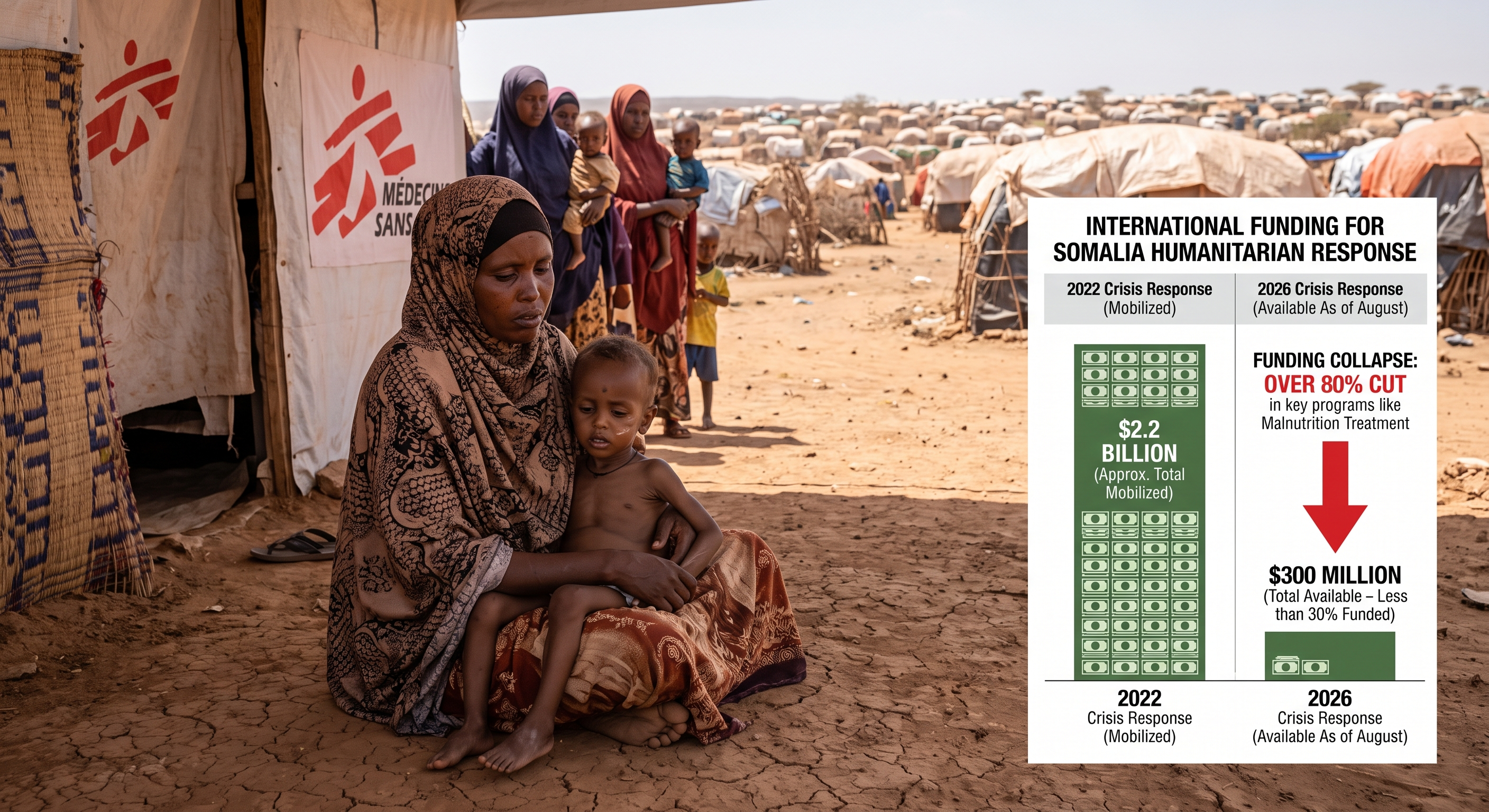

![Somalia is confronting another severe hunger crisis as drought, conflict and declining international assistance squeeze humanitarian operations.[Gemini Generated Image]](https://ocdn.eu/pulscms/MDA_/1397410a558d909dbd232af2d0eea9a6.png)
Somalia is confronting another potentially devastating hunger crisis with a fraction of the international funding available during its last near-famine emergency, as drought, conflict and sweeping foreign aid cuts leave millions struggling to find enough food.
- Somalia faces a worsening hunger crisis as drought and conflict deepen food shortages.
- Humanitarian funding has fallen sharply, from about $2.2 billion in 2022 to roughly $300 million.
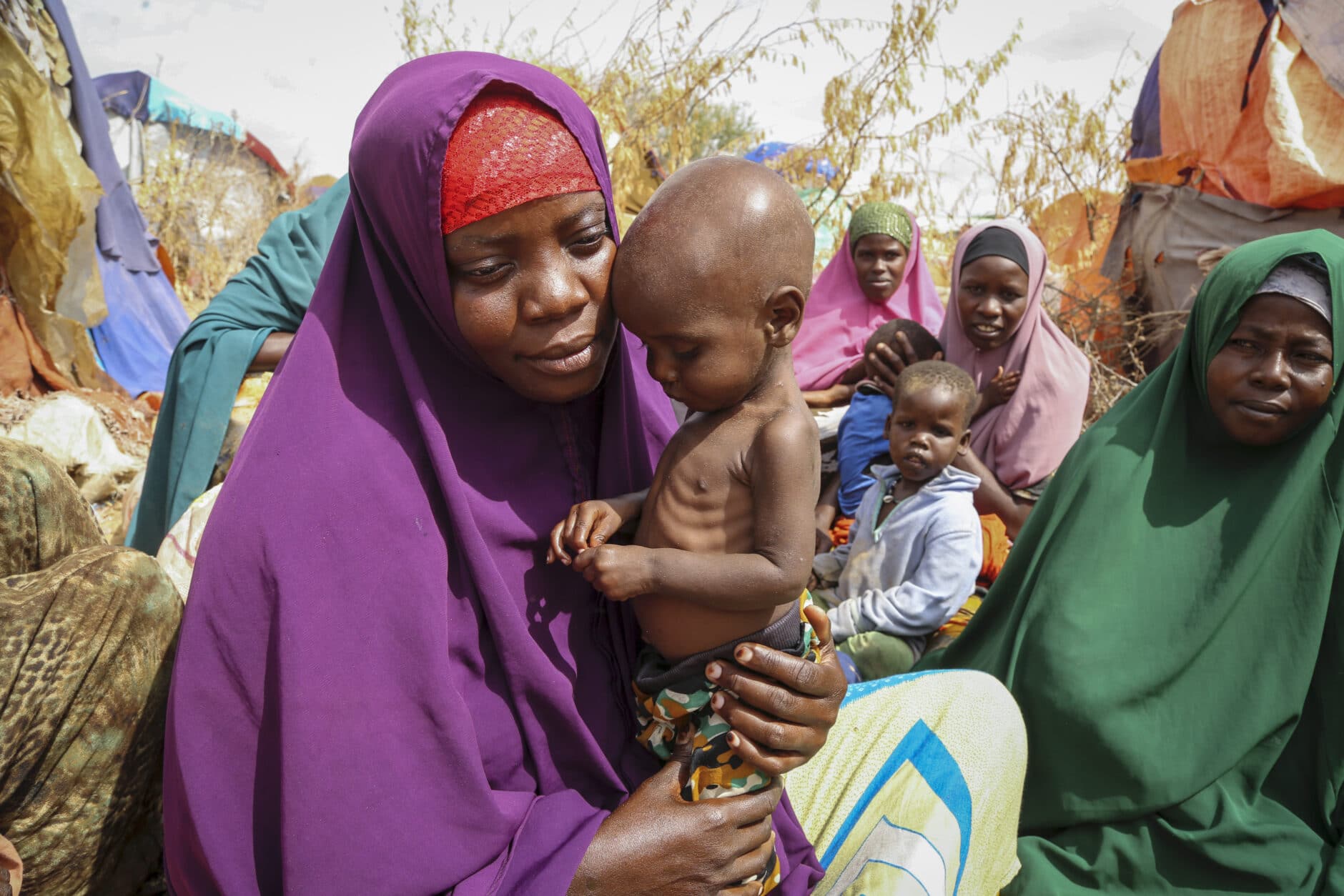
- Around 6.5 million people face crisis-level hunger, while 1.8 million children risk acute malnutrition.
- Aid cuts are limiting the response as malnutrition cases surge and millions remain vulnerable.
Funding for programmes treating acute malnutrition in parts of the East African country has fallen by more than 80% this year, Médecins Sans Frontières (MSF) said on Tuesday, even as the number of severely malnourished children arriving at treatment centres rises sharply.
The United States, previously one of the biggest funders of the response, has provided no money for the programme this year after contributing about $70 million in 2025, Reuters reported, citing MSF. Other Western donors have also reduced support.
The funding collapse comes at an especially dangerous moment for Somalia.
Around 6.5 million people were projected to face crisis levels of hunger or worse this year, while more than 1.8 million children under five are expected to suffer acute malnutrition. Almost half a million could become severely malnourished, according to an assessment released by Somalia’s government and United Nations agencies in February.
DON'T MISS THIS:A humanitarian crisis is brewing in the Horn of Africa as 22 million people face severe hunger in Ethiopia, Somalia, etc.
FAO’s latest Somalia emergency data put the number of acutely malnourished children at about 1.88 million, including 493,000 facing severe acute malnutrition. About 3.4 million people are internally displaced.
From $2.2 billion to about $300 million
Perhaps the starkest comparison is with Somalia’s previous hunger emergency.
During the severe drought of 2022, when Somalia came perilously close to famine, international donors eventually mobilised roughly $2.2 billion for the humanitarian response, according to figures cited by Reuters.
Only about $300 million is currently available this year. UN financial tracking data reinforce the scale of the squeeze. As of early August, only around $289 million in humanitarian funding had been reported for Somalia in 2026.
The country’s Humanitarian Needs and Response Plan remained less than one-third funded, leaving more than 70% of its requirements unmet.
The contrast matters because international intervention was instrumental in preventing the 2022 drought from producing a formally declared famine.
This time, humanitarian agencies are confronting worsening conditions with substantially fewer resources.
DON'T MISS THIS:Half of Somalia’s young children face malnutrition as famine risk returns after 4 years
MSF said admissions for malnutrition-related conditions at facilities it supports have increased by more than 80% compared with last year, reaching roughly 22,000 so far in 2026.
The situation is particularly severe around Baidoa, a major centre for people displaced by drought and conflict in southwestern Somalia.
MSF said roughly half of children screened in displacement camps there were acutely malnourished, while about one in four were severely malnourished.
Somalia’s drought is destroying livelihoods
The latest crisis is being driven by more than funding cuts. Poor rainfall has again damaged crops, killed livestock and depleted water supplies across a country where millions depend on agriculture and pastoralism for their livelihoods.
FAO and other UN agencies warned in May that worsening drought and conflict were increasing the risk of famine in some areas. At the time, nearly 90% of people requiring humanitarian assistance were receiving little or no support, while the humanitarian response plan was only 15.2% funded.
The agricultural damage has broader economic consequences. Livestock is a major source of income, food and export earnings for Somalia, meaning drought can simultaneously destroy household wealth, reduce food availability and weaken rural purchasing power.
For pastoral families, losing animals can erase years of accumulated wealth. Crop failures also increase dependence on markets precisely when households have less money available to buy food.
Those pressures have been compounded by Somalia’s long-running conflict with al-Shabaab, which continues to disrupt farming, trade, transport and humanitarian access in parts of the country.
![More than 1.8 million children under five in Somalia are expected to suffer acute malnutrition in 2026, according to UN-backed assessments.[Gemini Generated Image]](https://ocdn.eu/pulscms/MDA_/3d81b5a8de5588b0f8dc541cac6c6b5d.png)
Aid cuts add another shock to Somalia’s economy
The retreat in foreign assistance is also being felt beyond emergency food programmes.
The World Bank said major donors’ reductions in humanitarian and security assistance contributed to external official grants falling by the equivalent of 4.2 percentage points of GDP, adding pressure to Somalia’s external accounts.
The current-account deficit was estimated to have widened to 9.6% of GDP in 2025 from 9.3% a year earlier.
DON'T MISS THIS: Half of Somalia’s young children face malnutrition as famine risk returns after 4 years
That creates a difficult backdrop for a country that has spent recent years trying to move beyond decades of economic isolation.
Somalia reached the completion point of the World Bank and IMF’s Heavily Indebted Poor Countries initiative in December 2023, unlocking about $4.5 billion in debt relief and reducing its external debt burden substantially.
The government has since pursued reforms under an IMF programme aimed at strengthening public finances and institutions and supporting economic growth. The World Bank says Somalia has continued to make progress on structural reforms despite climate shocks and a difficult security environment.
But the hunger emergency illustrates how vulnerable those gains remain to climate shocks, insecurity and changes in international financing.
More than half of Somalia’s population already lives below the national poverty line, with poverty particularly severe among nomadic communities whose livelihoods are highly exposed to drought.
Echoes of Somalia’s 2022 crisis
Somalia’s latest emergency inevitably recalls the drought that gripped the Horn of Africa between 2020 and 2023.
Several consecutive failed rainy seasons devastated livestock and crops and displaced huge numbers of people. Humanitarian agencies warned repeatedly in 2022 that famine was imminent in parts of Somalia.
Large-scale international assistance ultimately helped prevent the country from crossing the technical threshold for a famine declaration.
The present crisis is developing under markedly different financial conditions.
The World Food Programme warned earlier this year that it needed $95 million simply to maintain assistance for Somalia’s most food-insecure people between March and August, saying a lack of additional financing could force operations to stop.
The gap between rising humanitarian needs and falling international financing means Somalia may have less room this time to contain the crisis before conditions deteriorate further.
MSF’s warning therefore points to a wider problem than the closure or scaling back of individual nutrition programmes: one of Africa’s most aid-dependent humanitarian emergencies is worsening at precisely the moment donors are pulling back.