This Tiny Caribbean Island Near St Maarten Has the World’s Shortest Commercial Runway — and One of Its Most Remarkable Landings
The plane crosses the water from St. Maarten, the peaks of Saba rising sharply ahead. Green mountains fill the windows. Then a narrow strip of pavement appears on a rocky shelf above the Caribbean Sea, with cliffs at either end and very little land beyond it. A few seconds later, the wheels touch down at […] The post This Tiny Caribbean Island Near St Maarten Has the World’s Shortest Commercial Runway — and One of Its Most Remarkable Landings appeared first on Caribbean Journal.
 Black News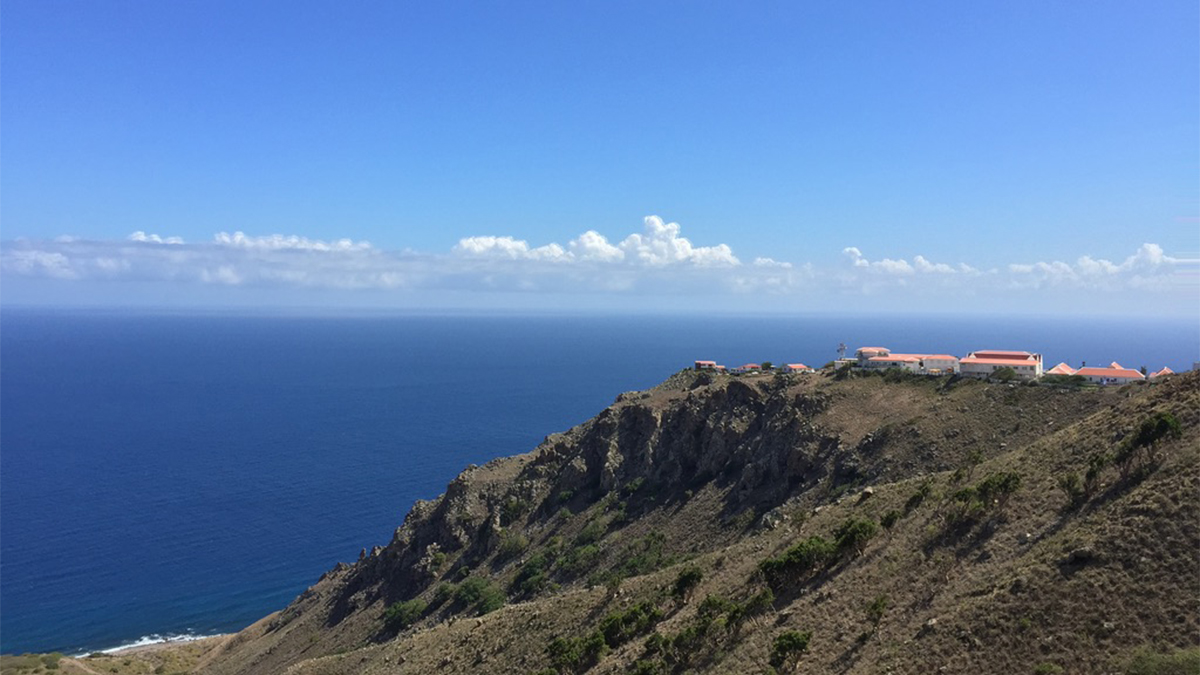
The plane crosses the water from St. Maarten, the peaks of Saba rising sharply ahead. Green mountains fill the windows. Then a narrow strip of pavement appears on a rocky shelf above the Caribbean Sea, with cliffs at either end and very little land beyond it.
A few seconds later, the wheels touch down at Juancho E. Yrausquin Airport.
The runway is just 400 meters long, or about 1,312 feet, making it widely regarded as the shortest runway in the world used for scheduled commercial flights. It is one of the Caribbean’s most famous aviation experiences, and it serves as the gateway to one of the region’s smallest and most distinctive islands.
Saba is a five-square-mile island in the Dutch Caribbean, a steep volcanic peak filled with hiking trails, red-roofed cottages and some of the region’s most celebrated diving. Reaching it by air takes only a few minutes from St. Maarten, but the arrival feels unlike anything else in the Caribbean. (And don’t worry — if the flight scares you, there’s a ferry option, too).
A Runway Between the Mountain and the Sea
Juancho E. Yrausquin Airport occupies Flat Point, one of the rare pieces of relatively level ground on an island dominated by steep terrain.
The paved runway stretches across the promontory on Saba’s northeastern side. Hills rise beside it. Rocky drops and the Caribbean Sea frame both ends. The unusual geography is part of what gives the landing its reputation, although commercial operations are handled by specially trained crews flying aircraft designed for short takeoffs and landings.
Large jets cannot use the airport. Scheduled flights typically rely on compact propeller aircraft such as the de Havilland Canada DHC-6 Twin Otter, whose short-field capabilities make it particularly suited to Saba. (St Maarten-based regional carrier Winair flies the route out of Princess Juliana International Airport).
The result is an arrival that feels far more dramatic than the brief flight would suggest. The aircraft approaches above the sea, lines up with the strip and descends toward a runway that appears almost impossibly small from the cabin.
Once the plane lands, the short length becomes even clearer. There is no long taxi toward a sprawling terminal. The aircraft slows, turns and pulls toward a compact airport building beside the runway.
How Saba Got an Airport
Building an airport here once seemed improbable.
Aviator Rémy de Haenen demonstrated that a landing was possible when he brought an aircraft onto Flat Point in February 1959, an event watched by much of Saba’s population. The demonstration helped build support for a permanent airport on the island. (De Haenen eventually made bigger fame on another island — St Barth – where the current airport is named for him).
Construction followed in the early 1960s, and the airport officially began operating in 1963. It was named for Juancho Yrausquin, an Aruban politician who supported the project and helped secure funding.
The airport transformed travel for an island where reaching the outside world had previously depended heavily on the sea. Regular flights eventually connected Saba with nearby St. Maarten, giving residents and visitors a much quicker route between the island and a major regional aviation hub.
The runway may be famous because of its dimensions, but its role extends well beyond novelty. The airport supports resident travel, tourism, cargo and essential connections for the island.
The Flight From St. Maarten
Most visitors reach Saba through Princess Juliana International Airport in St. Maarten.
From there, the flight is remarkably brief. The aircraft leaves the larger airport, crosses the waters of the northeastern Caribbean and approaches Saba’s steep volcanic outline. The journey typically takes around 15 minutes.
The cabin experience is very different from a typical regional flight. The aircraft is small, the island remains visible during much of the approach and the proximity to the terrain gives you an unusually direct sense of Saba’s geography.
The route has long been associated with Winair, the St. Maarten-based regional airline that has served Saba with Twin Otter aircraft for decades. The aircraft and crews are equipped for airports where conventional jets and larger regional planes cannot operate.
The airport itself has a small terminal with immigration, security and airline facilities. Everything is compact, and you can go from the aircraft to the island’s winding mountain roads in a matter of minutes.
The Island Beyond the Runway
The runway may introduce you to Saba, but the island’s appeal quickly expands beyond aviation.
Saba rises directly from the sea, with villages arranged along steep slopes and narrow mountain roads. Traditional cottages have white walls, green shutters and red roofs. The Bottom serves as the island’s administrative center, while Windwardside is home to many of its small hotels, restaurants and shops.
There are no sprawling beach resorts. Saba’s travel identity is built around hiking, diving, nature and small-scale hospitality.
The island’s most famous hike leads to Mount Scenery, the highest point in the Kingdom of the Netherlands. The trail climbs through tropical forest, with vegetation becoming denser and cooler as you gain elevation. Clouds frequently gather near the summit, creating an environment far removed from the dry, beach-oriented landscapes found elsewhere in the northeastern Caribbean.
Saba’s underwater terrain is equally important. The Saba Marine Park protects waters surrounding the island, where divers explore pinnacles, walls and volcanic formations populated by reef fish, turtles and other marine life.
Many excursions depart from Fort Bay, Saba’s small harbor, where dive boats head toward sites around the island’s volcanic slopes.
Where to Stay in Saba
Saba’s hotels reflect the island’s intimate character, with small properties that feel closely tied to the surrounding villages and mountain landscape.
In Windwardside, Juliana’s Hotel is one of the island’s best-known places to stay. The boutique property has cottage-style rooms, suites and apartments surrounded by tropical gardens, with broad views across the island and toward the sea.
The location makes it particularly useful if you want to explore Saba on foot. Restaurants, shops and several trailheads are nearby, while the hotel can help organize diving, hiking and transportation around the island.
The property is also home to Tropic’s Café, a relaxed restaurant and bar known for breakfast, cocktails and casual meals. The terrace has become a popular gathering place in Windwardside, particularly after a day on the trails or beneath the water.
Some accommodations have private terraces and kitchen facilities, making the hotel a good fit for longer stays. The atmosphere is warm and personal, and the small number of rooms keeps the experience connected to the island.
Saba also has a collection of guesthouses, cottages and small inns spread between Windwardside and The Bottom. Reservations can become limited during popular diving and hiking periods, making it worth planning early.
A Different Kind of Caribbean Trip
Saba requires a different approach from many Caribbean destinations.
You are coming for trails, dive boats, small restaurants and views from the island’s steep roads. Days can begin with a climb through cloud forest, continue with a dive along a volcanic wall and end over dinner in Windwardside.
The flight reinforces the island’s character. A trip that begins at one of the Caribbean’s busiest airports ends on a runway carved into one of its smallest islands.
Juancho E. Yrausquin Airport remains an engineering achievement, a practical lifeline and an attraction in its own right. Aviation enthusiasts travel to Saba specifically to experience it, while other visitors discover its significance only when the aircraft begins its descent.
The post This Tiny Caribbean Island Near St Maarten Has the World’s Shortest Commercial Runway — and One of Its Most Remarkable Landings appeared first on Caribbean Journal.