UNEB Warns Schools Over Fraudulent Candidate Registration as 2026 Exam Deadline Extended
The Executive Director of the Uganda National Examinations Board (UNEB), Daniel Odongo, has issued a stern warning to heads of government-aided schools against the illegal practice of registering privately sponsored candidates as government-sponsored learners. Speaking during a press briefing at the Uganda Media Centre on Thursday, Odongo described the practice as fraudulent and one that […] The post UNEB Warns Schools Over Fraudulent Candidate Registration as 2026 Exam Deadline Extended appeared first on Daily Star.
 Black News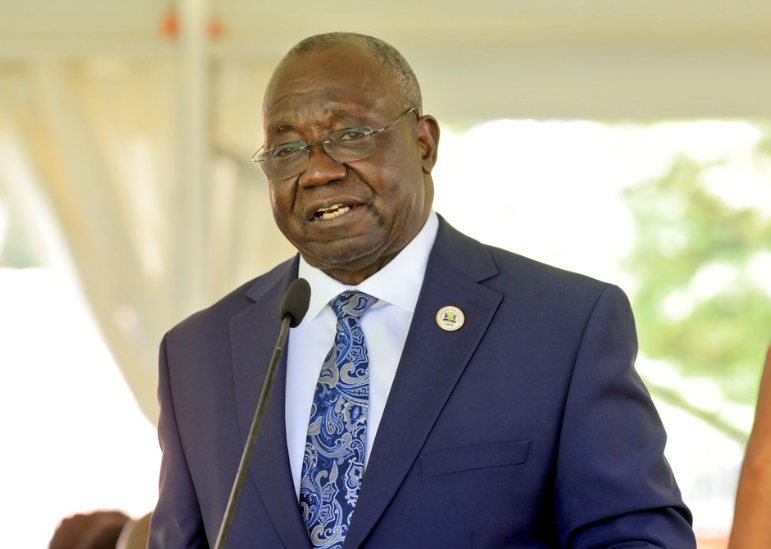
The Executive Director of the Uganda National Examinations Board (UNEB), Daniel Odongo, has issued a stern warning to heads of government-aided schools against the illegal practice of registering privately sponsored candidates as government-sponsored learners.
Speaking during a press briefing at the Uganda Media Centre on Thursday, Odongo described the practice as fraudulent and one that continues to cause financial loss to the government.
The warning comes as UNEB announced the extension of the normal registration period for candidates sitting the 2026 Primary Leaving Examination (PLE), Uganda Certificate of Education (UCE), and Uganda Advanced Certificate of Education (UACE).
“Heads of government-aided schools are put on notice not to register privately sponsored candidates as government-sponsored candidates. This is a fraudulent practice which causes financial loss to government,” Odongo said.
He warned that any head teacher, school director, or examination centre administrator found engaging in the malpractice will face severe penalties, including refunding twice the money defrauded and possible prosecution under anti-fraud laws.
“In addition, the examination centre number of the school shall be withdrawn,” he added.
Odongo noted that the malpractice is particularly common in primary schools, where administrators allegedly register learners from private schools under the Universal Primary Education (UPE) programme to benefit from government sponsorship.
In some cases, he said, school administrators collect money from parents while falsely declaring the same candidates as government-sponsored students.
“This is a fraudulent act, and the relevant laws on fraud will be applied,” he emphasized.
The UNEB boss revealed that the Board has intensified monitoring mechanisms to identify schools involved in examination fraud and irregular registration practices ahead of the 2026 examinations.
He also announced that the normal registration deadline has been extended from May 31 to June 30, 2026, to accommodate newly accredited examination centres and schools whose candidate capacities have recently been expanded.
The extension applies to both existing and newly accredited centres.
However, Odongo cautioned schools against delaying registration, warning of what he described as a “deadline syndrome,” where institutions wait until the last minute.
“We urge schools not to relax because of the extension. Centres should complete registration early to avoid last-minute congestion,” he said.
Despite the concern, he noted that the exercise has made significant progress. Out of the expected 880,000 PLE candidates, 673,992 had been registered by Thursday morning, representing 77 percent of the target.
For UCE, 299,483 candidates had been registered out of the expected 500,000, while UACE had recorded 109,718 registrations out of a projected 180,000.
Late registration will run from July 1 to July 31, 2026, attracting surcharge penalties. PLE candidates will pay a 100 percent surcharge, while UCE and UACE candidates will incur a 50 percent surcharge.
Odongo clarified that the government will continue to pay registration fees for candidates under the UPE, Universal Secondary Education (USE), and Universal Post O-Level Education and Training (UPOLET) programmes.
Privately sponsored candidates will pay Shs34,000 for PLE, Shs164,000 for UCE, and Shs186,000 for UACE.
He further warned schools against charging unauthorized fees and labeling them as “UNEB fees,” noting that this is an offence under the UNEB Act.
Individuals found guilty risk fines, imprisonment, or both.
Odongo also cautioned against the misappropriation of registration fees, revealing that UNEB has previously encountered cases where school administrators collected money from parents but failed to register candidates.
“Quite often we discover during examinations that some students were not registered despite paying fees, and the responsible administrators had disappeared,” he said.
He urged parents and guardians to remain vigilant and confirm that candidates are duly registered.
To enhance transparency, UNEB will require all examination centres to display candidates’ registers on school noticeboards at least 60 days before the start of examinations.
Parents and candidates are encouraged to verify details such as names, dates of birth, gender, photographs, and subject combinations before registration closes.
“We have had cases where candidates are registered with incorrect gender or mismatched photographs, which creates complications on result slips and certificates,” Odongo explained.
The UNEB boss also banned the use of erasable pens during examinations, citing risks of malpractice and fading ink.
“We have seen cases where answers fade before marking or candidates alter responses. Erasable pens are therefore prohibited,” he said.
Odongo further advised schools admitting learners with foreign qualifications to ensure their results are equated by UNEB before registration. Verified candidates will be issued unique codes to facilitate electronic registration.
He also reminded schools implementing the Competency-Based Curriculum (CBC) that Continuous Assessment (CA) scores and project work remain mandatory for UCE certification.
Candidates without Senior Three CA scores or project results will not qualify for certification, even if they sit the examinations.
As UNEB prepares for the 2026 examination cycle, Odongo reaffirmed the Board’s commitment to ensuring credibility, fairness, and integrity in Uganda’s national assessment system.
The post UNEB Warns Schools Over Fraudulent Candidate Registration as 2026 Exam Deadline Extended appeared first on Daily Star.