What Derby parties can teach Maryland about the Preakness
Governor Wes Moore's decision to secure ownership of the Preakness Stakes and Black-Eyed Susan Day intellectual property is a strategic move to build a celebration that elevates Baltimore, drives commerce, and creates economic opportunities for the state. The post What Derby parties can teach Maryland about the Preakness appeared first on AFRO American Newspapers.
 Black News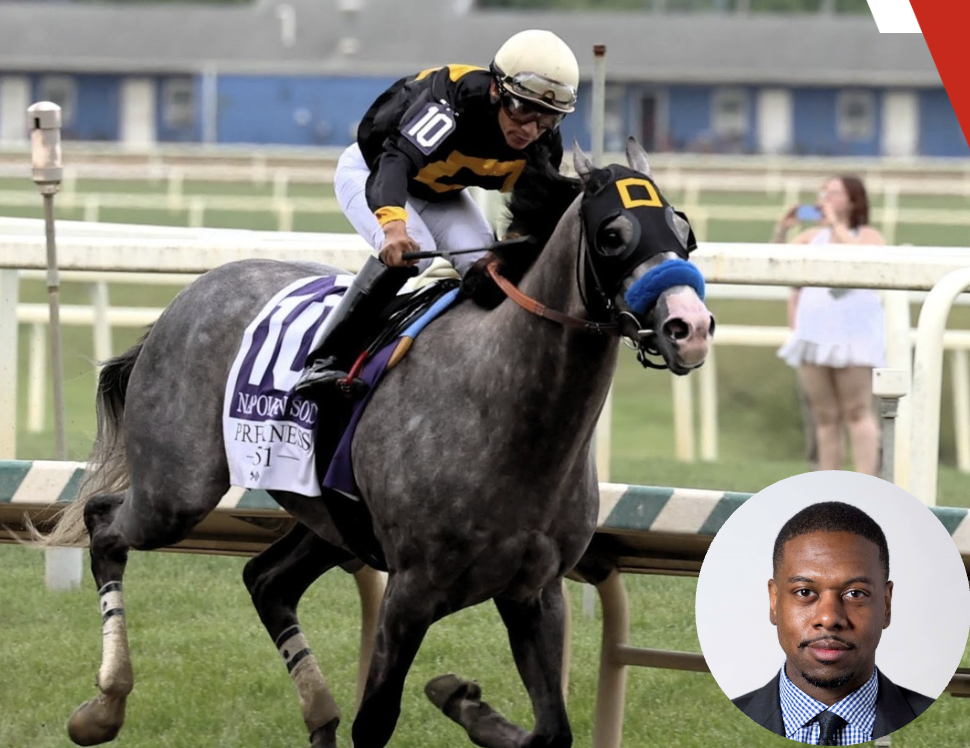

By Mark Anthony Thomas
Every spring, Black fraternities and sororities across the country host Kentucky Derby parties.
The race is in Louisville, but the celebration somehow travels everywhere. Chapters and alumni groups build scholarship fundraisers, brunches, day parties and networking events around a race many guests will never attend in person. People dress for it and plan around it, raise money through it and build traditions around it.
As a member of Alpha Phi Alpha Fraternity, Inc. (Alpha), I have watched this for years and been invited to my fair share of events. The Derby has become more than a horse race. It is a cultural brand, one that gives people a reason to gather, be seen and be part of something with style and a little swagger.
The irony is hard to miss. Alpha is nationally headquartered in Baltimore. Maryland is home to one of the three Triple Crown races. Yet much of the Black civic and social energy around horse racing has been organized around Kentucky’s race, not Maryland’s.

If the Derby can become a national reason for our frat brothers and sorors, alumni groups and civic organizations to gather, reconnect and celebrate culture, Maryland has no business treating the Preakness as just a single Saturday. It should be building a celebration with its own cultural gravity, one that elevates Baltimore, drives commerce across the state and, if we are ambitious enough, travels across the country.
That is why Governor Wes Moore’s decision to secure ownership of the intellectual property associated with the Preakness Stakes and Black-Eyed Susan Day deserves to be understood as more than a transaction. Throughout this process, Governor Moore’s thoughtful due diligence, together with the leadership of First Lady Dawn Moore, reflected a belief that the Preakness should be viewed as one of Maryland’s most important cultural and economic assets. Both have been consistent advocates for a more ambitious future for the event and the opportunities it can create across the state.
Maryland is acquiring the Preakness intellectual property because ownership is smarter —and over the long run, cheaper—than renting one of the state’s signature brands. The financial case matters. The larger point is control. If taxpayers are helping build the future of Pimlico and Maryland racing, the value created should flow back to Maryland.
The Preakness is not a standalone event. It sits inside an equine industry that generates nearly $3 billion in economic impact, supports more than 28,000 jobs and produces more than $1 billion in annual wages across Maryland. It is also arriving at a moment when GBC’s analysis shows the Baltimore Region is seeing more than $2 billion in investment tied to sports, arts, entertainment and cultural destinations. Those investments should reinforce one another rather than operate in isolation.
For decades, economic development was framed mostly through buildings, roads, ports, corporate relocations and public infrastructure. Those things are still important. Maryland has a globally significant port, major universities, federal assets, medical institutions and a growing innovation economy. But places are not thriving on infrastructure alone. They are thriving because people want to experience them.
In Baltimore, culture has always been more than entertainment. It is part of the city’s economy, identity and national influence. Churches, festivals, campuses, restaurants, music, sports and entrepreneurship shape how communities gather and how Baltimore carries its story beyond Maryland with moments like AFRAM’s 50th anniversary standing as powerful examples of how culture anchors civic life and draws regional and national attention.
The Baltimore Region’s 10-year economic opportunity plan, All In | 2035, recognizes creativity and culture as central to the region’s future. That is not a courtesy nod to culture. It is an economic argument. Talent, investment, visitors and entrepreneurs are drawn to identity, experience and authenticity.
Other places have built national economic moments this way. Art Basel, South by Southwest, Sundance and Essence Festival all began with a core identity and grew because leaders connected culture, commerce, hospitality and storytelling. Maryland does not need to copy any of them. The point is to build something that feels true to us.
A broader Preakness celebration should give people from the D.C., Maryland and Virginia area, the Mid-Atlantic and across the country a reason to arrive earlier, stay longer, spend more and experience the best of Maryland. Someone who comes for the race should leave with a fuller understanding of Baltimore’s restaurants and music, Black-owned businesses, creative entrepreneurs, neighborhoods, institutions, farms and waterfronts. That kind of programming would not weaken the Preakness. It would make it more valuable and help transform it into something larger than race day: an annual moment for Maryland that draws people here, resonates beyond those who attend and feels unmistakably rooted in our culture.
The immediate work is already underway. The Maryland Jockey Club, under new leadership, will help shape the near-term opportunities around racing, hospitality and Preakness week. GBC’s focus will be on the longer arc, aligning this moment with the region’s cultural economy and creating more room for businesses, artists, institutions, neighborhoods and communities to benefit.
That work should connect visitor growth with hotel and restaurant activity, sponsorship with local programming, national media with local storytelling, and public investment with measurable return. That is how a race becomes a larger economic engine.
For Black communities, this is also about ownership and benefit. Black culture has powered American music, fashion, food, sports and entertainment for generations, yet too often its cultural value is celebrated long after its economic value has already flowed elsewhere. As the Preakness grows, that opportunity should extend to the businesses, churches, artists, restaurants, promoters, venues and neighborhood entrepreneurs who already shape Maryland’s cultural power and know how to bring people together.
This applies in Park Heights, where Pimlico’s redevelopment will be felt most directly. It applies across Baltimore and across Maryland because a stronger cultural and tourism economy creates opportunity throughout the state while strengthening the broader equine industry.
The Preakness will always be part of Maryland’s history. With the right ambition, it can become a larger celebration of Maryland’s future and, one day, a reason for communities across America to gather around our race.
Derby parties showed us what is possible. Maryland now has the asset, the culture and the opportunity to build something of its own.
The opinions expressed in this commentary are those of the writer and not necessarily those of the AFRO.
The post What Derby parties can teach Maryland about the Preakness appeared first on AFRO American Newspapers.

:focal(0x0:2400x1445)/static.texastribune.org/media/files/db22dd3f1d63ab22cfeb1a6121dc3153/0618 Fort Worth NWS DR TT 01.JPG?#)