Why Trump Is Blinking And Hesitating On Iran
By Sophia Gonzalez Photos: Wikimedia Commons Donald Trump did not suddenly become a dove. He did not wake up one morning converted to the wisdom of Quincy Adams, George Kennan, or the old conservative suspicion of crusading wars. When he paused another planned attack on Iran, the public explanation was diplomatic: Qatar, Saudi Arabia, and the United Arab Emirates had urged restraint; Pakistan had carried a proposal; talks had become serious enough to justify delay. That explanation is true as far as it goes. It is not enough. The deeper story is that Washington’s military calculus has changed. The old assumption—that Iran could be bombed, contained, humiliated, and then brought quietly to the table—has met the hard surface of reality. American power remains immense. But immensity is not the same as usability. A superpower can destroy a great deal and still fail to produce a political result worth the price. That is what the Iran crisis has exposed. Trump’s hesitation was not merely a bow to Arab pressure. It was an admission, however reluctant, that another round of strikes might not restore deterrence at all. It might accelerate the very erosion of deterrence that the war was supposed to prevent. The Pentagon’s problem is no longer simply target selection. It is predictability, exhaustion, and escalation. Open-source military tracking has shown how much of America’s naval, bomber, tanker, and missile-defense capacity has been drawn into Operation Epic Fury. Defense assessments have also raised questions about depleted U.S. interceptor stocks and the burden Washington has carried in defending Israel from Iranian missile fire. These are not the markers of a cheap war. They are the markers of a war consuming the machinery needed for other theaters for those who subscribe to “peace through strength,” even though nonviolent civil society can also carry deterrent power–or the Finnish deterrence of a combination of some military and a committed citizenry to noncoöperation with any invaders, an approach they term the “indigestible hedgehog.” Iran, meanwhile, has not responded like the brittle adversary imagined in Washington seminar rooms. Its commanders have warned against renewed aggression, its forces remain on alert, and its defensive posture appears more adapted than at the beginning of the conflict. The relevant point is not that Iran can defeat the United States in a conventional contest. It cannot. The point is that Iran does not need to defeat America outright to make the next strike politically and strategically self-defeating. That distinction is often lost in Washington. A bombing campaign can destroy facilities. It can kill commanders. It can announce resolve on television. But it cannot, by itself, compel surrender from a nation that believes survival is at stake. Even analysts skeptical of Tehran have noted that suppressing air defenses and striking leaders does not answer the central political question: how does military punishment become a durable settlement? The answer, so far, is that it does not. Instead, the war has widened the bill. It has shaken energy markets and trade through the Strait of Hormuz. It has forced NATO discussions about what happens if the waterway remains unstable. It has driven gasoline anxieties into American households. It has placed U.S. troops, ships, and bases under constant threat. This is not strategic dominance. It is strategic entanglement. For conservatives, the lesson should be obvious. A foreign policy worthy of the name must begin with American interests, not with the emotional needs of allies, donors, think-tank panels, or television generals. The American Conservative has long argued that America First must mean judging policy by America’s concrete national interest, not by abstractions or inherited commitments. By that standard, the Iran war is failing. It is failing because the president has not explained the end state. It is failing because most Americans have disapproved of the military action. It is failing because two-thirds have favored ending U.S. involvement quickly, even without achieving every stated goal. And it is failing because Congress is now struggling to reassert its constitutional role after another president treated war powers as a personal instrument. Trump’s defenders will say he paused because he is a dealmaker. Perhaps. But a deal reached after escalation is not proof that escalation was wise. It may be proof that escalation created dangers too large to ignore. If the administration now accepts diplomacy, sanctions relief, maritime de-escalation, and nuclear monitoring as the real path forward, then the obvious question is why American forces had to bleed readiness, spend scarce munitions, and risk a regional firestorm to arrive there. The hawks will call restraint weakness. They always do. They called Iraq winnable, Afghanistan sustainable, Libya humanitarian, Vietnam an easy victory, and Sy
 Black News
By Sophia Gonzalez
Photos: Wikimedia Commons
Donald Trump did not suddenly become a dove. He did not wake up one morning converted to the wisdom of Quincy Adams, George Kennan, or the old conservative suspicion of crusading wars. When he paused another planned attack on Iran, the public explanation was diplomatic: Qatar, Saudi Arabia, and the United Arab Emirates had urged restraint; Pakistan had carried a proposal; talks had become serious enough to justify delay. That explanation is true as far as it goes. It is not enough.

The deeper story is that Washington’s military calculus has changed. The old assumption—that Iran could be bombed, contained, humiliated, and then brought quietly to the table—has met the hard surface of reality. American power remains immense. But immensity is not the same as usability. A superpower can destroy a great deal and still fail to produce a political result worth the price.
That is what the Iran crisis has exposed. Trump’s hesitation was not merely a bow to Arab pressure. It was an admission, however reluctant, that another round of strikes might not restore deterrence at all. It might accelerate the very erosion of deterrence that the war was supposed to prevent.
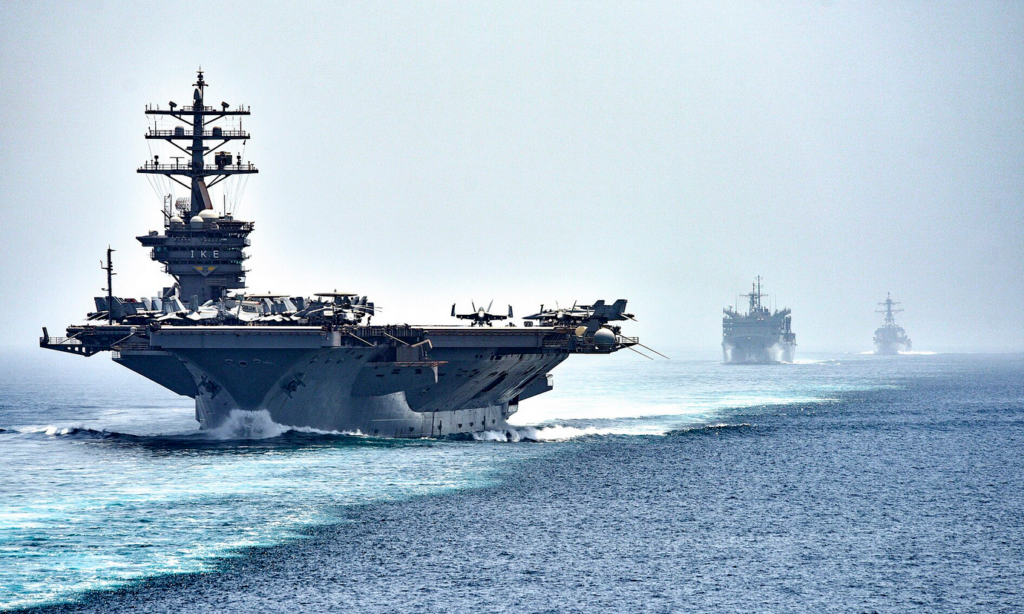
The Pentagon’s problem is no longer simply target selection. It is predictability, exhaustion, and escalation. Open-source military tracking has shown how much of America’s naval, bomber, tanker, and missile-defense capacity has been drawn into Operation Epic Fury. Defense assessments have also raised questions about depleted U.S. interceptor stocks and the burden Washington has carried in defending Israel from Iranian missile fire. These are not the markers of a cheap war. They are the markers of a war consuming the machinery needed for other theaters for those who subscribe to “peace through strength,” even though nonviolent civil society can also carry deterrent power–or the Finnish deterrence of a combination of some military and a committed citizenry to noncoöperation with any invaders, an approach they term the “indigestible hedgehog.”
Iran, meanwhile, has not responded like the brittle adversary imagined in Washington seminar rooms. Its commanders have warned against renewed aggression, its forces remain on alert, and its defensive posture appears more adapted than at the beginning of the conflict. The relevant point is not that Iran can defeat the United States in a conventional contest. It cannot. The point is that Iran does not need to defeat America outright to make the next strike politically and strategically self-defeating.
That distinction is often lost in Washington. A bombing campaign can destroy facilities. It can kill commanders. It can announce resolve on television. But it cannot, by itself, compel surrender from a nation that believes survival is at stake. Even analysts skeptical of Tehran have noted that suppressing air defenses and striking leaders does not answer the central political question: how does military punishment become a durable settlement?
The answer, so far, is that it does not. Instead, the war has widened the bill. It has shaken energy markets and trade through the Strait of Hormuz. It has forced NATO discussions about what happens if the waterway remains unstable. It has driven gasoline anxieties into American households. It has placed U.S. troops, ships, and bases under constant threat. This is not strategic dominance. It is strategic entanglement.
For conservatives, the lesson should be obvious. A foreign policy worthy of the name must begin with American interests, not with the emotional needs of allies, donors, think-tank panels, or television generals. The American Conservative has long argued that America First must mean judging policy by America’s concrete national interest, not by abstractions or inherited commitments. By that standard, the Iran war is failing.
It is failing because the president has not explained the end state. It is failing because most Americans have disapproved of the military action. It is failing because two-thirds have favored ending U.S. involvement quickly, even without achieving every stated goal. And it is failing because Congress is now struggling to reassert its constitutional role after another president treated war powers as a personal instrument.
Trump’s defenders will say he paused because he is a dealmaker. Perhaps. But a deal reached after escalation is not proof that escalation was wise. It may be proof that escalation created dangers too large to ignore. If the administration now accepts diplomacy, sanctions relief, maritime de-escalation, and nuclear monitoring as the real path forward, then the obvious question is why American forces had to bleed readiness, spend scarce munitions, and risk a regional firestorm to arrive there.
The hawks will call restraint weakness. They always do. They called Iraq winnable, Afghanistan sustainable, Libya humanitarian, Vietnam an easy victory, and Syria manageable. Their record should disqualify them from lecturing anyone about strength. Real strength is not the refusal to reconsider a bad course. Real strength is the ability to stop before pride turns a mistake into a catastrophe.
Iran has not been made more submissive by pressure. It has been made harder, more prepared, and more determined. That may offend Washington’s sense of hierarchy, but it is the strategic reality. Another attack would not simply test Iran. It would test America’s ability to absorb a longer war, higher energy prices, weaker readiness in Asia, greater danger to U.S. forces, and deeper public distrust at home.
Trump stepped back because the next step looked less like victory than attrition. He should keep stepping back. The United States does not need another demonstration of airpower. It needs an exit from the logic that made airpower seem like a substitute for policy. Diplomacy is not a gift to Tehran. It is a rescue operation for Washington’s own overstretched strategy.
A conservative president should not ask how to bomb Iran again. He should ask why America is still paying for the fantasy that bombing can make the Middle East obey.
Sophia Gonzalez, syndicated by PeaceVoice, is an American political analyst focusing on U.S. strategy, Middle East affairs, and global security. She writes to challenge interventionism and promote diplomacy.