Horst Festival is a blueprint for a creative, collective future
Hymn — Highlighted by an engrossing performance directed by Fallon Mayanja, the 2026 edition was a showcase of ASIAT Park’s ever-evolving space as an incubator for art, music and creativity.
 Black News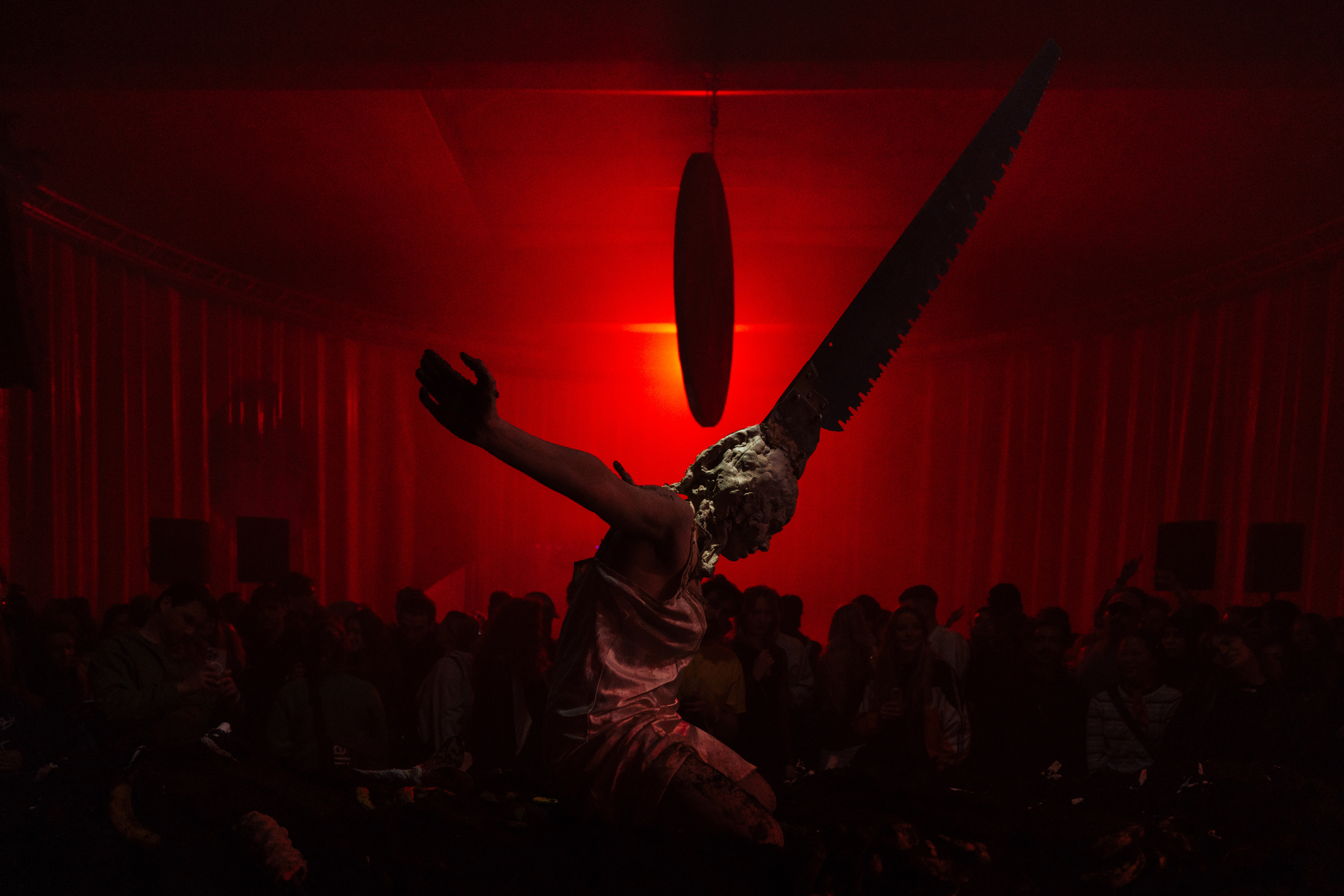
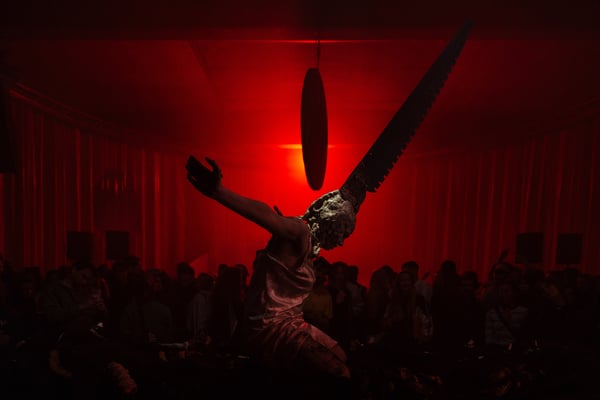
Hymn — Highlighted by an engrossing performance directed by Fallon Mayanja, the 2026 edition was a showcase of ASIAT Park’s ever-evolving space as an incubator for art, music and creativity.
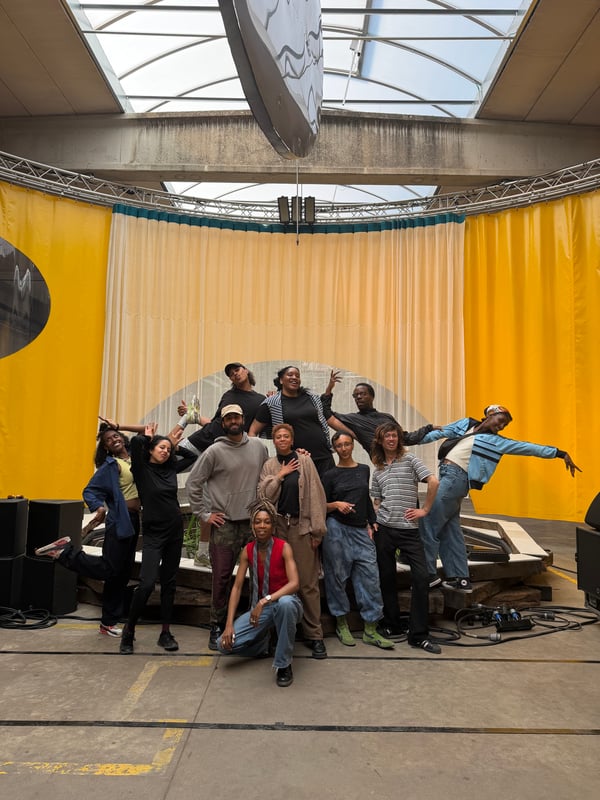
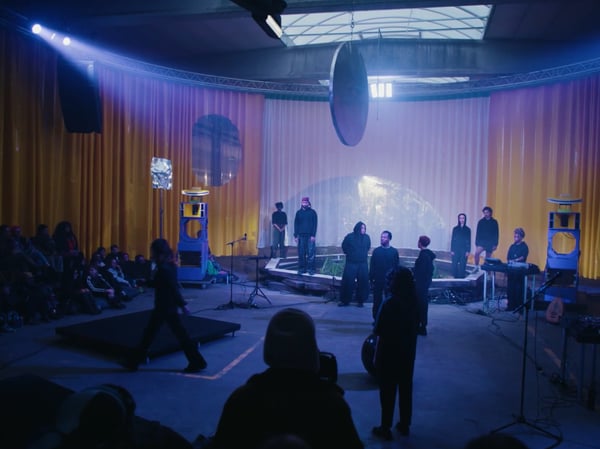
It’s the final night of Belgium’s Horst Festival, and I’m holding a confronting amount of eye contact with a performer. I’m in the Rain Room, which draped with yellow curtains and decorated by indoor plants is usually a relaxing space for talks and live performances across the festival. But as French sound artist Fallon Mayanja’s Detroit techno-rooted electronic soundtrack blends into scatty experimental ambient sonics, their assembled crew of fully People of Colour performance artists stand statuesquely still. Until then, they have danced, moved and chanted, building up to a collective dancefloor climax, before a reset sees some of them hold their gaze towards the crowd in a sobering bookmark from the carefree, loose escapism of the weekend.
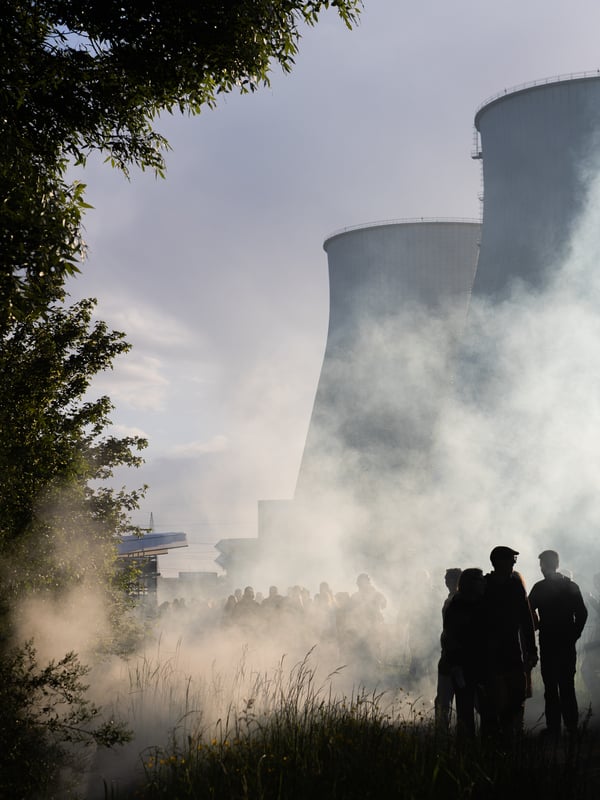
Titled ‘Hymn’, the piece is directed by Fallon and created in partnership with The Constant Now – an Antwerp nonprofit that empowers artists of colour – exploring Afro-diasporic rituals, spirituality, poetry and dance in a fluid, immersive performance. With the audience on its feet at its conclusion, the hour-long performance is a showcase of the multi-layered creativity found across Horst’s ASIAT Park site. Set in Vilvoorde, just outside of Brussels, in a formerly abandoned military base turned into a year-round music, culture, arts and sporting hub – Horst is much more than an in-and-out weekend festival.
After relocating from its first location of Kasteel van Horst in 2019, the festival team were granted custody of the site by the City of Vilvoorde. Hosting creative businesses and community projects while building permanent stage structures, site-specific art installations that are open to see through summer, a skatepark, and opening a nightclub that hosts 24-hour parties, ASIAT is a fluid, ever-evolving axis of community that in full festival flow projects as an almost utopic, creative blueprint for society and shared space.
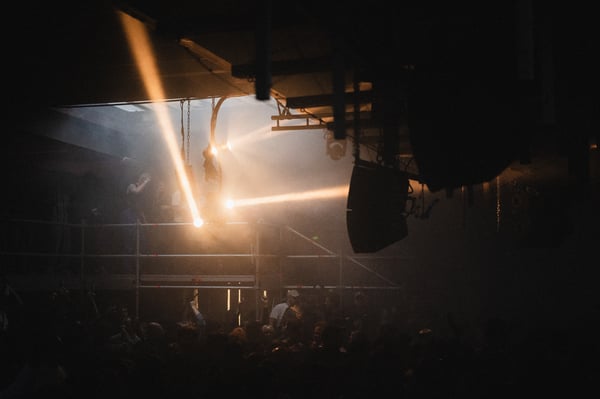
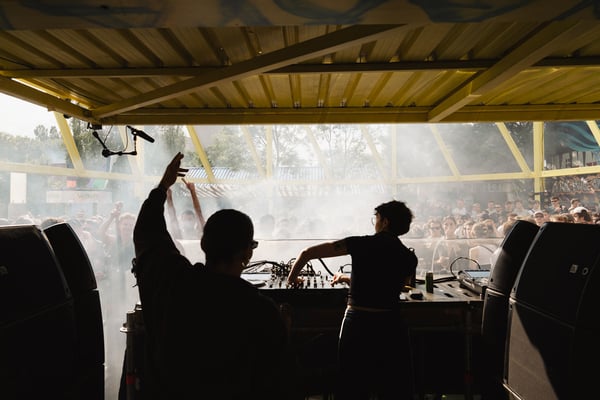
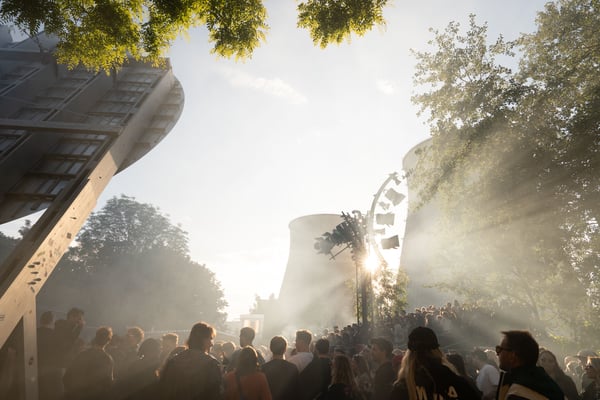
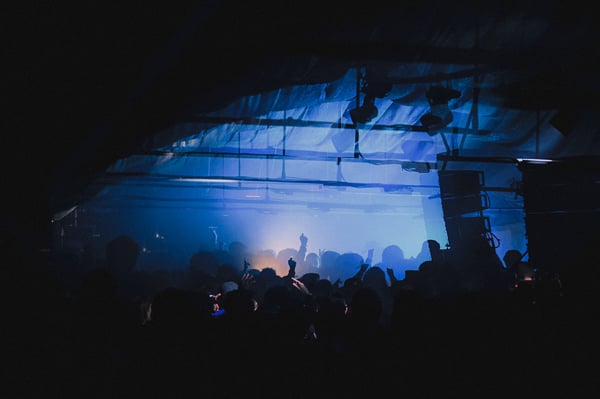
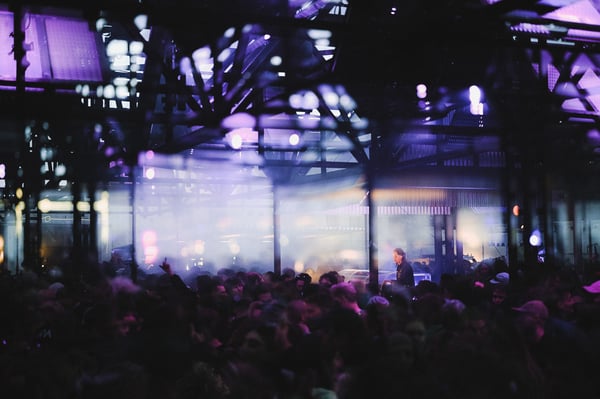
“The festival is a temporary project, but the idea is that we build a cultural ecosystem on site all year around, so we invest in pavilions and projects, and have a dialogue with audiences other than just the festival,” says Louise Goegebeur, Horst’s artistic director. “ASIAT Park is also an art park, with living works that come and go, iterations on pavilions, and both short-term and long-term programming – we want to give space to the narratives of creatives, whether it’s a performance piece or a sculpture, or a skatepark.”
While the weekend revolves around electronic music – with particular weekend highlights coming from homegrown Brussels-based artists including AliA, Ben Kamal and DJ Rino – the emphasis on arts makes for a particular differentiating point from other music festivals, with the 2026 slate placing a particular focus on the performance pieces. Beyond ‘Hymn’, there’s the acrobatic fire and mud play of ‘Apolemia’, a secret ‘Picon Playground’ ball pit stage hidden inside a fake portaloo, and the delightfully bonkers cabaret ‘Anal Pompidou’.
And just as important as it is to share art and space, Horst also puts focus on sharing knowledge. In the weeks running up to the festival’s kickoff, Horst hosts Ateliers, or workshops, where budding performers, stage designers, producers, sound technicians and more are given hands-on training and experience in their fields. Fallon’s performance was forged through days spent with their performers and in many ways, ‘Hymn’ sees all of Horst’s different strands – music, art, performance and its social mission defined by creativity – converge in a single performance. We caught up with Fallon afterwards to find out more about the piece, their methodologies and their work as a champion for artists of colour.
Can you explain who you are and the work that you do?
I’m a sound artist, a performer and composer. What I mostly do departs from sound, even when I direct [performance] pieces such as ‘Hymn’. I’m interested in how sound is used as a tool for social transformation, and within this work I have done research on listening practices and using live music experience in order to cultivate them. I mostly start with Queer and Afro-diasporic storytelling, departing from my own history, stories, spirits and connecting with people from my communities to ask questions and push further discussions and understanding on what it is to be who we are in society.
How did growing up in Paris influence your art and approach?
I think the first thing I’d say, is that with the age and experience that I have now, is that travelling has made me understand that Paris is a really diverse city. I grew up in the suburbs, and they are even more diverse [than the centre]. So I grew up surrounded by a lot of Black and Brown people and community. Travelling and exploring the work that I do made it clear that is something that is really present in Paris but not necessarily many cities in Europe.
So that was the start of my desire to understand like, ‘How can we create constellations in this Afro-European context? Within art spaces, how can we create grounds of care and support and understanding in relation to the public?’ This is how I started creating methodologies of work that you see in ‘Hymn’, like reaching for People of Colour, working with POC organisations, and not only thinking about the piece and the art itself, but everything around it, because as a Person of Colour, I believe that everything is intertwined.
I really enjoyed the performance, and you had the crowd on their feet applauding at the end of ‘Hymn’ – how did it come about in the first place?
I’ve been making work based around Julius Eastman, who was this Black Queer composer, and ‘Hymn’ is an adaptation of one of his compositions. So this was the starting point – his legacy as not only a composer but also a human being, and I think I’m strongly connected to what he was trying to achieve. Then a few months ago, Magali from The Constant Now came to me saying that they had been invited by Horst [to curate a performance]. She didn’t know me, and had just heard a lot about me and my work, and she came saying let’s meet, and that’s how I got connected with Horst this year.

“I love having club moments in my performances, because as a Black queer person it’s a space that is so precious.”
How did you build your process of working with other People of Colour, and why is it an important part of what you do?
When I first started being invited to other cities and spaces in Europe [to share my work], I always questioned what it is to share a story and then leave. I needed another point of connection to who I was and what I was trying to do, so I started inviting an artist from one of my communities in the cities or spaces that were inviting me. I got to meet amazing people in all cities that I performed in – really creative and beautiful souls, and then we were also not appearing as a singular voice, which is important for me in this kind of representation; that we fall into common voices, and the voices of many. And in a really selfish way, it was just amazing for me to go around Europe and meet People of Colour and Queer people, which helped me be who I am, and it became a methodology and tool to go further.
How did the creative process for ‘Hymn’ develop?
So I met with Magali in September, and I told her my idea of doing this adaptation of Julius Eastman’s [1981 composition] ‘The Holy Presence of Joan d’Arc’. In the piece, Eastman has 10 shells, so I wanted to have 10 bodies that become a living instrument. So from there I began developing the story more and the context, and after a conversation between Magali and Louise from Horst, we decided that we could use the Atelier as a kind of residency space. We did an open call for performers, and I worked with my assistant director for this piece Alen Nsambu, who I met five years ago in Copenhagen looking for an artist of colour to work with me. We had three days together, then the eight other performers arrived and we had two-and-a-half days with them to create the piece.
What was the Atelier like?
It was amazing. I have to say the project was amazing from beginning to end. The performers didn’t know each other when they arrived, but honestly from the end of day one other people thought that we all knew each other and we were a company. It was so fluid and the energy was there – they were all super eager to both learn and share with the group, and to create. Some were more comfortable using body movements, some voice, so it was nice because it was a place where everyone could share their tools – I asked everyone to come with an exercise for the beginning of the day and the end of the day. So there were exercises on training your voice, body exercises, and it was a great way to connect and become comfortable with each other.
Can I give my interpretation of the performance? In the first half my take was it represents how suspicious and separated we are in daily life, but how we can come together and find community on dancefloors and other musical spaces.
It’s less about suspicion, but I like it. All the acts in the performance have what I like to call the ‘drifting’ and the ‘gathering’, and the singular and the communal – so it’s about existing individually within the collective. How can the collective support you? How can you navigate your own path? Then of course, there is the club part. I love having club moments in my performances, because as a Black queer person it’s a space that is so precious, and even in the Atelier it was one of the things that connected us instantly.
How much responsibility do festivals like Horst have to make sure arts from People of Colour are properly represented? And how do you make sure that the work actually makes an impact, and not just part of a diversity check box exercise?
I will start by saying we still have a long way to go. In terms of checking the diversity box, let’s be honest they are doing that, because they have chosen to work with a POC based organisation in The Constant Now, who is going to come to me because Magali wants to work with someone that is POC, and I work with POCs. But from there I’m going to knock on the door for everything, so I was challenging Horst like, “How do you host? What is it to be a host? What are you going to give us?” I don’t want just my face to be here and say that we’ve got three artists of colour. I’m asking about safe spaces, how they are sharing with us, food, and with Magali we worked on a lot to push them further.
And to be honest some things that we were asking where it seemed like we could have been asking for too much, in the end they gave it to us. So the desire is there to do better. One of these was that when we were performing, we knew we would be surrounded by a mostly white space, so we asked to have extra invitations so we could invite the people that we want. I think it’s still good to book Black people, but [we are asking], “How much are you paying these people? Are you offering for these people to come with their community? Who is educating the team?” Organisations have to stop thinking that because they book people of colour, the work is done.
Did you get to see much of the rest of the festival, and what did you make of it?
I want to spread love for [visual artist] Paul Maheke’s work, that I really liked. Paul talks a lot about spirits and ghosts, which is also something that is in ‘Hymn’, because it’s about summoning your own voices. But with Horst, I think it’s really nice that they have their focus and they push it – what it is to be a community, what it is to be together.
Follow Fallon Mayanja on Instagram.
Isaac Muk is Huck’s digital editor. Follow him on Bluesky.
Buy your copy of Huck 83 here.
Enjoyed this article? Follow Huck on Instagram for more from the cutting edge of sport, music and counterculture.
Support stories like this by becoming a member of Club Huck.