Word in Black Panel Examines Food Justice and Black Resilience
In the months since President Donald Trump signed the “One Big, Beautiful Bill Act,” more than 4 million people have lost the Supplemental Nutrition Assistance Program benefits that keep their families fed. The $187 billion cut is the largest ever, but the proposed budget for next year shows more cuts are being planned. The squeeze […] The post Word in Black Panel Examines Food Justice and Black Resilience appeared first on Word In Black.
 Black News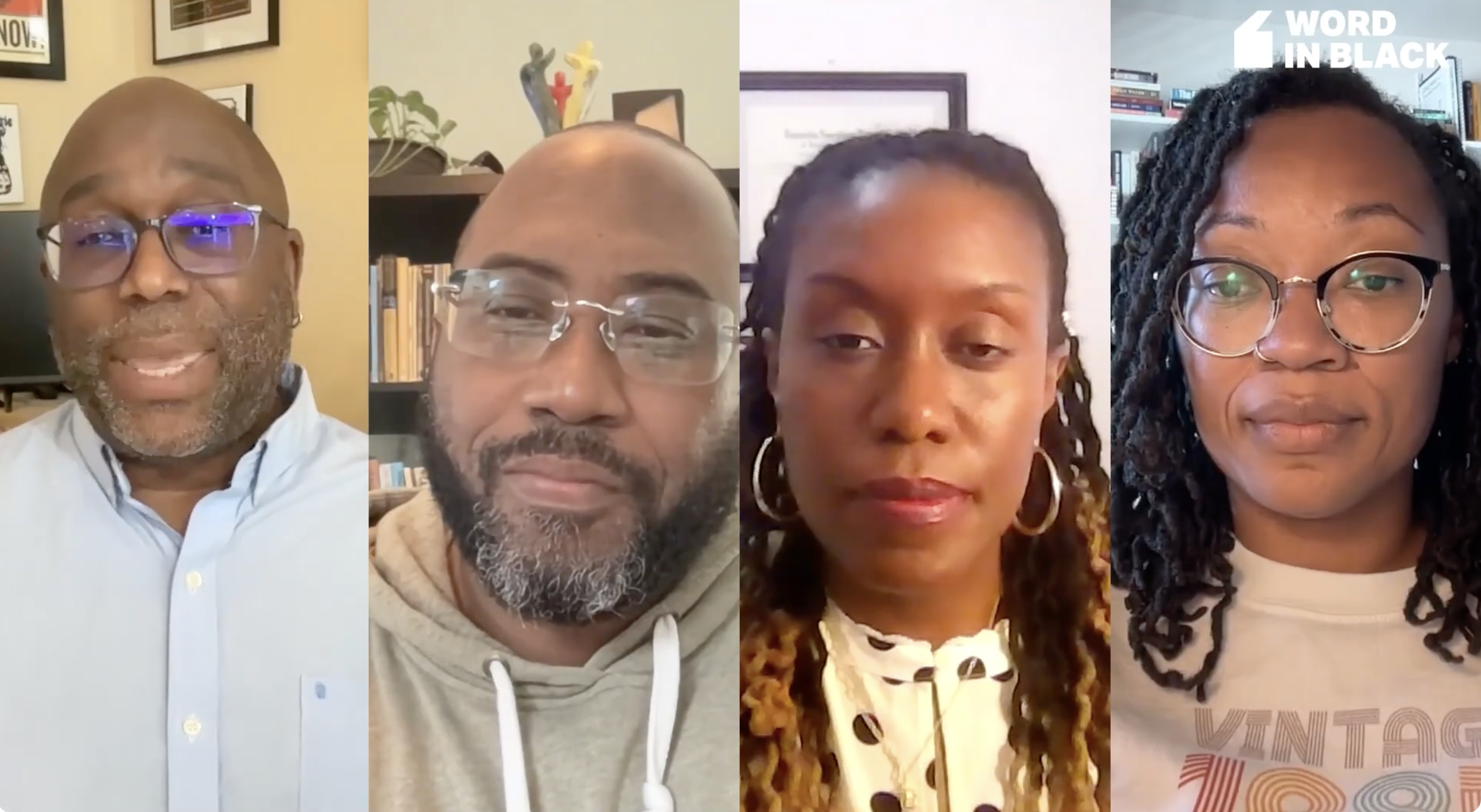

In the months since President Donald Trump signed the “One Big, Beautiful Bill Act,” more than 4 million people have lost the Supplemental Nutrition Assistance Program benefits that keep their families fed. The $187 billion cut is the largest ever, but the proposed budget for next year shows more cuts are being planned.
The squeeze on what are commonly called a “benefit” — but in truth is food support that keeps more than 10 million underpaid, unemployed, elderly, and disabled Americans alive — comes in several forms. The most significant, however, are expanded work requirements, restrictions on what recipients can buy, and benefits stripped from legal immigrants.
RELATED: Black Churches Transform Food Aid Into Food Justice
Hunger prevention advocates say Black Americans already have been disproportionately affected. They believe the situation will get worse before it gets better.
Joy and Survival
On May 13, Word in Black convened a panel of food policy experts, scholars, and faith-based organizers for a wide-ranging conversation on food access, health disparities, and the policies shaping what ends up on Black American’s plates.
Hosted by Joseph Williams, Word in Black’s head of content, and sponsored by the Knight Foundation, the discussion explored what Williams described as the two stories food carries in Black America: joy and survival.
The panel featured Rev. Dr. Heber Brown III, founder of the Black Church Food Security Network; Ty Jones Cox, vice president for food assistance at the noted research institute the Center on Budget and Policy Priorities; and Dr. Ashanté Reese, scholar and author of several books including “Gather: Black Food, Nourishment, and the Art of Togetherness.”
Brown said the origins of his work feeding the hungry grew from his time pastoring Pleasant Hope Baptist Church in Baltimore. As a third-generation clergy member, he recalled watching the same names appear on the congregation’s “sick and shut-in” list week after week.
“I just have never been the kind of minister who’s just concerned about the spiritual welfare of members of my church,” Brown said. “In fact, I have a more expansive view of what it means to be spiritually healthy and that includes being physically healthy and whole as well.”
‘Anti-Black, Anti-Poor’
When Freddie Gray’s death at the hands of Baltimore police in 2015 triggered a wave of grocery store closings across Baltimore — a city where roughly 80 percent of students qualify for free and reduced lunch — the congregation began growing food on church land, Brown says. Eventually, he said, the project scaled into a national network linking Black churches to Black farmers.
Reese pushed the conversation beyond access alone. She cited three intersecting forces driving Black food insecurity: choice, access, and the changing composition of food itself.
You can’t tell me that children should be working or that children are undeserving or that children are ‘fraud.’
Ty Jones Cox, center on Budget policy priorities
“There are far more things that are allowed to be in our food than there were 15 years ago, 20 years ago, 40 years ago,” Reese said. “A lot of times people will say, ‘Why is this stuff now all of a sudden unhealthy? Our grandparents used to eat the same way.’ Not saying that that’s necessarily how we should eat. We might be eating the same things, but the composition of those things are not the same as they were.”
Quoting geographer Ruth Wilson Gilmore, Reese noted that American capitalism “requires inequality and racism enshrines it.” That framework, she said, explains why the U.S. food system has always been “anti-Black, anti-immigrant, anti-poor.”
Children Lose, Corporations Win
Resse pointed out that food prices climbed as high as 30 percent since 2020 and never came back down, and that the U.S. wastes tons of food annually. If leftover food went to hungry people instead of going to landfills, “no one would be food insecure in this country,” she said.
Jones Cox grounded the conversation in federal policy: since the Trump administration cut $187 billion from SNAP last year, 3.4 million people have lost access to food assistance, including 196,000 children in Arizona alone.
“You can’t tell me that children should be working or that children are undeserving or that children are fraud,” Jones Cox said. The savings, she added, were redirected to permanent tax cuts for wealthy individuals and corporations.
The panelists pointed to mounting threats from the Trump administration’s Make America Healthy Again movement, which Reese said pushes for less oversight of food processing while simultaneously stigmatizing the choices of low-income families.
Jones Cox noted that grocery cashiers, many of whom are themselves SNAP-eligible, are now being asked to enforce new restrictions on what recipients can buy.
Systems ‘Beyond Redemption’
Asked for solutions, Brown invoked the legacy of Fannie Lou Hamer’s Freedom Farm Cooperative and he referred to the “Maroon” traditions of Black self-reliance that guided Black Americans through the Great Depression.
“This system, I believe, is beyond redemption,” Brown said., He urged investment in independent, community-rooted food systems.
Reese pointed to organizer Mariame Kaba’s vision of “a million different tiny experiments” and praised the National Black Food and Justice Alliance as a leading visionary network. Jones Cox emphasized voting and storytelling, citing the public outcry that forced Republicans to reverse course on a recent threat to withhold SNAP benefits during a government shutdown.
RELATED: Hunger By Policy: SNAP Cuts Hit Hardest in Black America
Word In Black’s Research Director Dr. Christa Mahlobo introduced the anonymous food survey, open through May 27, designed to capture Black Americans’ sentiments, well-being, and proposed solutions around food.
“Through this research we highlight that we’re not just studying what it is that folks are eating, but what food means to us in this sort of cultural, emotional, and even spiritual way,” Mahlobo said.
The post Word in Black Panel Examines Food Justice and Black Resilience appeared first on Word In Black.