You cannot sue a Thokolosi before its master
BACK when I was a toddler and right through my teenage years, winter evenings were reserved for one thing: stories around the fire in my grandmother’s rondavel in Ha Toloane. As the flames crackled and the smoke escaped through the grass-thatched roof, Nkhono would entertain us with tales of... The post You cannot sue a Thokolosi before its master appeared first on Lesotho Times.
 Black News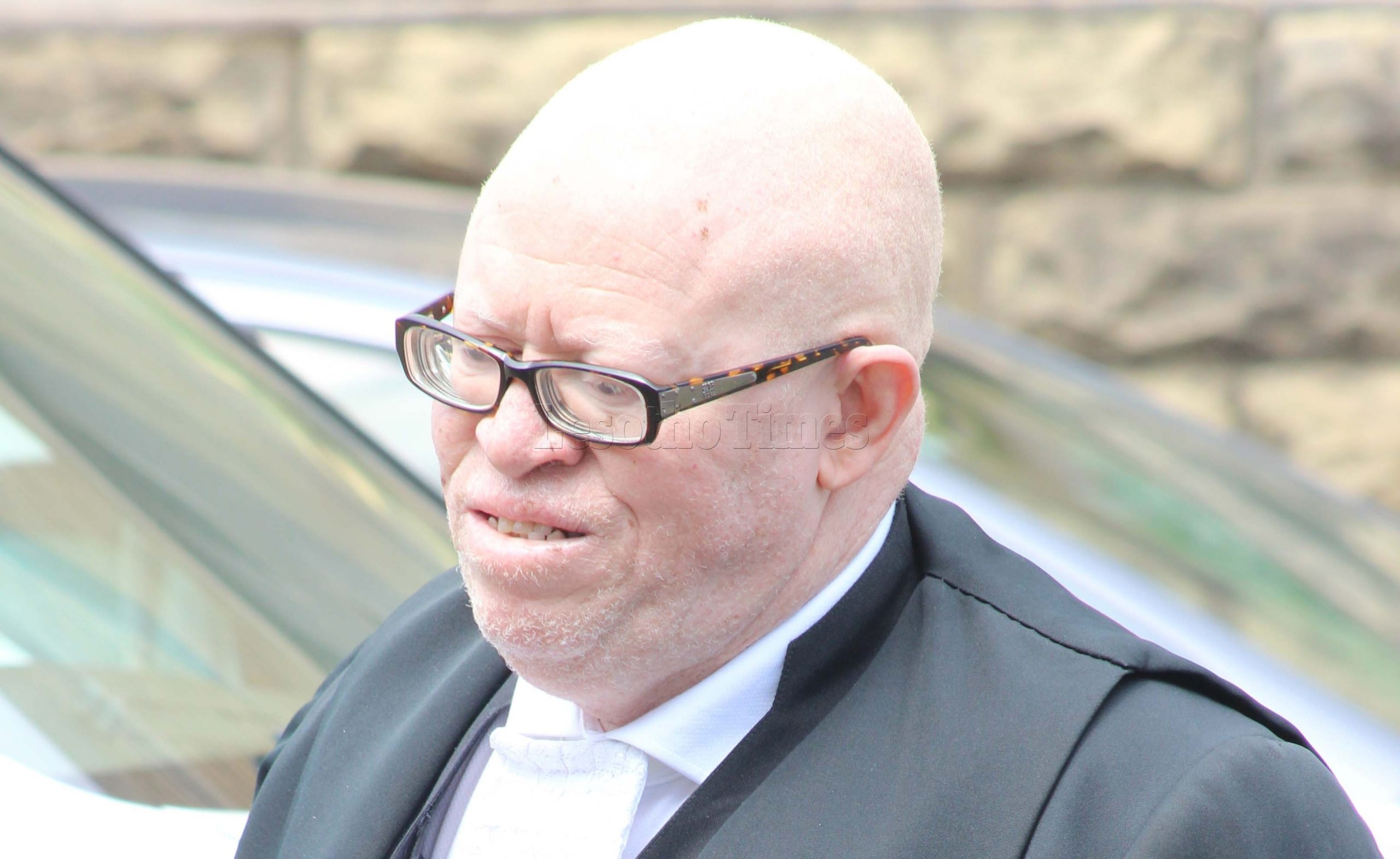
BACK when I was a toddler and right through my teenage years, winter evenings were reserved for one thing: stories around the fire in my grandmother’s rondavel in Ha Toloane.
As the flames crackled and the smoke escaped through the grass-thatched roof, Nkhono would entertain us with tales of witches from her younger days. Not the modern witches who use WhatsApp and drive Koloi tsa lehloeng. No! These were old-school witches who travelled by lightning and settled disputes through village gossip.
One story fascinated me more than the others. Apparently, witches frequently quarrelled among themselves. One would accuse another’s thokolosi of stealing chickens. Another would insist her neighbour’s thokolosi had killed a cow. Yet another would complain that someone’s thokolosi had destroyed her maize field.
But there was one unwritten rule – No witch would ever admit that her own thokolosi was the culprit. Her neighbour’s thokolosi was always guilty while her own was a saint.
For those unfamiliar with Basotho folklore, a thokolosi is often described as a dwarf-like goblin, usually half a metre to a metre tall, with a giant head, sharp teeth, glowing eyes, claw-like fingers and a general appearance that suggests it was assembled by a committee of nightmares. Witches supposedly sent these creatures to perform dirty work on their behalf while maintaining plausible deniability.
If a cow died mysteriously, it was never my thokolosi.
If chickens disappeared, it was always your thokolosi.
Justice, as it turns out, was difficult to find among witches.
Little did I know that decades later I would watch the same fairytale unfold not in a village cattle post but in the sophisticated corridors of the National University of Lesotho and the courts of law.
The modern version stars NUL Council chairman, Dr Khabele Matlosa, and suspended Pro-Vice-Chancellor, Professor Kananelo Mosito.
Prof Mosito went to court challenging the Council’s attempt to recruit a new Vice-Chancellor before the current incumbent’s contract expires.
The Council, understandably nervous, looked at the judicial landscape and saw a problem. Mosito is not merely a professor. He also happens to be President of the Court of Appeal. Suddenly, Nkhono’s stories became relevant again.
The Council essentially told the High Court: “How can we expect judges to hear a case involving the President of the Court of Appeal? Surely, they work under him. Surely, they drink tea with him. They won’t rule against him”.
Translated into village folklore, the argument sounded something like this:
“How can we take this complaint to the witch’s own thokolosi?”
The Council therefore asked for all High Court judges to recuse themselves. Justice Molefi Makara politely declined. The Council lost. Then they appealed. They lost again.
Then they sought to accelerate matters before the Court of Appeal. They lost again.
Then Acting Appeal Court Judge Phillip Musonda froze the recruitment process and effectively opened the door for Prof Mosito to assume the acting Vice-Chancellorship when Prof Olusola Fajana’s term expires.
There is a story doing the rounds in Roma that when Dr Matlosa and his Council suspended Prof Mosito and effectively booted him out of the NUL campus, the latter departed with a simple warning: “U tla ntseba”.
Whether the story is true or merely one of those colourful campus legends that grow with every retelling is almost beside the point. What matters is that subsequent events have given it the appearance of prophecy. Since leaving campus, Prof Mosito has been collecting court victories with the efficiency of a tax collector.
The Council has challenged him in the High Court and lost. It has sought the recusal of judges and lost. It has appealed and suffered further setbacks. At this stage, Dr Matlosa may well feel that he is indeed getting to know Prof Mosito far better than he ever intended.
In football terms, the scoreline is becoming increasingly uncomfortable.
Mosito: 4
NUL Council: 0
And that brings me to what I would pay good money to witness. Picture Mzalas Restaurant at Roma. On one table sits Prof Mosito. Before him stands a chilled bottle of celebratory champagne. The recruitment process has been frozen. The Court of Appeal has spoken. The law appears to be moving in his favour.
Across the room sits Dr Matlosa. His glass contains something considerably stronger. The Council has lost before the High Court. Lost the recusal bid. Lost before the Court of Appeal. Lost the urgency application. Lost the recruitment process.
At this stage he is probably suspicious of every judge within a 50-kilometre radius. Their eyes meet across the room. One raises a champagne flute. The other raises a whisky tumbler. One celebrates. The other calculates legal fees. Both smile politely. Neither means it.
And somewhere in heaven my grandmother is probably laughing. Because after all these years, the story remains the same. The names change. The setting changes. The livestock disappear. The chickens become court applications. The cattle become vice-chancellorships. The witches become lawyers. The thokolosis become legal arguments.
But one lesson survives every generation: When you take on somebody in their own territory, do not be surprised when you leave empty-handed. Just ask Dr Matlosa.
He has now learned what generations of Basotho grandmothers knew long before law schools were invented.
Unfortunately for Dr Matlosa, philosophical debates about institutional reform offer little consolation. The immediate reality is that Prof Mosito continues to rack up victories while the Council continues to absorb defeats.
What makes the whole affair fascinating is that Dr Matlosa appears to have walked straight into a Sesotho proverb our ancestors perfected centuries ago.
“U ke se qose thokolosi ho moloi”.
In this case: Do not sue a judge before judges.
Now before the Judicial Service Commission sends me a strongly worded letter, let me state clearly that judges are independent. They take oaths. They are trained to apply the law impartially. They do not wake up each morning wondering how best to protect colleagues.
Indeed, Justice Makara himself pointed out that High Court judges are accountable to the Chief Justice, not to Professor Mosito.
Advocate Dominic Metlae also reminded the court that Prof Mosito has lost cases before.
All perfectly valid points. Yet one does not need to be a lawyer to understand why the public might raise an eyebrow. Perceptions and appearances matter. Confidence in institutions matters.
Even if every judge involved was as impartial as Solomon himself, the average citizen can still be forgiven for scratching his head.
Imagine a football match where one team captain also happens to chair the referees’ association. The referees may be completely honest. But supporters of the losing team will spend weeks discussing conspiracies over braai stands and shebeens. That is human nature.
The real problem may therefore not be Prof Mosito. Nor Justice Makara. Nor Justice Musonda.
The real problem may be the structure itself. Perhaps our judiciary should be insulated from precisely these situations. Judges should not occupy influential positions outside the judiciary.
Perhaps it is high time appellate judges should serve full-time rather than appearing periodically while simultaneously pursuing careers elsewhere. That is not only an anomaly, but also a serious miscalculation.
The system should be designed in a manner that avoids even the perception of potential conflicts. Because perceptions are stubborn things. Once they take root, they are impossible to uproot.
Bontate Musonda and Mosito sit next to each other whenever they are hearing cases at the apex court (Ntate Mosito as the appeal court president. Ntate Musonda as a justice of the appeal court).
Suddenly, a case involving one of them reaches the very apex court. They swap roles. Ntate Musonda suddenly becomes acting president of the court. Not only does he grant his peer (Ntate Mosito) a far-reaching favorable interdict, but he also compels the Council of NUL to ensure his peer is appointed Acting Vice Chancellor. This would all have been fine if it was the stuff of thokolosi tales. Except that it is not. We are dealing with the very apex court which must be seen as not only dispensing justice but also ensuring that justice is seen to be dispensed.
Whoever coined the phrase that “justice must not only be done but must be seen to be done” was spot on.
In this very tragic case, many would be forgiven for having seen justice as not having been done. An appeal court president getting a favorable judgment from a court that he leads?
Ntate Mosito could be right in all the arguments he has raised against the NUL Council. But that is all besides the point. The point is justice must have been seen to have been done.
It goes without saying that this could only be achieved if Ntate Matlosa’s application for a recusal of all judges that currently work under Ntate Mosito had been granted.
After all, this would not have been the first time judges had been parachuted from other countries to hear this matter. It certainly would not have been the last time either.
Ntate Matlosa will feel hard done by. Perhaps rightly so. Not so much because justice has not been served, but because it will not be seen as having been served. Even though Ntate Musonda emphasized that his was only an interdict not meant to deal with the merits, he in some way went to deal with the merits by prescribing the appointment of his colleague (Ntate Mosito) as vice chancellor. Again, Ntate Matlosa will feel hard done by. Rightly so.
What must be done now
From all the chaos at NUL, it is now clear Ntate Mosito wants to be the next Vice Chancellor. Scrutator will be the first to argue that he deserves the job. He is a highly consummate academic and brilliant professor. He deserves the job. To save plunging the judiciary from any further ill repute, Ntate Mosito must head to NUL and stay there. He must not moonlight any further as the head of the judiciary while fighting political battles at NUL. He cannot be VC or Pro VC while returning to lead the apex court. The incongruity of that arrangement has now been laid bare by what has just happened in this case involving his interests.
The head of the apex court is in real practical terms the head of the judiciary. This must be a full-time position. Nowhere else in the world, will you ever have a president of an appeal court doing other paid work elsewhere outside the judiciary without risking the reputation of a whole court system.
For that to happen, it requires our ever giggling and quacking politicians to put their house in order and finally deliver the much-awaited reforms that will give us a Supreme Court headed by a full time Chief Justice. Thank God, that is a role that our eminently competent Sakoane Sakoane is ready, able and very competent to fill.
While Ntate Mosito runs NUL, Ntate Sakoane runs the whole judiciary without a part time appeal court lingering over his head. No risk of further jeopardizing the reputation of the judiciary. That’s all that’s needed now.
Ache!!!
p/s And by the way, Ntate Musonda can then stay put in Lusaka as well.
The post You cannot sue a Thokolosi before its master appeared first on Lesotho Times.