80 lives lost as Africa faces new Ebola threat - regional trade, travel at risk
The World Health Organisation has declared the Ebola outbreak in the Democratic Republic of Congo a Public Health Emergency of International Concern, warning that the virus could spread further across Central and East Africa as infections emerge in urban centres and border regions.
 Black News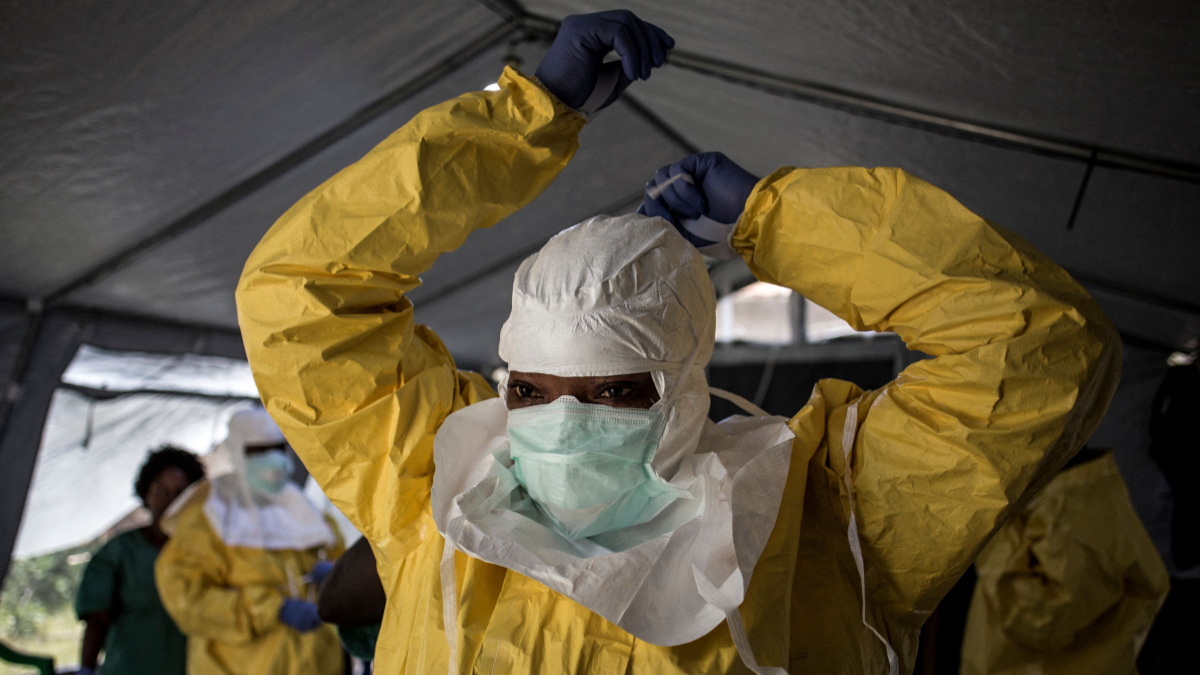
![A health worker in protective gear responds to Ebola cases in eastern DR Congo after the WHO declared the outbreak a global health emergency amid fears of wider regional spread. [Photo by John WESSELS / AFP]](https://ocdn.eu/pulscms/MDA_/51f180db561c719d6629c1ae412a584a.jpg)
The World Health Organisation has declared the Ebola outbreak in the Democratic Republic of Congo a Public Health Emergency of International Concern, warning that the virus could spread further across Central and East Africa as infections emerge in urban centres and border regions.
- The WHO has declared the Ebola outbreak in DR Congo a Public Health Emergency of International Concern after deaths rose sharply across affected regions.
- Cases have spread to Uganda and major Congolese cities, raising fears of wider cross-border transmission linked to trade and migration routes.
- Health authorities warned that conflict, mining activity and weak healthcare infrastructure could worsen containment efforts.
- The outbreak involves the Bundibugyo strain of Ebola, which currently has no approved vaccine or treatment.
The outbreak, centred in the eastern province of Ituri, has already killed at least 88 people, according to health authorities, with hundreds of suspected infections under investigation. The WHO said the current outbreak involves the Bundibugyo strain of Ebola, for which there are currently no approved vaccines or treatments.
While the agency stopped short of describing the situation as a pandemic-level emergency, it warned that the actual scale of infections could be far higher than official figures suggest.
WHO Director-General Tedros Adhanom Ghebreyesus said there were “significant uncertainties to the true number of infected persons and geographic spread” of the outbreak.
The virus has now spread beyond Congo’s borders, with Uganda confirming two cases linked to travellers from DR Congo. Ugandan authorities said one infected patient, a 59-year-old Congolese man, later died after crossing into the country.
A separate Ebola case was also confirmed in the eastern Congolese city of Goma, according to AFP, heightening fears over transmission in densely populated urban areas already affected by insecurity and armed conflict.
Regional Trade at Risk
The WHO said confirmed and suspected cases have been detected across Bunia, the capital of Ituri province, as well as the gold-mining towns of Mongwalu and Rwampara. One confirmed infection has also been recorded in Kinshasa, the country’s capital, involving a traveller returning from Ituri.
Health experts say the combination of conflict, high population movement, informal healthcare systems and busy cross-border trade routes could accelerate the spread of the virus across the region.
Countries bordering the DR Congo, including Rwanda and Uganda, are considered especially vulnerable due to extensive commercial links and the regular movement of people across porous frontiers.
Rwanda announced tighter health screening measures along its border with Congo, describing the move as a precautionary step. The country’s health ministry said surveillance systems had been strengthened and emergency response teams placed on alert.
The Africa Centres for Disease Control and Prevention also warned that mining activities and movement between affected regions could complicate efforts to contain the outbreak.
Jean Kaseya, director-general of Africa CDC, said regional coordination was essential because of “significant population movement” between affected areas and neighbouring countries.
He also urged communities to follow strict public health guidelines around funerals and burials, warning that traditional practices involving physical contact with bodies could drive further infections.
“We don't want people infected because of funerals,” Kaseya told the BBC World Service.
Public health officials say funeral gatherings contributed heavily to the spread of earlier Ebola outbreaks in the region, including the major epidemic between 2018 and 2020 that killed nearly 2,300 people in DR Congo.
The US government has also stepped up monitoring efforts after reports that at least six Americans may have been exposed to the virus in Congo. According to CBS, one individual reportedly developed symptoms, though no infections had been officially confirmed.
The US Centres for Disease Control and Prevention said it would deploy additional personnel to DR Congo and Uganda, while the US Embassy in Congo advised citizens against travelling to Ituri province.
The outbreak has also raised concerns over the potential economic impact on trade, transport and regional mobility in Central Africa, particularly if neighbouring countries impose restrictions on border crossings or cargo movement.
WHO Cautions Against Border Closure
However, the WHO cautioned governments against shutting borders or restricting international travel and trade, arguing that such measures are often driven by fear rather than scientific evidence.
“Such measures are usually implemented out of fear and have no basis in science,” the agency said in its guidance to member states.
Instead, the WHO urged countries to strengthen surveillance systems, establish emergency operation centres and improve rapid testing and isolation procedures.
The agency said confirmed Ebola patients should remain isolated until they return two negative Bundibugyo virus-specific tests conducted at least 48 hours apart.
Ebola, first identified in 1976 in what is now DR Congo, is believed to originate from bats and spreads through direct contact with infected bodily fluids. Symptoms include fever, muscle pain, fatigue, vomiting, diarrhoea and, in severe cases, internal and external bleeding.
According to the WHO, the disease has an average fatality rate of around 50%, although mortality rates vary depending on the outbreak and speed of treatment.
This marks DR Congo’s 17th Ebola outbreak in nearly five decades. Over the past 50 years, around 15,000 people have died from Ebola outbreaks across Africa.
Last year alone, 45 people died during an outbreak in a remote part of Congo, underscoring the country’s continuing struggle to contain recurring epidemics amid fragile health systems and persistent insecurity.