Africa unites in Banjul to combat violence against women
The call was made in a communiqué adopted at the close of the ACT Africa Regional Capacity Building and Advocacy Workshop held in Banjul from 13 to 15 May 2026 on the margins of the 87th Ordinary Session of the African Commission on Human and Peoples’ Rights. The workshop, themed “Building Evidence-Informed Violence Against Women Prevention and Response Resilience through Coalition Strengthening, Shared Leadership and Advocacy,” brought together participants from Burkina Faso, Cameroon, Central African Republic, Côte d’Ivoire, Gabon, The Gambia, Ghana, Liberia, Mali, Nigeria, Senegal, Sierra Leone and Togo. Organised under the leadership of Women Aid Collective and the West and Central Africa Women’s Rights Coalition, with support from UN Women and the European Commission, the gathering reaffirmed a collective commitment to ending all forms of violence against women and girls across Africa. Participants expressed concern over growing cases of cyberstalking, technology-facilitated gender-based violence, economic insecurity and the impact of climate shocks on women and girls. They noted that despite increased digital access, many women still face barriers in reporting abuse while justice systems remain weak and underfunded. Drawing on findings from the “Her Voice” regional research conducted in Cameroon, Ghana, Nigeria and Togo, the communiqué stressed that climate change, displacement and limited accountability mechanisms are worsening the vulnerability of women and girls in the region. The advocates urged African states to ratify and implement key continental instruments, including the AU Convention on Ending Violence Against Women and Girls, the Maputo Protocol and the Kampala Convention. They also called for stronger laws against technology-facilitated violence, increased investment in survivor-centred services, improved digital safety protections, and the establishment of gender-sensitive national data systems to strengthen accountability and policy reforms. The communiqué further urged governments, development partners and regional bodies to strengthen collaboration with women-led organisations and feminist coalitions in advancing advocacy, strategic litigation and accountability mechanisms. Adopting the communiqué in Banjul on 15 May 2026, participants pledged to sustain cross-border feminist solidarity and continue amplifying the voices of women and girls across West and Central Africa.
 Black News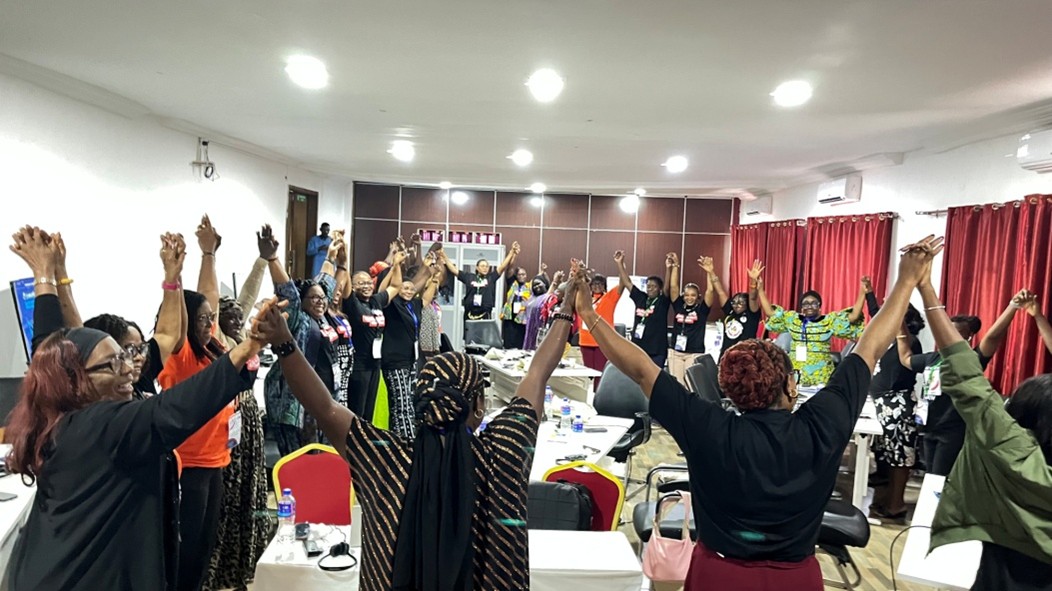
The call was made in a communiqué adopted at the close of the ACT Africa Regional Capacity Building and Advocacy Workshop held in Banjul from 13 to 15 May 2026 on the margins of the 87th Ordinary Session of the African Commission on Human and Peoples’ Rights.
The workshop, themed “Building Evidence-Informed Violence Against Women Prevention and Response Resilience through Coalition Strengthening, Shared Leadership and Advocacy,” brought together participants from Burkina Faso, Cameroon, Central African Republic, Côte d’Ivoire, Gabon, The Gambia, Ghana, Liberia, Mali, Nigeria, Senegal, Sierra Leone and Togo.
Organised under the leadership of Women Aid Collective and the West and Central Africa Women’s Rights Coalition, with support from UN Women and the European Commission, the gathering reaffirmed a collective commitment to ending all forms of violence against women and girls across Africa.
Participants expressed concern over growing cases of cyberstalking, technology-facilitated gender-based violence, economic insecurity and the impact of climate shocks on women and girls. They noted that despite increased digital access, many women still face barriers in reporting abuse while justice systems remain weak and underfunded.
Drawing on findings from the “Her Voice” regional research conducted in Cameroon, Ghana, Nigeria and Togo, the communiqué stressed that climate change, displacement and limited accountability mechanisms are worsening the vulnerability of women and girls in the region.
The advocates urged African states to ratify and implement key continental instruments, including the AU Convention on Ending Violence Against Women and Girls, the Maputo Protocol and the Kampala Convention.
They also called for stronger laws against technology-facilitated violence, increased investment in survivor-centred services, improved digital safety protections, and the establishment of gender-sensitive national data systems to strengthen accountability and policy reforms.
The communiqué further urged governments, development partners and regional bodies to strengthen collaboration with women-led organisations and feminist coalitions in advancing advocacy, strategic litigation and accountability mechanisms.
Adopting the communiqué in Banjul on 15 May 2026, participants pledged to sustain cross-border feminist solidarity and continue amplifying the voices of women and girls across West and Central Africa.