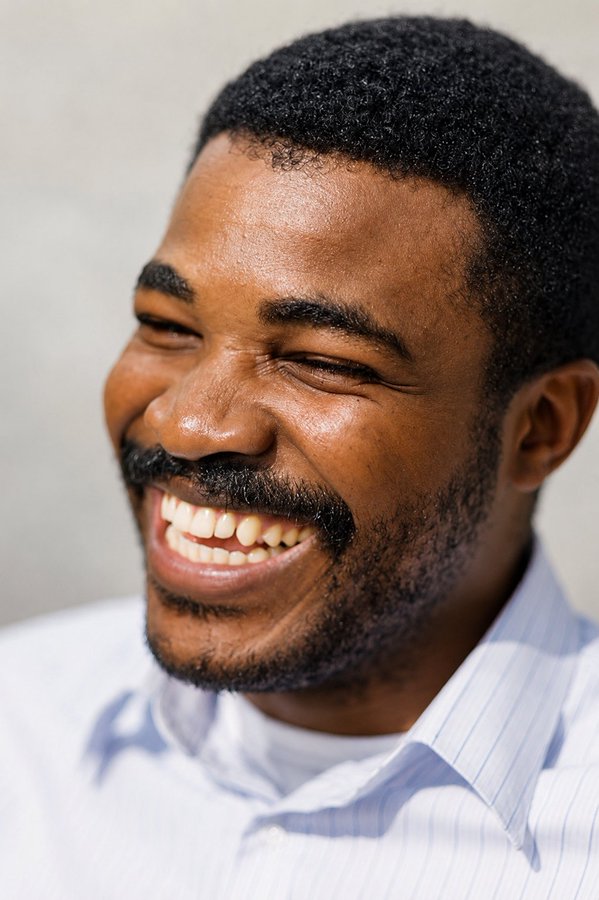
An optimistic, capable and intelligent Africa
Immersed in drawing from a very young age, Emmanuel Nguema Omeme is a passionate storyteller. At a very young age, he embarked on a course in animated film. His love for creating animated stories led him to turn his attention to video games. After gaining professional experience in France, the United States and Africa, he […] The post An optimistic, capable and intelligent Africa appeared first on New African Magazine.
 Black News
Immersed in drawing from a very young age, Emmanuel Nguema Omeme is a passionate storyteller. At a very young age, he embarked on a course in animated film. His love for creating animated stories led him to turn his attention to video games. After gaining professional experience in France, the United States and Africa, he founded Garden Hut in Gabon in 2021. His aim: to undertake innovative cultural projects and bring African stories to life.
How did the Garden Hut entrepreneurial venture come about, and what is the vision behind it?
Garden Hut was born out of my desire to tell stories through articulated figurines, inspired by historical African figures. My ambition was to raise awareness amongst younger generations, provide them with points of reference, and help them discover the richness of our cultures, as these objects are often absent from our daily lives from a very young age.
I chose to use digital tools because they allow me to bring my creations to life and anchor them in the tangible world. Thanks to 3D printing, I can transform these virtual objects into real, functional items that allow people to interact with their history.
Speaking of which, does Africa sufficiently promote its cultural heritage through new technologies?
A few years ago, this wasn’t necessarily the case, but over the last five years we’ve seen a surge in skills across Africa, particularly in West Africa. We’re witnessing significant growth in studios and talent, even though many players in the creative industries remain in the informal sector. That said, I believe we are moving towards an Africa which, culturally and digitally, is asserting its own worldview, writing its own stories and finally fully celebrating its heritage.
How can virtual reality, augmented reality and 3D modelling transform the transmission of African knowledge?
I see these tools as building blocks. Originally, our culture was primarily oral, but in order to survive, it had to adopt the written word, losing some of its richness in the process. Today, thanks to video games and immersive technologies, we can recreate these experiences, allowing users to interact with and be truly moved by our stories.
You’ve worked on several innovative projects, notably those centred on Miriam Makeba, Gabonese craft heritage and the Bilili BD Festival. Which one has left the deepest impression on you?
It’s difficult to choose, as each project has left its mark on me in its own way. For example, working with the Chamber of Trades to develop a virtual reality platform was a highlight, as it demonstrated an understanding of the digital challenges facing our country. It’s also rewarding to be recognised as an expert in my own country!
I’d also say that the Bilili Comic Festival made a huge impression on me; this platform brings together key players from the cultural industries of Africa, Europe and beyond, thereby creating truly unique human and professional connections and opportunities.
When you recreate a historical figure or a cultural world in 3D, what message are you trying to convey?
The main aim is to raise awareness of certain aspects of these figures, particularly amongst young people. For example, figures such as Gaspard Yanga, who is linked to Gabon, aren’t necessarily well known. Others, such as Mansa Moussa or Samori Touré, are starting to become better known, but not always amongst the youngest generations.
Beyond simply raising awareness, I also aim to inspire – through storytelling and design – a sense of pride, strength and resilience, as these figures are examples of determination. Ultimately, it is a love for what it means to be African that I want to convey through these stories.
What feedback do you receive from the public?
It varies greatly. Young and older people don’t react in the same way. Some, unaccustomed to virtual reality headsets, feel unsettled or even reject the experience. Others, surprised, realise that it is young Africans who are designing these experiences, whereas such skills are often associated with the West.
And of course, the greatest compliment is when a user is marvelling at the 3D, finds the environment realistic, and interacts with the digitised objects. Such moments of wonder are the finest testament to our success!

You also develop figurines inspired by historical African figures such as Thomas Sankara, Mansa Moussa and Charles N’Tchoréré.
Very often, these figures do not feature in school curricula, and few forms of media, such as cartoons, mention them. Perhaps somewhat selfishly, I would say that it is my favourite medium – 3D sculpture – that allows us to enshrine them in the collective memory. We can turn them into tangible objects – such as busts or collectable figurines – worthy of display, which can adorn a desk or, in the future, become articulated toys to raise awareness amongst the youngest members of society. I feel it is essential that these stories are passed down through the generations; I want to rekindle that pride in being African and inspire young people.
So should Africa invest more in its own heroes, its stories and its imagination?
I believe so, because we live in an age where storytelling shapes a nation’s identity. The image a culture projects to other cultures depends on its own stories. Today, thanks to decentralised technologies, we have the means to tell our own story and share it with the world.
We may be at the beginning of something significant, but there is still a long way to go. We are seeing initiatives and talent, but they remain rather fragmented.
You took part in the first cohort of the KESSA programme. What does this experience mean to you?
A unique opportunity to meet creators sharing the same goals, all driven by the desire to portray an optimistic, capable and intelligent Africa that is reclaiming its own narratives. It’s also a unique space for collaboration, a circle where I felt validated, listened to, and where I realised that my voice deserved to be heard.
The KESSA manifesto states that “no one will come to save Africa and no one will come to stop it”; how do you interpret this statement?
For me, this statement means that we actually face fewer obstacles than we think when it comes to telling our own story and defining our narrative. And that, at the same time, no one will actually come to help us. It is therefore a moment to be seen as an opportunity, where we must realise that this narrative – this Africa we want to write – we must build it ourselves, with determination and responsibility.
KESSA advocates the idea that Africans must regain control of their narratives.
Yes, that is indeed the mission I am pursuing with Garden Hut. I firmly believe that young Africans must reclaim their narratives in order to build a genuine sense of belonging to their continent. Immersive technologies offer a powerful lever for regaining control of our narratives
Can immersive technologies be seen as tools for cultural sovereignty in Africa?
Undoubtedly. Firstly, because truly skilled and professional talent remains scarce across Africa, and without an increase in such talent, no creative industry can truly flourish.
Secondly, as a Christian, I believe that one of God’s commandments is to be fruitful and multiply and to fill the Earth. So, through training, I share the skills I have acquired and see this as a way of multiplying myself, of doing my bit to help build this industry.
You place great importance on training…
To help more African studios and creative businesses emerge, there is a great deal to be done. I don’t necessarily claim to understand everything, but I think what’s sorely lacking are skills. The more we develop these skills, the more opportunities we open up, the more studios there will be, and the more African stories we’ll create.
What advice would you give to a young African passionate about 3D design, animation or virtual reality?
If you want to make a name for yourself in Africa, you need to be aware that the wider community still doesn’t fully grasp the scope of these creative technologies. So, you have to work tirelessly, keep learning, stay ready for opportunities, and above all, build a network with other professionals who will help keep that passion alive and open up opportunities for collaboration.
I’m optimistic. Skills are improving, American studios are now rivalling the best, and I see a very promising future.
What role might Africa play tomorrow in the global economy of creativity and cultural innovation?
I couldn’t say for certain, but I think Africa has the potential to play a major role. With the cultural diversity we possess, Africa, in particular, is a treasure trove of unique stories. If creators retain ownership of their stories, if we retain control over our licences, then Africa can establish itself as a leading player, with profits remaining on the continent and subsequently invested in training, infrastructure and distribution networks.
Africa is often portrayed by others. Do you think your generation now has a responsibility to write the next chapter in the continent’s history itself?
Yes, I think that’s the case, and I truly believe we’re on the right track. Through all the creative disciplines being embraced by talented Africans across the continent, I believe that Africa is taking ownership of its own narrative and charting the next chapter of its history itself.
Whilst some young people may have thought they were born in the wrong place, let us convey to future generations that being African is a blessing, a strength, an opportunity, and our wealth.
The post An optimistic, capable and intelligent Africa appeared first on New African Magazine.