Australian miner targets South Africa gold revival 7 years after losing top spot to Ghana
South Africa’s gold industry is drawing renewed investor interest as a wave of smaller, lower-cost projects and modular technologies begins to reshape a sector that has lost more than 70% of its output over the past two decades.
 Black News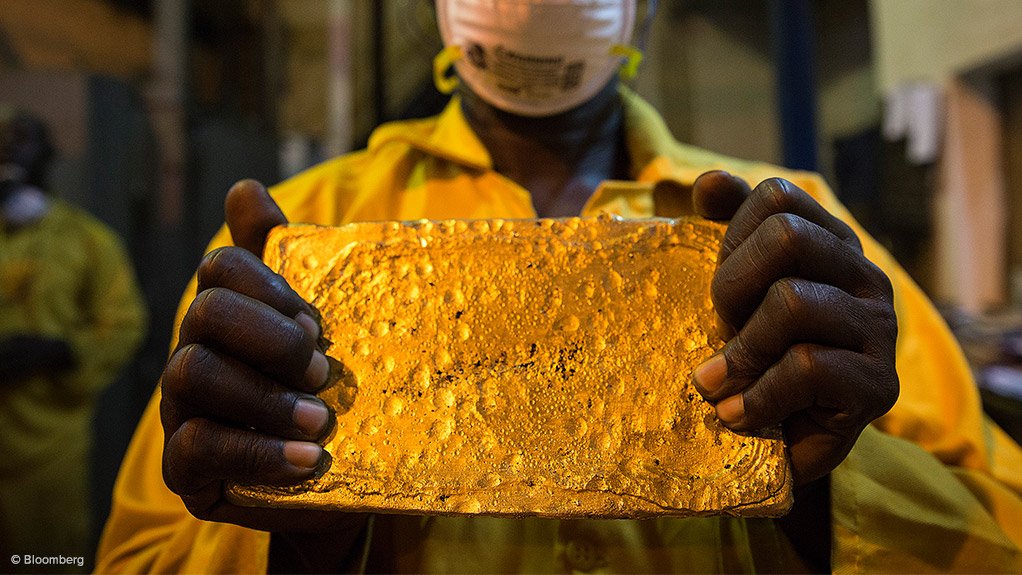

South Africa’s gold industry is drawing renewed investor interest as a wave of smaller, lower-cost projects and modular technologies begins to reshape a sector that has lost more than 70% of its output over the past two decades.
- South Africa's gold industry is seeing renewed investor interest due to a wave of smaller, lower-cost projects and modular technologies.
- Developers are moving away from deep, capital-intensive mining and targeting legacy deposits for improved returns and reduced risk.
- South Africa's gold output has declined by over 70% in the past two decades, losing its top African producer status to countries like Ghana.
- Projects like Theta Gold Mines' TGME and Wits Mining's Qala Shallows are reviving historic sites and set to produce significant gold over the next decade.
The shift marks a departure from the country’s traditional reliance on deep, capital-intensive mining, with developers targeting legacy deposits and shorter lead-time projects to improve returns and reduce risk.
In Mpumalanga, Theta Gold Mines Ltd. is advancing its TGME Gold Project near the historic town of Pilgrim’s Rest, signalling a potential restart of production in an area that has been largely dormant since the 1970s.
The Australian miner is developing a processing plant designed to treat gold-bearing ore from a cluster of historical underground operations.
According to local reports, the project has an estimated mine life of about 13 years and is expected to produce roughly 1.24 million ounces of gold, with initial recovery of more than 1.08 million ounces at a processing rate of 540,000 tonnes a year.
First ore processing is scheduled for the first quarter of 2027, placing the project among a new pipeline of incremental developments emerging across the country.
To accelerate construction, Theta is procuring a 900 kilowatt modular ball mill circuit from local manufacturer MechProTech.
Executive chairperson Bill Guy said the procurement reflects a firm commitment to commission the plant by the end of 2026.
Once mined, the ore will be crushed and processed to separate gold from surrounding rock, before being refined into a usable form.
Notably, Pilgrim’s Rest was once a cornerstone of South Africa’s gold economy following an 1873 gold rush, but declined as deposits were depleted and operations became uneconomic, with the last mine closing in 1972.
New mine near Johannesburg adds to momentum
Separately, Wits Mining Ltd. is preparing to bring online the Qala Shallows project near Johannesburg, with first gold targeted for the first quarter of 2026, as the project moves toward initial output.
The $90 million mine is projected to produce about 70,000 ounces annually, modest by global standards but notable in a market that has seen little greenfield development.
Like the TGME project, Qala Shallows will mine gold-bearing ore, which will then be processed at a nearby plant owned by Sibanye Stillwater Ltd. to extract and refine the gold.
Over a 17-year life, the project could generate as much as $2.7 billion in revenue, with costs forecast below $1,300 per ounce, according to feasibility data.
A multidisciplinary due diligence review conducted in 2026 has further strengthened investor confidence, positioning the project as a potential entry point for new capital into the sector.
South Africa loses ground to West African producers
The renewed activity comes against the backdrop of a sharp long-term decline in South Africa’s gold sector, once dominated by major producers such as AngloGold Ashanti, Gold Fields and Harmony Gold.
Output has fallen by more than 70% over the past two decades, with South Africa losing its position as Africa’s leading gold producer to Ghana in 2019, as investment shifted to lower-cost, more accessible deposits and more reliable power supply.
The change reflects a broader pivot in capital flows to West Africa, where countries such as Mali and Burkina Faso have expanded output by exploiting shallower reserves and more cost-efficient mining conditions.
In South Africa, the impact has been evident in employment, with the workforce shrinking to fewer than 90,000 from peak levels in the 1980s, underscoring the depth of the sector’s contraction.
Shift towards leaner, lower-cost mining models
Rising labour costs, high electricity tariffs, ageing infrastructure and the complexity of ultra-deep mining continue to weigh on production and profitability, forcing companies to scale back or redirect investment.
Illegal mining is also adding pressure, with abandoned shafts increasingly exploited by informal operators.
In response, miners are shifting to smaller, lower-cost projects and modular technologies to sustain output while limiting upfront capital.
While unlikely to restore South Africa’s former dominance, the trend signals a gradual restructuring of the industry, with efficiency and cost discipline driving future growth.