‘Behold, Will Uganda’s Olara-Otunnu Ever Become UN Boss?’
By Black Star News Photos: YouTube Screenshots A mixed grill of “-isms” —cynicism, skepticism, optimism and pessimism—have combined to receive the news of Uganda’s top diplomat of long-standing UN caliber—Olara Otunnu—finally being nominated by his home government to replace the current UN boss, Antonio Guterres whose 10-year Secretary-General tenure elapses on December 31. Otunnu was slated as the best bet to become the UN Secretary-General in 1996, but the regime in Kampala refused to endorse him and instead stepped up efforts to pull him down by hook or crook. The would-have-been UN’s seventh Secretary-General Otunnu missed the lucrative opportunity to Ghanaian statesman and diplomat, Kofi Annan. Annan took the mantle from the Egyptian Boutros-Boutrous Ghali in a January 1, 1997 10-year tenure. “In 1996, when he really needed the nomination and stood a great chance, the Ugandan regime refused to nominate Olara Otunnu for the UNSG seat [and] vehemently opposed his candidature,” writes on X, Ugandan lawyer and human rights fighter on July 25, Godwin Toko. “For the crime of having been Minister under Tito Okello, they even revoked his diplomatic passport [and] the man had to seek Ivory Coast citizenship. Now, [Otunnu] at 75, the Ugandan regime nominates him, well-knowing that, first, the consensus is that the next SG should be either from South America or the Carribean.” When army commander, Lt-Gen Tito Okello overthrow Dr Apollo Milton Obote’s second government on July 27, 1985, Otunnu had been Uganda’s Permanent Representative to the UN from 1980. Gen Okello then appointed Otunnu Foreign Affairs minister. “Two,” according to Toko, “that another African, [former Senegalese President] Macky Sall, declared their candidature earlier and has been running around looking for votes already. Another performative attempt at hoodwinking people from that [Northern] part of Uganda [from where candidate Olara-Otunnu hails] who should be asking the regime some very hard questions, I see.” This was in reaction to Uganda’s Permanent Representative to the UN, Ambassador Adonia Ayebare’s July 24 letter to the President of the UN General Assembly, Annalena Baerbock and Permanent Representative of the Democratic Republic of Congo, Zenon Mukongo Nga; the current President of the UN Security Council. In the letter, Ayebare said; “I have the honour to refer to the letter dated 25 November 2025 regarding the process of selecting and appointing the next Secretary-General of the United Nations (A/80/544-S/2025/765), and have the honour to inform you that the Republic of Uganda has nominated Mr Olara Otunnu, former United Nations Under-Secretary-General and Special Representative for Children and Armed Conflict, for the position of Secretary-General of the United Nations, in accordance with Article 97 of the Charter of the United Nations, as well as the General Assembly resolution 79/327.” Ayebare went on to introduce his candidate: “…. As the first Special Representative for Children and Armed Conflict (1998-2005), he established the protection of war-affected children as a substantive agenda item of the Security Council and designed the compliance and monitoring regime adopted under Security Council resolution 1612 (2005), which remains in operation today. He previously served as Permanent Representative of Uganda to the United Nations (1980-1985) and as President of the Security Council in December 1981.” A statement from Uganda’s Foreign Affairs ministry then followed on July 26 confirming that the Government of Uganda had indeed nominated and submitted the candidature of Ambassador Olara Otunnu, “a distinguished Ugandan statesman and international civil servant, for the post of Secretary-General of the United Nations”. Signed by the ministry’s Permanent Secretary, Vincent Waiswa Bagiire, the diplomatic docket said, “Ambassador Otunnu brings to this candidature over four decades of distinguished service at the highest levels of international diplomacy, having served both within the United Nations system and in senior leadership roles across government, academics and civil society. “At the national level, Ambassador Otunnu served as Uganda’s Minister of Foreign Affairs [1985-1986] and as a member of the Uganda National Consultative Council during the country’s transition period following the fall of the Idi Amin regime.” The National Consultative Council was Uganda’s interim Parliament following the April 11, 1979 Gen Idi Amin ouster after an eight-year presidency. The Government of Uganda, adds the statement, is confident that Ambassador Otunnu’s unique breadth of experience, spanning the UN Secretariat, the Security Council, national government, academia and grassroots peace-building, makes him exceptionally well suited to lead the United Nations at this critical juncture in global affairs. “A good proposal by the government to nominate a candidate with a rich CV to vie for the positio
 Black News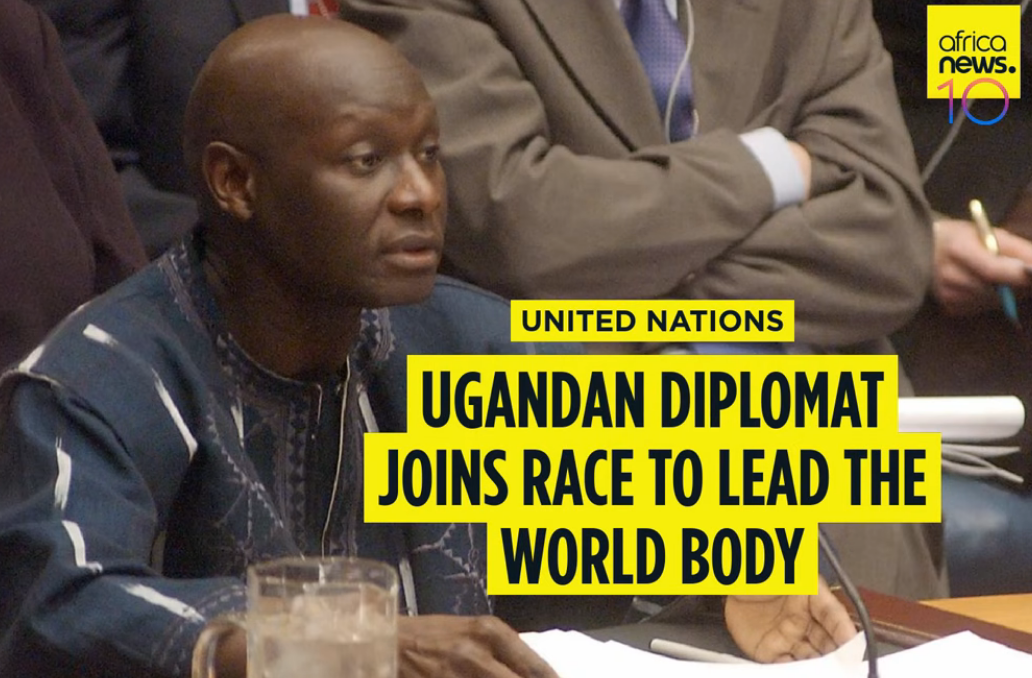
By Black Star News
Photos: YouTube Screenshots
A mixed grill of “-isms” —cynicism, skepticism, optimism and pessimism—have combined to receive the news of Uganda’s top diplomat of long-standing UN caliber—Olara Otunnu—finally being nominated by his home government to replace the current UN boss, Antonio Guterres whose 10-year Secretary-General tenure elapses on December 31. Otunnu was slated as the best bet to become the UN Secretary-General in 1996, but the regime in Kampala refused to endorse him and instead stepped up efforts to pull him down by hook or crook. The would-have-been UN’s seventh Secretary-General Otunnu missed the lucrative opportunity to Ghanaian statesman and diplomat, Kofi Annan. Annan took the mantle from the Egyptian Boutros-Boutrous Ghali in a January 1, 1997 10-year tenure.

“In 1996, when he really needed the nomination and stood a great chance, the Ugandan regime refused to nominate Olara Otunnu for the UNSG seat [and] vehemently opposed his candidature,” writes on X, Ugandan lawyer and human rights fighter on July 25, Godwin Toko. “For the crime of having been Minister under Tito Okello, they even revoked his diplomatic passport [and] the man had to seek Ivory Coast citizenship. Now, [Otunnu] at 75, the Ugandan regime nominates him, well-knowing that, first, the consensus is that the next SG should be either from South America or the Carribean.”
When army commander, Lt-Gen Tito Okello overthrow Dr Apollo Milton Obote’s second government on July 27, 1985, Otunnu had been Uganda’s Permanent Representative to the UN from 1980. Gen Okello then appointed Otunnu Foreign Affairs minister.
“Two,” according to Toko, “that another African, [former Senegalese President] Macky Sall, declared their candidature earlier and has been running around looking for votes already. Another performative attempt at hoodwinking people from that [Northern] part of Uganda [from where candidate Olara-Otunnu hails] who should be asking the regime some very hard questions, I see.”
This was in reaction to Uganda’s Permanent Representative to the UN, Ambassador Adonia Ayebare’s July 24 letter to the President of the UN General Assembly, Annalena Baerbock and Permanent Representative of the Democratic Republic of Congo, Zenon Mukongo Nga; the current President of the UN Security Council.
In the letter, Ayebare said; “I have the honour to refer to the letter dated 25 November 2025 regarding the process of selecting and appointing the next Secretary-General of the United Nations (A/80/544-S/2025/765), and have the honour to inform you that the Republic of Uganda has nominated Mr Olara Otunnu, former United Nations Under-Secretary-General and Special Representative for Children and Armed Conflict, for the position of Secretary-General of the United Nations, in accordance with Article 97 of the Charter of the United Nations, as well as the General Assembly resolution 79/327.”
Ayebare went on to introduce his candidate: “…. As the first Special Representative for Children and Armed Conflict (1998-2005), he established the protection of war-affected children as a substantive agenda item of the Security Council and designed the compliance and monitoring regime adopted under Security Council resolution 1612 (2005), which remains in operation today. He previously served as Permanent Representative of Uganda to the United Nations (1980-1985) and as President of the Security Council in December 1981.”
A statement from Uganda’s Foreign Affairs ministry then followed on July 26 confirming that the Government of Uganda had indeed nominated and submitted the candidature of Ambassador Olara Otunnu, “a distinguished Ugandan statesman and international civil servant, for the post of Secretary-General of the United Nations”.
Signed by the ministry’s Permanent Secretary, Vincent Waiswa Bagiire, the diplomatic docket said, “Ambassador Otunnu brings to this candidature over four decades of distinguished service at the highest levels of international diplomacy, having served both within the United Nations system and in senior leadership roles across government, academics and civil society.
“At the national level, Ambassador Otunnu served as Uganda’s Minister of Foreign Affairs [1985-1986] and as a member of the Uganda National Consultative Council during the country’s transition period following the fall of the Idi Amin regime.” The National Consultative Council was Uganda’s interim Parliament following the April 11, 1979 Gen Idi Amin ouster after an eight-year presidency.
The Government of Uganda, adds the statement, is confident that Ambassador Otunnu’s unique breadth of experience, spanning the UN Secretariat, the Security Council, national government, academia and grassroots peace-building, makes him exceptionally well suited to lead the United Nations at this critical juncture in global affairs.
“A good proposal by the government to nominate a candidate with a rich CV to vie for the position of UN Secretary General. Mr Olara Otunnu faces 6 other candidates two of whom are former Presidents, of Chile and Senegal. Best wishes to him,” former minister and now sworn-out MP, Sarah Opendi, posted on X.
But in what seems to suggest Olara Otunnu’s nomination is a set-up for failure at securing the world’s top job, “As the second candidate from Africa, one of the issues this candidacy raises, like Macky Sall, is whether the importance that African States attach to regional rotation is disappearing. It is worth noting that so far Africa is the only region outside of the Caribbean and Latin America to field [two] candidates,” submits independent-based Pan-African policy research, training and consulting think-tank, Amani Africa.
“It is to be recalled that the UN General Assembly Town Hall with the candidates was held on 23 July. As a late entrant, he [Olara-Otunnu] faces a disadvantage of making up that opportunity that other candidates had in campaigning. The timing of his entrance into the race comes just before the first UN Security Council Straw Poll scheduled for 30 July 2026. More than anything else, the role of the UNSC is the most decisive aspect of the selection process. It is anticipated that the Straw Poll by the UNSC offers the most significant indication on the prospects that candidates have for securing what is at times called ‘the most impossible job on earth’,” Amani Africa spells doom for the belatedly-nominated Olara-Otunnu.
The new nominee for the UN’s top job is from Africa, “despite the fact that under the informal principle of regional rotation, to which the Africa group ordinarily attaches importance, the turn for fielding candidates is that of the Caribbean and Latin America group,” Amani Africa reminisces.
Armed with Biblical allusion, however, comes consolation for Olara-Otunnu and his candidature, from Uganda’s Justice and Constitutional Affairs Minister, lawyer Norbert Mao, in a July 26 tweet; “36 years ago, Ambassador Olara Otunnu had a clean shot at the position of UN SG but politics got in the way. 36 years later, in the spirit of reconciliation, Uganda has endorsed one of its most illustrious sons for the UN top job. ‘Behold, how good and how pleasant it is for brethren to dwell together in unity!’ Psalm 133:1.”