Berita’s ‘Echoes of The Soul’: A meditation on migrant workers
Berita’s Workers’ Day performance becomes a powerful meditation on migration, memory and xenophobia in a nation built through labour, movement and forgotten solidarities
 Black News
In 1960, 17 African countries won their independence from colonial rule. National liberation struggles on the continent cohered around a set of political objectives which included justice, equality, freedom and the affirmation of a total humanity.
The objectives required many political actors, cultural workers, coalitions and varied tactics throughout the years. Many of the political interventions were undergirded by a strong sense of pan-African unity and collaboration.
Despite the displays of African collaboration and solidarity in the broad-based liberation struggle, the post-apartheid era has had an alarming number of periodic incidents of anti-foreigner antagonisms.
In her book Female Fear Factory, Pumla Gqola notes that “in both 2008 and 2015, violence chose pathways of race, gender, class and nationalist power in ways both obvious and blurred.
“The obvious ways lay in what was rendered visible in the media idiom and public talk: the race, class and gender of the perpetrators posited against the origins of class of those attacked and/or displaced.
“On television and in print media, young black men were shown as the perpetrators, going on rampages through economically marginal zones, although occasional images of women and children displaced were briefly flighted”.
She says “the assailants were represented toyi-toying and singing liberation struggle songs as they attacked, killed and displaced those they had previously lived amongst.
Obviously, this was about the intersections of nationalism, gender, race and class as all xenophobia is”.
The intimacy of the violence is chilling given the way in which South Africa and Johannesburg in particular were built. The history of Johannesburg is a history of migrant labour.
As Anne-Katrin Bicher notes: “For most of the 20th century temporary labour contracts were the dominant pattern of workers’ employment in the South African economy, which was based on the country’s mineral resources.”
She says workers from “South Africa’s rural areas, as well as from countries like Mozambique, Botswana, Lesotho, Eswatini, Zambia, Tanzania and Zimbabwe were brought to Johannesburg by recruitment agencies like the Witwatersrand Native Labour Association and later the Native Recruiting Corporation under the Chamber of Mines”.
“South African workers were offered contracts of between six to 12 months while migrants from beyond South Africa’s borders were given up to 24 months.
“During this time, the men were not allowed to settle permanently with their spouses in the urban areas. Women thus played a major role in running rural homesteads.
“They supplemented their husbands’ meagre earnings through subsistence farming, pottery, beadwork and crafts in order to secure the family’s survival.
“Later women became migrants in their own right, often finding domestic work in the cities or jobs on plantations.”
The story of how South Africa, Johannesburg and Newtown were built is embedded in the lives of the migrants who were brought to build our country as we know it.
But through systemic political chauvinism and populism, this history is eroded and echo chambers of ultra-nationalism and xenophobia are sown into our social consciousness.

The histories that might move us closer to the truth might lie in the creative expressions of oral history.
As Anne Karpf posits, oral history, in its earliest iteration, was understood as a history from below that sought to correct the formal written archive that had histories of colonial conquest which were histories of disinformation.
The oral dimension of theatre and music bring to the fore raw histories from below which have been “alchemically transformed”, as Karpf would suggest.
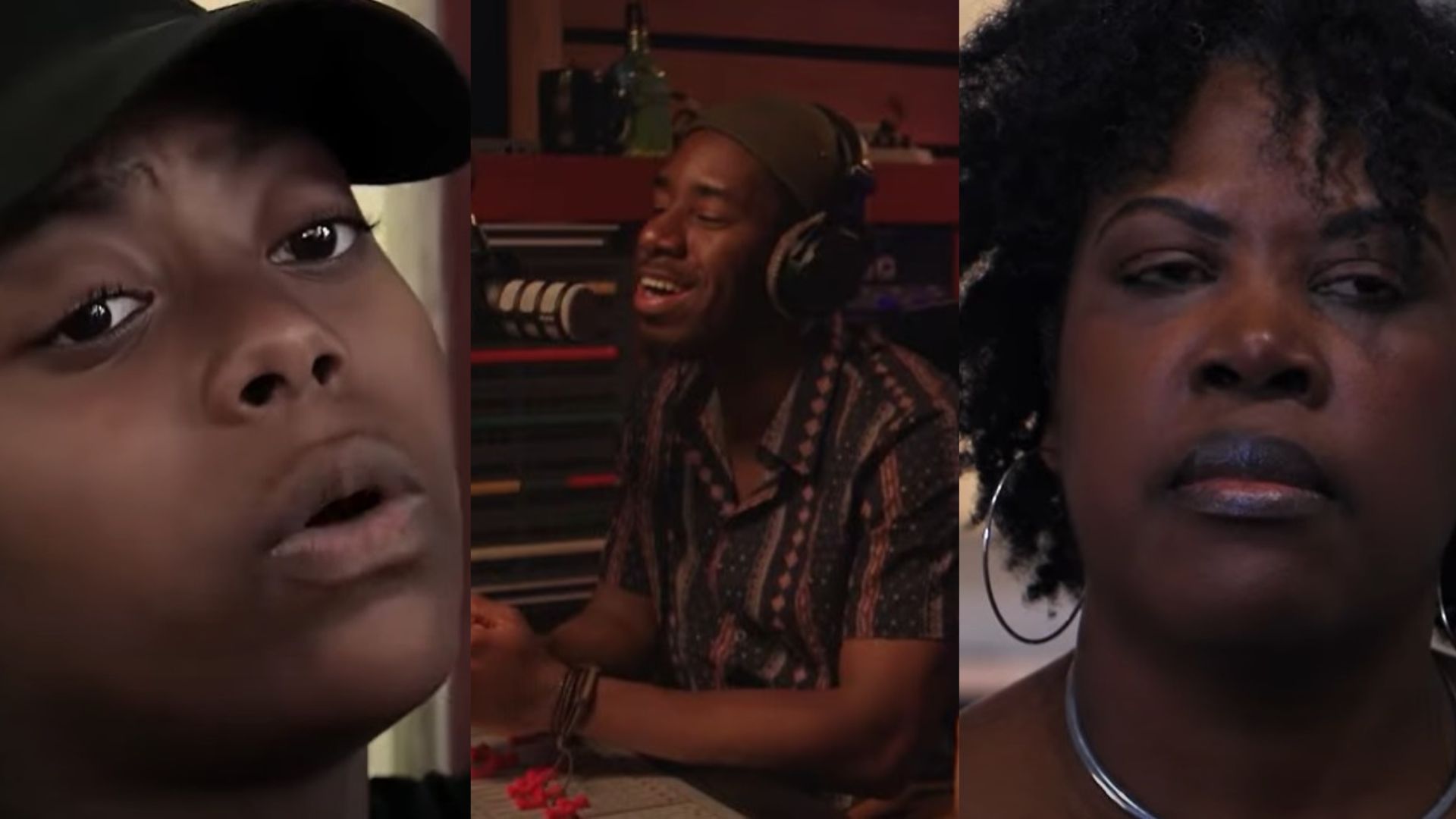
Cue multi-award-winning Afro-soul star Berita’s special Workers’ Day performance at The Market Theatre. The Zimbabwean-born songstress and music producer is a household name in South Africa despite, in her own words, being “an outsider for most of her adult life”.
Born Gugulethu Khumalo, Berita spent her formative years in Zimbabwe and New Zealand. The pace of her family’s farming lifestyle made it possible for her to cultivate stillness, calm and an awareness of her interiority from a young age.
The practices of tranquillity would become important to her artistic practice as a young woman in the Eastern Cape, forging her identity as a singer-songwriter in a scene suffused by delicate expressions of Xhosa indie and soul music.
Berita gently recounts the story of how a cab driver in KuGompo City saw her carrying a guitar on her way to her university residence. Immediately the cab driver associated her with Spinach who later became the mega superstar Zahara to the rest of the country.
Zahara had just moved to Johannesburg, had a promising record deal and the likelihood of imminent fame. The story of a girl with a guitar and a dream became a recognisable signifier in the Eastern Cape and so he offered her immediate support.
Not long afterwards, Berita would become a prominent musical figure in her own right. In 2012, she released her debut album, Conquering Spirit, which peaked at #1 on iTunes and earned her Gold Status on Risa and won the Best African Pop Album award at the 2013 Metro FM Awards.
In 2014, she collaborated with Hugh Masekela and fellow countryman Oliver Mtukudzi on the single, Mwana Wa Mai. The following year she collaborated with Black Motion on the Mwana Wa Mai remix.
These are some of the accolades that brought Berita’s star into sharp focus. Her gentle meditative voice became important in the South African Afro-jazz lexicon. Berita’s sound also transcended genre as she collaborated with Oskido on a house remix of her song Thandolwethu.
Fourteen years into her career, Berita has sustained her place in the industry with songs such as Jikizinto, Siyathandana and her most recent release, Namhlanje, which hit the airwaves last month.
This Workers’ Day, Berita will be presenting a concert experience titled Echoes of the Soul in its second edition and presented in partnership with the Sampra Development Fund.
The first iteration in 2024 “came from a place where my soul and spirit was yearning to come home musically. I felt like I would do shows and concerts but I would not really present fully who I was to the audience”, Berita says.
This is a poignant reflection given the long-standing histories of song, memory and meaning-making in the cultural life-world of Newtown in general and in The Market Theatre in particular.
Berita’s show promises to reckon with her contemporary musical oeuvre in a site suffused with the histories of the workers, women and migrants that shaped our conception of Johannesburg.