Richie Shazam on the Power of Self-Authorship
In conversation with Chani Ra, the visual artist and model discusses community, cultural identity, and creating Shazam Studios on her own terms. The post Richie Shazam on the Power of Self-Authorship appeared first on BRICKS Magazine.
 Black News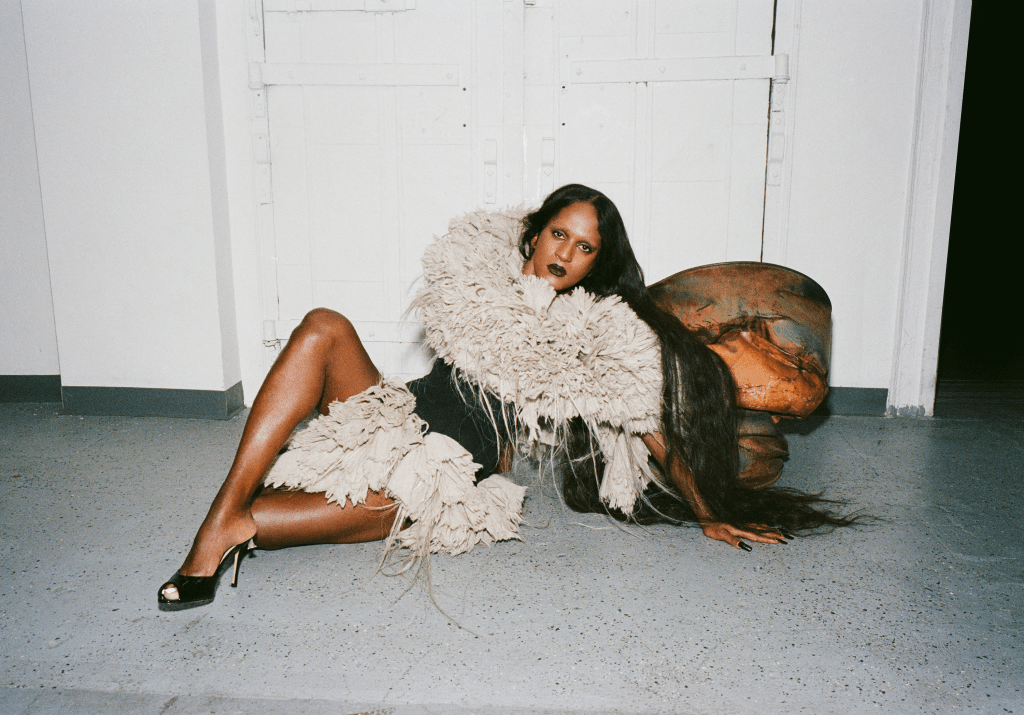
PHOTOGRAPHY Richie Shazam
STYLING Brianna Andalore
HAIR John Novotny
MUA Sasha Borax
SET DESIGN Joonie Jang
LIGHTING Christopher Morel
PHOTOGRAPHY ASSISTANT Austin DeWitt
STYLING ASSISTANTS Nikki Fina, Alex Harris & Akai Littlejohn
ASSISTANT Elisabet Gudmundsdottir
INTERVIEW Chani Ra
When you hear the name Richie Shazam, you might think of a trailblazing international model. You might recognise her from shooting your favourite artists for a slew of prestige magazine covers, or from her 2023 art book, SHAZAM. When I hear her name, I think of pure, unbridled creativity. She’s magnetic, expansive, and seemingly without limit – a true embodiment of the millennial ideal: building a life around making whatever you want, on your own terms. A testament to the generation that pushed the idea of the multi-hyphenate into reality.
There is nothing inherently elegant about a Google Meet on a rainy evening in Essex – that is, until Richie appears on screen from an equally freezing New York. She’s sitting in front of a painting washed in rich colour, almost as if her aura is spilling out behind her. I clocked we’re both wearing our hair pulled back into buns, faces fresh, which only reinforces a shared understanding: ‘clean girl’ was never going anywhere for Black, Brown and mixed girls. Over here, it’s not a trend – it’s magic, and it’s the uniform of a woman with shit to do.
Richie is immersed in the launch of Shazam Studios, a new home for the creative chaos of her and her expanding circle, and fresh out of therapy, when she hops on the call.

Chani Ra: How are you?
Richie Shazam: I’m doing good, babe! Just having a little late breakfast, she’s on her therapy journey.
CR: Well, thanks for coming straight from therapy. I know how that can be…
RS: I’m such an open book organically. However, even with being an open book, you still have your layers. When you engage in a therapeutic practice, it allows you to see yourself in different ways and understand how your history is impacting your present day. I need to keep this continuous, because it genuinely feels like a weight lifted. It gives me awareness and a sense of peace in such a kooky universe that we’re living in. All I can do right now is get stronger and firmer to exist and tackle the world we’re living in.
I’ve been such an advocate for [therapy] right now because it’s only a fucking hour out of your week. I’d be doomscrolling anyway, so I might as well do something productive. That’s the resolution: don’t get caught up in the doom scroll. Do honourable actions for yourself and for others. We need to take a little break.
CR: It’s such a good thing to have in your back pocket. I remember saying to my therapist, “I need to be doing this for the rest of my life,” and she was like, “No, I think it’s normal to tap in and out.”
RS: When shit hits, it’s a great thing. One of my big resolutions for 2026 is just to engage in meaningful work and really honour the journey that I’ve been on and where I want to be. I’m trying to honour the smaller victories. The space that we live, work and operate in is always about the optics of doing it. I’m mentally and spiritually over it! I’m seeking something else; it’s missing from my body, something larger. That’s why this year, it was very important for me to launch my studio, to do things on a different scale, have a different level of impact and genuinely build a community.
It’s so hard when you’re writing your own rule book, because you have to figure it out on your own. I have to make that decision, I have to show up for myself. I can’t be all over the place, she’s got to take a beat: she’s got to ponder, write a list, get a planner, write shit out with pen and paper. It’s over for the Notes app. The Notes app is exploding. The Notes app is a fever dream. I need to tactically be writing things, putting them on walls, and revisiting them, like an old-school methodology of how to be a boss bitch, I’m trying to bring that back.
CR: I’ve been trying to work out if there’s ever been another period in time where the collective has agreed that technology has gone too far and retreated. I think this might be the first time? Up until now, it was always forward motion, convenience, develop, develop, develop! Now we have AI at every turn, and I think the consensus is that we have gone too far.
RS: Even the latest iPhone update, everyone is so mad! I can’t even turn the flash on. Now there’s the exoticism of someone busting out an iPhone 5 – but that’s a gimmick. There’s no evolution in this. What’s next? Y’all building your whole career busting out an iPhone 2? That’s the gag of where we’re at. I don’t know if you saw that headline about everyone getting so excited for archive McQueen at the Grammys? What does that mean for the evolution?
CR: I saw this…was it Fat Anna Wintour?
RS: Or was it Boring Not Com? I live for their headlines!
CR: Who do you think is behind the account?
RS: Oh, babe! I don’t know, it’s got to be a PR person. Or all the PR’s are just sending them information?
CR: It’s an internet-fashion-urban legend!
RS: Screaming!
CR: We’re so off-track! The theme of the issue is ‘I Support You’, and so much of what you just said and the mindset that you’re in really aligns. When do you feel the most supported?
RS: When I’m truly comfortable being vulnerable and allowing people within my realm. I allow them inside my brain, inside my mind and my vortex. It’s about the power of vulnerability, of seeing yourself deep down and knowing that you need nourishment and need care.
It’s also something that’s reciprocated; I can’t show up for you if you can’t see me for me. It’s been a lifelong process; it’s not been an overnight sensation. People have an idea of you, because we’re all living in this algorithmic, avatar-esque world, but I feel the most in-tune when I allow myself, and I give others, permission to really see me and hear me. We’re all weirdly playing a role most days. Everyone’s acting. They’re like ‘You’ve really got to check in on that friend’ – But that should be a given. You gotta check in on your people. You know what I mean? That’s me all day, I’m on that phone. I’m like, ‘Hello, hello, hello’ because that’s support. I want to give, but I also want to receive, and that’s essential to actual community building.
One of my big resolutions for 2026 is to engage in meaningful work and really honour the journey that I’ve been on and where I want to be. I’m trying to honour the smaller victories. The space that we live, work and operate in is always about the optics of doing it. I’m mentally and spiritually over it!
Full look LYHUIZI
Shoes DIOR
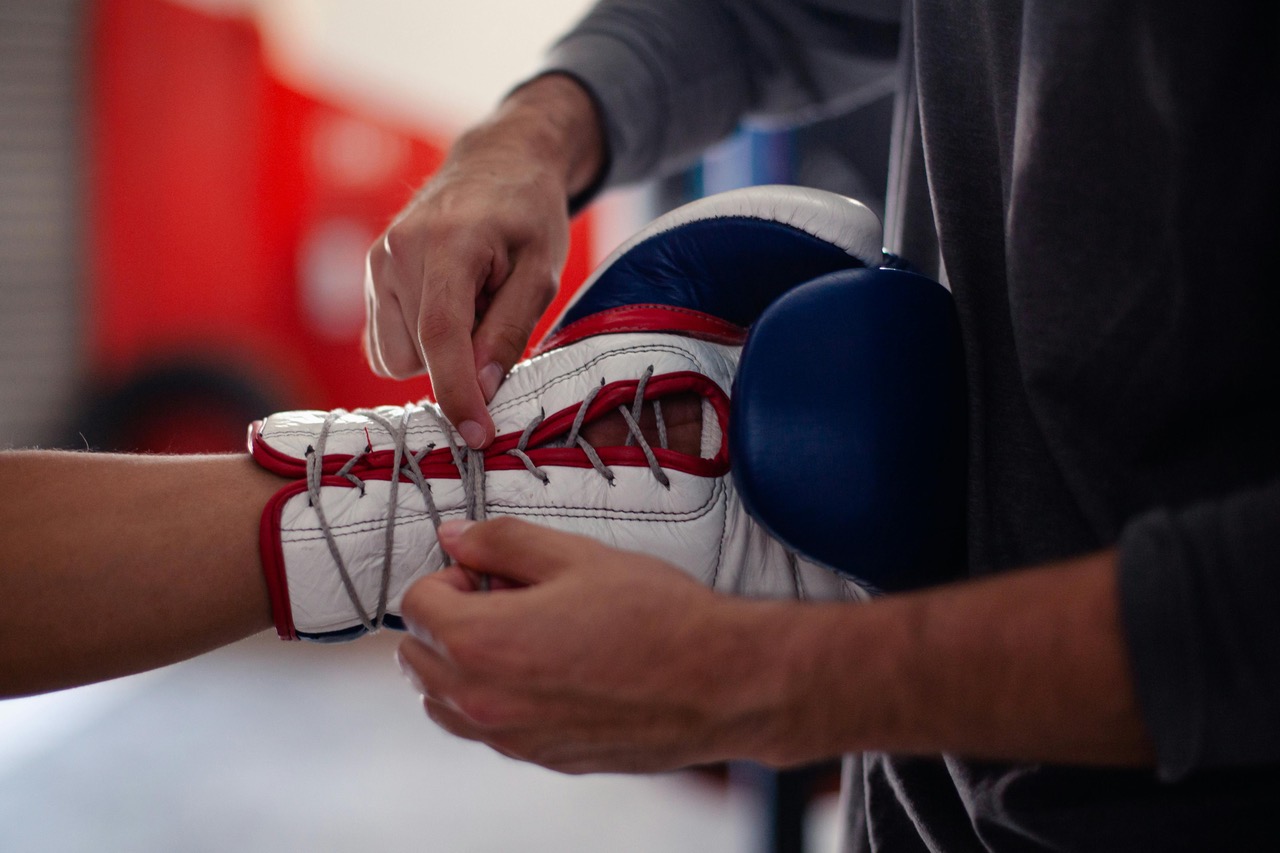
Gloves RICHIE’S OWN

CR: A big topic right now is the way that “therapy language” has isolated people from their friendships. This language, they think, will deepen relationships, but it has made them very shallow. We’re now seeing a turnaround on that. People are starting to realise they’ve made so many boundaries that now they’re on an island by themselves. We really need to be open and honest and vulnerable, like you’re saying. You talk a lot about chosen family and building ecosystems. Has your understanding of support shifted as your career has grown?
RS: As my career has grown and is growing, I’m actively figuring things out all day on my own. You would think I’ve got all this support, but no. I’m able to build the worlds that I worldbuild with my community, because my community shows up for me, and that’s built on the fundamental building blocks of how I treat people. I treat them with respect, and they want to create because they know it’s going to be a good time. In a very old-fashioned way, it’s not just transactional. We genuinely enjoy chopping it up and creating something new, fresh and spontaneous. It’s about authentic, real relationships and friendships, and meeting people on new levels.
I do feel really fortunate that I have so many incredible friends who are such powerful artists that I can bounce ideas off of, create with, learn from and exchange with. Those individuals are also my family. When you’re not playing by a rule book, it’s about the importance of problem-solving and asking people for help. Any given day, I’ve got a lot of people asking me things, and I try to accommodate as much as I can.
I’ve been thinking a lot about collectivism and having a space for me, my community and the new generation.
CR: Well, let’s talk about your studio, Shazam Studios. It launched as a space for image making, creative chaos – which I love the sound of – and a house for all your projects and collaborations. What gaps have you been trying to fill for yourself and others by creating the studio?
RS: My 2025 was so hectic and all over the place because I did so much, and Instagram as the only vessel wasn’t enough for the extent of all of the things that I’ve gotten the opportunity to create and do. I’ve just been thinking a lot about collectivism and having a space for me, my community and the new generation. We have so many young kids coming in who are in college or post-grad. I give advice very liberally, very freely. I just started inviting them to cook in the studio and make something. It was something that’s always been on my mind, and I felt like people so rarely tap into our community in a way that’s not just using us for some sort of clickbait scenario. I always tell people, in interviews, in anything I do: give us a position of power. Employ us! It got to a point where I had to say “fuck that!”, start something from the ground up and build my own entity. I want to build my own safe space because I create that for so many people. I want to have a space where my community at large can come, we can work, and we can cook.
One of our first projects was this cover. Working on this editorial was such a labour of love because I had so many incredible people who showed up and contributed to it. It really encapsulates what the theme of the issue is because essentially, the shoot was an exchange of ideas. I had very loose creative parameters, and then chaos ensued. More is more! I have so many ideas, and I try them all. I extend myself to pure exhaustion, but it’s not even about perfection; it’s experimentation. I’m not like an endless moodboard; I need to make things in the moment.
I also wanted to launch it because I have an installation exhibition currently featuring photos, videos and sculptures in Austin, Texas. The studio is where the art happens, where the art exists. My photography and my directing work are facets of the umbrella of things that I do. I’m not exclusively just that; it’s under a larger art practice that I’m still trying to make sense of. I live for the people who have it all figured out. I love those people, but for me, that’s just not my story. Everyone is turning out a product or doing something, but I’m more of a “slow and steady wins the race” kind of gal. My exhibition has been really great for me to make sense of that and mirror my identity, while also looking at all the fantastical things that I find to be so striking and important.

CR: It’s such an honour to be a part of the studio launch! Can you tell us more about the exhibition?
RS: I’m really excited. I haven’t had a show of this magnitude, ever. I actually got my start in the art world; I used to work for different art galleries and art museums in New York City, and it was great because of the connections that I could build with the artists while helping them build their shows. Some of those artists became great friends of mine, and always told me that there’s more to me than just this, that I’m an artist. I never knew what the hell they were saying – but maybe I just wasn’t mentally ready to receive that message.
I genuinely love being in creative, artful spaces where people are free-thinking and can open up that side of their brains. We’re living in a world where we have to be so on and so calculated, and everything has to be an intense game of Tetris, where everything’s like a puzzle piece, and it makes everybody strive for perfection. I want to go against the grain. I don’t know if it’s my Aquarius brain or what it is, but I refuse it. I’m really happy that this exhibition has given me the ability to explore all of these facets of making things, of fabricating things, and also of reassessing my history, the trauma of my history and why I’ve refused to look at it. With the vessel of my community, especially the individuals helping me with my vision of bringing this exhibition to life. It’s allowing me to walk through that history, and almost in a fantastical way. For me right now, especially having the show about identity in Austin, Texas, is just like a gag and a mouthful in itself.
I feel an overwhelming sense that this is all a part of the mission of setting myself free.
CR: I was going to say! Texas is a red state, right? I like the idea of you bringing this, there. To the people who need to see it.
RS: Yes, Austin is a liberal city within Texas, but it’s still Texas. It’s so gaggy, and this is where I need to be, because shit is so turbulent and raw. I feel an overwhelming sense that this is all a part of the mission of setting myself free. Also, it’s about connecting with people there and connecting with larger audiences, because that’s where I want my work, ultimately, to live. I want it to reach wider audiences, and I want the messages to reach people. I feel like social media doesn’t really elicit hope anymore in the way that it once did. I remember 10 years ago when you posted something, and then you saw someone, you’d be like, “Oh my God, they’re so cool”. I don’t feel that way anymore. I don’t feel that sense of kinship or community building in that same way.
CR: It’s much more like a business now, lots of product pushing.
RS: 100%! Just buying shit. You know I’m buying shit! I’m like “Great! I don’t need to go on Amazon today. I’m going to place my order on TikTok shop!” That’s just how it goes, and that’s okay. I think, right now, there’s power in numbers, in coming together, and collective action. I think that that’s also really beautiful and poignant, and that’s something I want to champion.
CR: As you’re on the therapy journey, did the two intertwine with each other, or was that just a happy coincidence?
RS: It was a happy coincidence. I think my trauma is so immense from childhood; growing up in a West Indian household, trying to understand my Indian roots, as well as growing up with health complications, and being very marred by intense things at a young age. How that impacted my imagination and my fantasy, I think this show is going to illuminate that. I feel like it’s going to provocatively allow people to see certain facets of myself visually that they haven’t seen already. It’s a large departure from my self-portrait book. It’s been a stepping stone moment for me. It’s like stepping into a new era, something that’s a bit more raw, more intimate, but still having heavy strains of fantasy, imagination, colour, and seeing the transformation that happened and making sense of it.
I don’t know about you, but sometimes I wake up brand new, acting like “I don’t know about that”. This show has been about reclaiming and reassessing and also relocating, going back to Queens as I’m fabricating things and looking at materials and realising ‘wow!’ My culture is so rich and so vast and so filled with things in a way that I know. I know this, I know that it’s in me; it’s imbued in the things that I make actively. But when you’re confronted with it, you gain another sense of appreciation. I have this weird displacement from a lot of it.

My culture is so rich and so vast and so filled with things in a way that I know. I know that it’s in me; it’s imbued in the things that I make actively. But when you’re confronted with it, you gain another sense of appreciation. I have this weird displacement from a lot of it.
Dress FRANKIE JULIA
Shoes MANOLO BLAHNIK
CR: There’s a difference in a memory or a knowing versus like standing in it and actually being back at the scene, it brings up details that you probably had forgotten. We feel like we remember everything and we know everything about our lives, our culture, and our experiences. But going back, like you said, and revisiting certain places, it will unlock different parts of the brain that you closed. I imagine it’s been an intense journey?
RS: I closed them shut! So now I’m cracking it open, and I’m being okay with it. So I definitely feel like…yeah, maybe the therapy has been really great!
CR: I was just thinking, in terms of support, it must be quite valuable to have that hour a week to let go of the findings of this project, which sounds pretty deep, intense and amazing.
RS: It’s cool, and also God bless my close friends who hear about it and also get to witness it with me as well, because they’ve been very impactful, holding my hand through it, because it’s a lot. I think specifically around the gender identity bit of it, having that fear and that isolation because of how intensely I felt the shame and discrimination from my family and culture. Feeling like I wanted nothing to do with it; that doesn’t fit me anymore. That’s such a cop out. You’ve got to reclaim it; it’s vital, and it’s going to bring warmth.
CR: I’m sure the close friends you’re mentioning are finding beauty in watching you go on this journey. I had a similar experience with one of my chosen relatives navigating the same complex, cultural mindfuck. Helping to facilitate those moments of cultural expression is a joy. I’m sure your circle loves witnessing you have that same experience.
RS: Even just talking about it with them, that in itself is a moment, because I’m so in my imagination when I’m cooking and brewing and doing my thing. It’s been really nice to be inspired by something that’s been there the whole time in silence. I can actively give it a new meaning and a new interpretation, and that’s been really special.
I think specifically around the gender identity bit of [the exhibition], having that fear and that isolation because of how intensely I felt the shame and discrimination from my family and culture. Feeling like I wanted nothing to do with it; that doesn’t fit me anymore. That’s such a cop out. You’ve got to reclaim it; it’s vital, and it’s going to bring warmth.
CR: People can try to ostracise other people from a culture, but the culture itself is never going to try to push anybody out. The culture is in you, like you said. It’s yours. I’m glad that you’re having that. That’s really beautiful, and I’m truly excited to see what’s in this exhibition. You wear a lot of hats as a multi-hyphenate; what is the most supportive thing that you’ve done to sustain yourself throughout your creative career? Because we know creative careers are crazy.
RS: I feel like it changes. It’s always like evolving. Right now, I’m really appreciating solitude, and I’m learning to be comfortable by myself and exist in my home, in my own space. It’s so necessary to recharge and to take a beat. I don’t actively enjoy being around a lot of people or busy places and things. Even on my phone, there’s so much fodder and so much information, and I take it all in. I’m learning that I don’t need to be in all of these places, because I see it on my phone anyway, and it’s like… Are the girls really gagged to be outside? Is anything really gaggy? Because, like, when y’all are there, ain’t nobody really having fun. Everyone’s so obsessed with nostalgia. So it’s very “why can’t we go back to 2016 when it was really fun”, but we can’t. Society won’t allow us to. They won’t allow us to be free, to feel that sense of freedom and let our inhibitions flow. I think people are yearning for it. But can we break free of the shackles of social media and being chronically online? What has to give?
CR: I wonder, are people even really yearning for it? Or are they just pretending to yearn for it, because that’s the social trend? It’s such a catch-22, because if they really wanted to do that, they would just do it right? They would just put the phone down and go out.
RS: And dance! Remember in COVID, when people were going to all those secret parties, it was very thrill-seeking. Obviously, it was also awful and a bit crazy.
CR: The super spreaders!
RS: Yes! But you’re absolutely right, I think maybe just for myself, I miss that sense of freedom. I also feel I’m tired, so I’m okay with missing out on that.
CR: You can just go to the things that matter.
RS: Exactly, be intentional. I like showing up for my friends and supporting the projects they’re working on. I like being part of it, that makes me feel really good. I think it’s just about lending myself to things that mean the most.
I’m not trying to be in spaces where someone or something or some presence is making me feel smaller than who I am, because I’m not.
Dress PIPENCO LORENA
Shoes STEVE MADDEN
Gloves & Socks RICHIE’S OWN

CR: You’re putting the feeling over the image of being somewhere. How you feel when you leave is what makes it valuable or not. I like that. The last time we spoke, we bumped into each other on the dance floor, and you said something that a lot of people might relate to. You said that you’ve been in many of these rooms, and you still feel overlooked. What’s the biggest hurdle and learning experience from navigating the fashion world?
RS: Your team is so important. That’s who is advocating, who is fighting for you, who is pushing down the door with you. At the end of the day, I don’t have the support of my parents or my family. I’m here figuring it out for myself. I have to know that that’s a triumph in itself that I got in here by myself. That’s something that I applaud myself for. I have those moments of not feeling seen, and that’s the constant battle because that’s how this machine works: it sustains itself by making you feel like that because everyone’s looking for the stunt queen. It becomes about who’s gonna pull the most stunts, but I just want to be consistent. I want to keep creating things that mean the most to me and have conversations with people who want to collaborate and work with me.
That satiates my spirit and my soul, as well as my “standing” in this community. At the end of the day, I’ve broken bread with a lot of people. I’ve been in a lot of spaces, but there’s no longevity in them. They’re literally looking at you, and then the other eye is looking the other way. Being in those rooms isn’t gagging.
CR: It’s that Wizard of Oz thing, isn’t it?
RS: I’m not trying to be in spaces where someone or something or some presence is making me feel smaller than who I am, because I’m not. I am important, and I know that what I’m bringing to this, no one else is. When am I feeling those feelings? I have to take a beat and tell myself that, and the people I’m with represent that because it’s not about chasing the scene, we are the scene. I want to make the most of being in the room when I choose to be in the room.
The hurdle of being overlooked or not seen is a pressure cooker. Everyone is looking out for themselves. It’s just the name of the game, but you have to marry that with the intentionality of building something larger for your community. If I go, I have to converse, I have to connect, and those are things that I love and that come quite naturally to me. I have to use my voice and use my platform in a smarter way. I do get scared. I get nervous, but I know I need to do it.
The hurdle of being overlooked or not seen is a pressure cooker. Everyone is looking out for themselves. It’s just the name of the game, but you have to marry that with the intentionality of building something larger for your community.
CR: One positive thing in those spaces is when there are actual, authentic people in the room, they tend to gravitate to one another, and then beautiful things happen after that, so at least you kind of find the realness in the fakeness.
RS: Girl, we were having a kiki, we were having fun!
CR: And now you’re on the cover! You shot yourself for the cover, which is a flex in itself. What was the inspiration?
RS: The inspiration was veering into mysticism. A lot of things are brewing within me, and I wanted to channel this strong, ethereal, warrior-esque individual and implant myself in that historical framework, but queer it up and play with these strong silhouettes. I enjoy transformation. I enjoy every facet of making the picture, from the hair, the makeup, the styling, the set design, the lighting – everything in that moment. There’s a lot of intentionality, but I still leave room to play, try new angles and exhaust ourselves to find magic in the moment.
This shoot was the launching pad for the studio and the space, and working with my collaborators was such a great moment for us to come together collectively on this super cold day in New York City. Everyone showed up and was really committed. Our stylist, Brianna Andalore, is a close friend of mine. We had so many ideas for interesting silhouettes and really playing with colour, textures, skin, and body. We wanted to showcase the lines of my body and the mysticism of that, too. We were rewriting the tale of being comfortable in my body because a big part of me being in this vessel is disconnection: I’m in it, but I’m not in it. I’m in my skin, but I’m not in my skin. I almost don’t even feel physical touch when I’m in glam; it feels like it’s just happening.
There’s a power to it when it comes to embodying a character, and that is something I wanted to amplify with these images. Honestly, we were just having fun! There are elements of horror and gore, but the darkness is mirrored in this light. I’m very into how light hits, especially Brown skin – that’s very important to me. I’m always working to master that in the photos that I take of others and of myself. The beauty and intricacies of Brown skin, and skin in general, were central to the making of the images.

CR: Do you think being a photographer has made you a better model and vice versa?
RS: Yeah, I think they both work hand-in-hand. It’s funny because with modelling, I’ve been able to do so many great things and work with so many incredible people, but it wasn’t until I got to start taking photos professionally that I really got to see a lot of the mechanics come to life. I began having more agency and more power over the image.
Being a photographer has allowed me to use my voice more, and it’s definitely amplified my message as well as enhanced my experience as a model. I can really be on the set all day, I can commit to it and be in the mindset to create. That’s something that I tell a lot of the kids at my studio: it’s not one-and-done, it’s a process. There are a lot of moving parts, and you need all of them to create the synergy. From modelling to photography, it’s the language that you’re building, the communication with your collaborators. You have to make sure everyone is in sync, and everyone understands what’s going on. Some people love a word reference. Some people like a picture reference. Some people want to imbue both of them together, you know? Getting comfortable with your voice to articulate that is important. The imagery that we made for this cover was a testament to the community I work with. It was like an expression of a love language; we’re letting our inhibitions go, and I think that it’s a great example of what we strive to do.
CR: I bet all these younger people that you’re showing the way to feel so lucky for this guidance
RS: Honestly, I have a lot of gratitude for them, too. They show up, and they want to learn, they want to engage, and it’s been really fun, I’m really happy that I get to do it. I’m also learning every day, too. That’s the really great part, I feel like I’m going back to school. I’m learning so much information, learning how to strengthen skills, and that’s been really special.
CR: It seems like this studio angle is, like, the right path, the way you’re speaking about it. It just feels like there’s a new chapter. It just sounds very harmonious. How does self-authorship change the power dynamics you’ve experienced in traditional fashion spaces?
RS: In a sense its giving me more agency to tell the stories I want to tell and bringing that authenticity to the frame, the story, the vision of what I’m thinking and feeling. I’m reclaiming myself because these spaces, they need us. They’ve always needed us, which we know, and we’ve built these spaces, and they’re heavily reliant on us. Now more than ever in these very divisive times that we’re living in, we can’t, we can’t allow them to erase us. A lot of active erasure, especially in America, is happening. Especially in arts and overall identity politics, they’re really fighting over time to cancel us out of society. They would rather we live on the fringes and exist in marginalisation. Art and fashion can be so happy with a couple of amplified tokens; they fill the quota with one person, and then that person becomes almost like a monolith for how you have to look, act and exist. There’s a beautiful tapestry of all of us, and we’re all here, and that one person was heavily inspired by the people on that tapestry, you know? That also goes back to our conversation of being overlooked or unseen in those spaces, you just start thinking, “Am I crazy? Am I cuckoo? Am I losing it?” No, you’re not. Your feelings are valid, and that’s something that I constantly have to tell myself. I have lived in the space, and I want to set a new standard for what’s acceptable.
Especially in arts and overall identity politics, they’re really fighting over time to cancel us out of society. They would rather we live on the fringes and exist in marginalisation. Art and fashion can be so happy with a couple of amplified tokens; they fill the quota with one person, and then that person becomes almost like a monolith for how you have to look, act and exist.
Dress WHO DECIDES WAR
Shoes DIOR

CR: Tokenism can’t exist in anything that is produced by Shazam studios because you’re working naturally and authentically, so it just frames everything in a completely different light than that of the large portion of the industry that are just trying to stay relevant. I won’t name any names, but you see certain campaigns, and it’s like “You don’t give a fuck about these people!” It’s important that you get to set a new standard. Something I’ve been asking creatives lately is: Do you feel inspired to create as a response to the trying political climate, or do you see creation as an escape from the hellscape? Or both?
RS: I think both. I think I definitely have to almost tune out what’s happening and get back to self-care. It can be quite damaging to hear a never-ending barrage of negativity where you live, where you work, and you hear it on the news. I do feel very compelled to make things and get more comfortable telling my story. That’s just always going to be an ongoing journey for me. I have a lot of stories, and I feel like I’m very blessed to have a lot of different chapters.
CR: And you’ll have many, many more.
RS: Exactly. I have a lot of gratitude to be able to just have this time to cook and to make something, it’s giving me peace during all this chaos. I think it’s been a very heavy state of self-reflection and pondering because I think everyone’s trying to figure out what their next move is. But I think in the collective consciousness, you kind of have to go back to yourself and revisit things and make sense of it. So I hope that you know that I can help others and help myself.
CR: I feel like every time you look at the news these days, it’s at a point now where it’s easier to give a list of who is allowed to be versus who isn’t. It seems like every day there’s a new group of people being attacked. It’s extremely harrowing. There’s so much discussion about whether art is political and what it should be saying. But I do think looking at art as an escape is also something that’s just as valid as making these bold statements. Both are just as valuable. Is there an evergreen creative reference you’ve always gone back to?
RS: I’m really obsessed with glamour and beauty. I love looking at images of individuals from the 60s, 70s, 80s, 90s – I love the punchiness of that. Even looking at my mom in the 80s and 90s. I always really loved her flamboyancy and the loud colours and textures and gold teeth and curly hair. I find her daringness and willingness to push boundaries to be very inspiring. New York, obviously, being so lucky to be from here as well as living here, I’m always seeing things that draw me in. Instagram and TikTok, too. I’ll see things or hear things that make me think and ponder, so aspects of everyday life are always inspiring.
CR: How do you lay the groundwork to achieve your goals? You have so many, and you’ve achieved so many of them, how do you set yourself up for success?
It’s about not leading from fear, just ripping the band-aid off and doing it. Many people get scared of even having the willingness to think of doing something and taking charge, and breaking free of the confines of their minds. There’s so much exploration to be had, and it’s vital. The groundwork is resisting and rebelling and breaking through that fear. So many people live in fear, and that’s been something that I’m actively always working on. Fear of judgment, fear of what others think, fear of not being my best, or whatever fear it may be, I think that we can allow it to dictate our success or our freedom, or our will, or our ability to connect with others.
CR: I think that fearlessness is a great way to end the conversation. Fearlessness is a very forward-moving word.
RS: Yes!

Enjoyed this story? Help keep independent queer-led publishing alive and unlock the BRICKS Learner Platform, full of resources for emerging and aspiring creatives sent to you every week via newsletter. Start your 30-day free trial now.
The post Richie Shazam on the Power of Self-Authorship appeared first on BRICKS Magazine.