Broken dreams and budget limits: Inside Uganda’s 48.9% higher education loan surge
A university admission letter brings great pride to a Ugandan home, but it almost always comes with an immediate financial crisis. With tuition fees far outpacing average household incomes, earning a higher degree has turned into an expensive ambition that very few families can afford without help. That widening financial gap spilled into full view […] The post Broken dreams and budget limits: Inside Uganda’s 48.9% higher education loan surge appeared first on The Observer Media Ltd.
 Black News

A university admission letter brings great pride to a Ugandan home, but it almost always comes with an immediate financial crisis.
With tuition fees far outpacing average household incomes, earning a higher degree has turned into an expensive ambition that very few families can afford without help.
That widening financial gap spilled into full view on Thursday at the Uganda Media Centre in Kampala, where government officials laid out the stark numbers behind the 2026/27 Higher Education Students’ Financing Scheme (HESFS).
Demand for student loans has surged by 48.9 per cent in a single year. The ministry of Education and Sports received 10,615 applications for the 2026/27 academic year, up from 7,125 the previous year.
Yet, behind that skyrocketing demand lies a sobering reality: only 2,790 students were selected to receive funding. While the official data shows that 8,005 applicants were fully eligible for support, the scheme’s financial ceiling meant that nearly two out of every three qualified, needy applicants, 5,215 young Ugandans, were left behind.
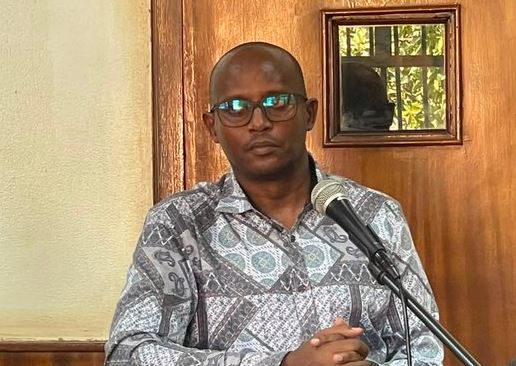
Speaking at the announcement, CPA Michael O. Wanyama, commissioner in charge of the scheme, acknowledged the growing pressure on state coffers.
“The demand for student loans has been increasing year by year,” Wanyama said.
To decide who received funding from the allocated Shs 10.72 billion budget, the ministry deployed a three-tier socio-economic selection model embedded in its digital screening system.
Thirty per cent of the slots were allocated equally across district quotas, another 30 per cent were distributed to districts based on their total share of eligible applicants, and the remaining 40 per cent were reserved strictly for the most vulnerable candidates.
Using an automated scorecard that evaluates household wealth, academic results, and geographic isolation, the scheme successfully directed loans to historically underserved border areas, including Amudat, Buvuma, Kalangala, Karenga, Kotido, and Moroto.
Female students earned 1,400 of the 2,790 available loans, while 1,390 went to male applicants. Additionally, 64 students living with disabilities secured loans covering tuition and specialized learning aids.
Under statutory rules, the scheme remains tightly restricted to science, technology, engineering, and mathematics (STEM) fields, along with tourism and hospitality management, programmes where annual tuition does not exceed the government ceiling of Shs 7.6 million.
Bachelor of Science with Education led the intake with 581 beneficiaries, followed by engineering (498), computer science (313), and health care management (284).
Interestingly, the ministry stretched its original target of 2,400 beneficiaries to 2,790 because many successful applicants enrolled in diploma courses and lower-cost degree programmes.
Funds will not be handed to students directly; instead, tuition and operational fees will be disbursed straight to the 33 participating public and private chartered universities and tertiary institutions.
Yet, beyond the funding shortage, the release revealed a frustrating, preventable barrier for applicant families: bureaucratic error. Of the 2,610 applications rejected outright as ineligible, more than half, 1,452 cases, failed simply because students submitted incomplete files or missed required documentation.
Another 279 applied for unapproved humanities courses, while 87 were continuing students who ignored the rule limiting loans strictly to first-year enrollments. The ministry is currently sending SMS alerts, and successful students must sign official loan agreements before the ministry releases funds.
Established under the Higher Education Students’ Financing Act of 2014, as amended in 2024, the loan scheme was designed to ensure no bright Ugandan is denied a career due to poverty.
But as applications approach 11,000 against a budget that covers less than 2,800, the scheme faces a fundamental question: Without a substantial boost in national funding, can government loans keep pace with a generation fighting for a place in the modern economy.
The post Broken dreams and budget limits: Inside Uganda’s 48.9% higher education loan surge appeared first on The Observer Media Ltd.