Cecil Stodghill: Leading the Futures of Students at The Altamont School
By Sym Posey | The Birmingham Times At The Altamont School, Principal Cecil Stodghill’s story begins long before he ever stepped onto the Birmingham campus, rooted instead in a classroom miles away, where a teacher saw something in him that would ultimately shape not only his future, but the futures of hundreds of students he […]
 Black News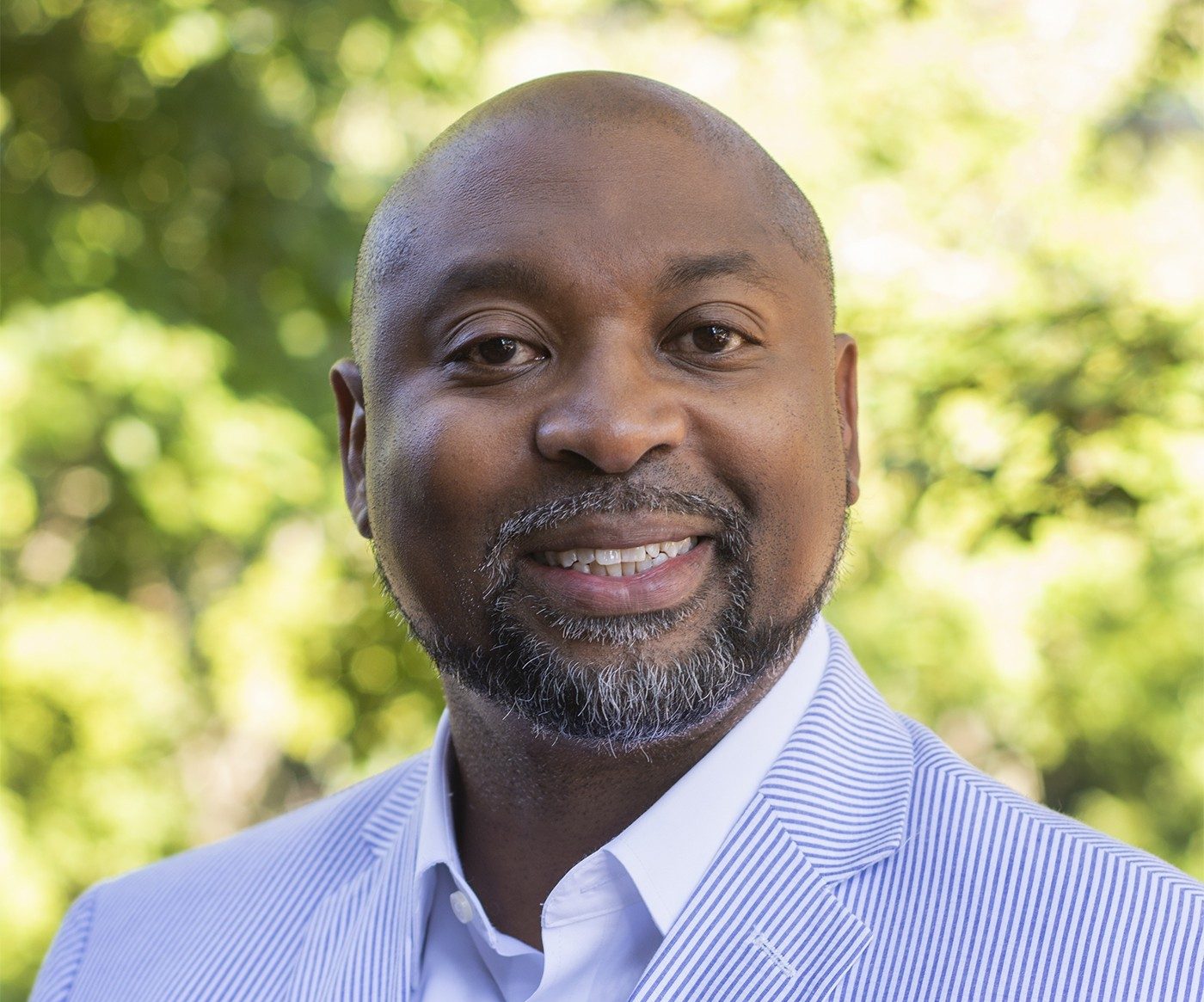

By Sym Posey | The Birmingham Times
At The Altamont School, Principal Cecil Stodghill’s story begins long before he ever stepped onto the Birmingham campus, rooted instead in a classroom miles away, where a teacher saw something in him that would ultimately shape not only his future, but the futures of hundreds of students he now leads.
“I grew up in a very urban area in Chattanooga,” Stodghill said, reflecting on his early years. Raised in a single-parent household, he describes his upbringing candidly and without pretense. “If I may, I grew up in a hood,” he said. “But I realized that education was what would get me — and everybody else — out.”
That realization did not come on its own. It was sparked by Linda Clark, his fifth-grade teacher at Orchard Knob Elementary School, who recognized a potential in him that he himself had not yet fully understood. “To this day, I still don’t know what it was,” he said. “But she felt that I had a little more horsepower than was afforded to me.”
Clark introduced Stodghill to the McCallie School, an all-boys boarding school that would alter the trajectory of his life. Enrolling there in the seventh grade, he encountered new expectations, new environments, and new opportunities that broadened his understanding of what education could offer.
“That was my transformation,” he said. “My understanding of what education can do — not only for an individual, but for a family, for a generation.”
It’s a philosophy that continues to guide him today.
After graduating, Stodghill enrolled at the University of Miami, drawn not only by academics but also by the opportunity to experience a wider world. Initially pursuing international finance, he ultimately earned a degree in marketing, a decision shaped by his desire to engage more directly with people and ideas beyond the classroom.
“I wanted to be in a place that was big, that was new, that gave me more exposure than just academic exposure,” he said. “And it did. It was amazing.”
Firmly Rooted
His early professional years were spent in higher education, where he worked for about five years before receiving a call that would redirect his career path. His alma mater, the McCallie School, invited him back to help launch a new initiative as director of multicultural affairs. It was an opportunity he accepted — and one that firmly rooted him in K–12 education.
“I’ve been in it ever since,” he said.
Over the years, Stodghill built a career that spanned multiple cities and school communities, including roles in Tampa, Charlotte, and Albany. In Albany, he served as head of school before moving to Birmingham in 2022 to lead Altamont.
Though new to the city at the time, Stodghill was no stranger to the school’s reputation.
“I’ve been familiar with Altamont for a number of years,” he said, noting its standing as one of Alabama’s most rigorous academic institutions. “Some would say we are the academic institution in the state.”
Expanding Opportunities
Now, several years into his tenure, Stodghill describes his time at Altamont as both productive and deeply fulfilling. Under his leadership, the school has continued to build on its academic strengths while expanding opportunities for students in meaningful ways.
Among the accomplishments he points to are the growing number of students gaining admission to top-tier colleges and universities — not only within Alabama but across the country and internationally. Students from Altamont have gone on to institutions such as the University of Alabama, Auburn University, and Alabama A&M, as well as Ivy League schools and universities abroad.
“What I’m most proud of,” he said, “is that we’ve continued to hold our academic standard and, I feel, raised that in some regard — but really have exposed students and parents to a world that’s much larger than Birmingham.”
That exposure is not limited to college placement. Within the school itself, students are encouraged to explore a wide range of interests, from athletics and fine arts to debate, robotics, and beyond. Altamont students have earned multiple state and regional championships in these areas, reinforcing the school’s commitment to well-rounded excellence.
“Altamont is that school that allows you to dip your toes into a lot of different waters,” Stodghill said. “You may not be able to do that at much bigger schools. Here, it’s encouraged.”
That encouragement extends into the daily structure of student life.
Giving Students Agency
Serving grades five through 12, Altamont maintains a relatively small student body — approximately 360 students — paired with a faculty and staff of around 80. The result is an environment where individualized attention and community connection are central.
“We’re intentionally and unapologetically college prep,” Stodghill said. “But college prep is much more than academics. It’s about giving students agency. It’s about giving them independence and a say in how their education is shaped.”
Students typically take six to seven classes per day, but the learning experience extends far beyond the classroom. With more than 40 clubs and student-led organizations, as well as affinity groups that reflect a wide range of identities and interests, students are encouraged to find their place — and their voice.
“We’ve got student-led groups for our Muslim students, for our gay and straight students, for our Black Student Union, for our Christian Collective,” he said. “We want to make sure we find all those pockets and safe spaces for students, and then make sure they come together and work together.”
This balance of individuality and community is central to Stodghill’s vision. Equally important is ensuring that Altamont remains connected to the broader Birmingham community, rather than isolated from it.

Individuality and Community
“It’s very important to me that Altamont is a part of Birmingham and not just the elite school that sits on the hill,” he said.
To that end, the school has developed partnerships with organizations and businesses across the city, creating opportunities for students to engage with the community in meaningful ways. For Stodghill, these connections are essential, not only for student development but for the health of the city itself.
“We’re not just up here hiding from the city,” he said. “We’re a part of the city and really helping it grow.”
That same philosophy informs the school’s academic approach. While Altamont offers 22 Advanced Placement courses, it has also made deliberate decisions about curriculum to ensure relevance — particularly in a city as historically significant as Birmingham.
One notable example is the decision to eliminate Advanced Placement U.S. History in favor of a course that more deeply explores local Civil Rights history.
“I don’t want a kid graduating from Altamont going to Princeton, and a kid from Oklahoma knows more about the civil rights movement than the kid from Birmingham,” Stodghill said.
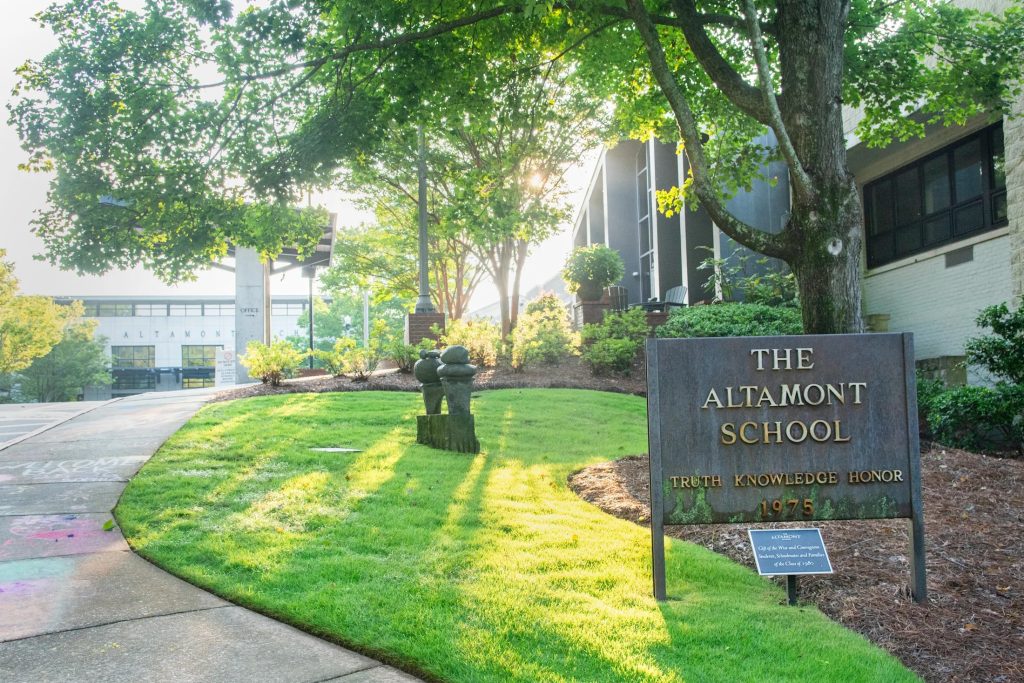
Such decisions reflect the advantages of being an independent school — free from many of the constraints that govern public or religiously affiliated institutions. Founded in 1975 through the merger of the Brooke Hill School (an all-girls school) and the Birmingham University School (an all-boys school), Altamont was established with a commitment to academic rigor and educational independence.
“This is our 50th year,” Stodghill noted, highlighting a milestone that the school has celebrated throughout the academic year with a series of events, including alumni gatherings, art exhibitions, academic panels, and a Golden Gala.
Importantly, he emphasized that Altamont’s founding differs from some narratives surrounding independent schools of that era.
“The thing about Altamont — it was birthed out of a truly organic educational culture,” he said. “And it has grown to be one of the more rigorous, yet racially diverse, religiously diverse, neurologically diverse schools in our area, if not in the state.”
Family of families
For Stodghill, diversity is not a buzzword but a lived value, one reflected in both the student body and the curriculum. It is also evident in the school’s culture, which he describes as a “family of families.”
“We don’t just enroll a student, we enroll an entire family,” he said. “Our parents, our families — that’s our heartbeat.”
That sense of inclusion extends to the school’s most significant milestones. One of Stodghill’s early decisions as head of school was to move graduation ceremonies from the school’s 500-seat theater to the historic Alabama Theatre in downtown Birmingham.
The change was practical and symbolic.
“I don’t want a student who has two siblings, two parents, and four grandparents having to decide who gets the three tickets,” he said. “We need to make this a celebration for all of the families.”
Today, graduation draws between 1,500 and 2,000 attendees, transforming what was once a limited event into a citywide celebration of achievement.

‘Let kids be kids’
Even as he leads an academically rigorous institution, Stodghill remains committed to preserving something often lost in high-pressure environments: the simple experience of growing up.
“It is very important to me that our 12-year-olds, our 16-year-olds, and our seniors get to be 12, 16, and seniors,” he said. “We still let kids be kids.”
That perspective — shaped by his own journey, guided by mentors like Linda Clark, and informed by years of experience across the country — continues to define his leadership at Altamont.
And while his path into education may have begun with a single teacher’s belief, its impact now extends far beyond a single classroom.
For Stodghill, the mission remains clear: to ensure that every student who walks through Altamont’s doors is given the opportunity to discover not only what they can achieve—but who they can become.
To learn more about The Altamont School, visit www.altamontschool.org.