Comment on Beyond the Visual: landmark exhibition led by visually impaired artists and curators by Colin
I was very moved by much of the work in this show. I've seen Aaron McPeake's work in various contexts now; notably MIMA and Wellcome and I have come to view the Icelandic Landscapes' as old friends. The work is utterly gorgeous and always puts me in mind of a happy long weekend in Reykavic a few years ago. I just love the textures, the burnt quality of the work that feels very resonant with the qaulites of fire and ice that sums up Iceland in many respects. I spent about 3 hours in the exhibition and listened to as much of the audio as possible ... the pieces were lengthy but i for one didn't mind that at all. I really enjoyed the creative description ... that was what made the exhibition so unique and stand out in its approach. I think mirroring the objects in the exhibition with such powerful poetic descriptions was genius. It was the thing that made Beyond the Visual such a landmark exhibition in my mind. I loved the humour and play on identity in Gossiaux's 'Doggirl'. For an object that is so unassuming it packs quite a powerful punch. It's the allusions to Egyptology and Anubis. It may well be completely unintended but there is a theme of many-breasted goddesses in artefacts from ancient civilisations and that was the first reference Doggirl' put me in mind of. Like McPeake's work there was something ancient yet contemporary about the work that appealed to me. Possibly my favorite exhibit in the show was Pass Away by Serafina Min and that was completely to do with the audio ... it gave the artwork depth, breadth and significance on so many levels. I loved the fact that the object itself was almost incidental to the atory it told. The poetry of the description of the three deaths made with wax and the accompanying story were profound. The audio gave meaning to an object that in and of itself I might have otherwise walked past without any real clue as to the meditation on life and death that it holds. Joseph Rizzo Naudi's approach to interviewing the artists was a key piece of curation that gave the exhibition coherence. If I am honest I was slightly confused by the range of types of object in the show. I wasnt completely wowed by the theme of the senses that seemed to be the central motif. This was largely because which sense was being evoked seemed to be random. If every object had the same range of sensorial meanings it would have worked but it felt to me that sound, smell and movement seemed played a more peripheral role. Obviousely some of the pieces had movement or sound as key objects but it felt a bit fragmented. Weirdly as much as I loved the fact that you could touch all of the sculptures it almost seemed that you needed a touch workshop to give people permission to be able to move past that cultural limitation of not being allowed the luxury of touch. Liz and I both remarked on how few of the people in the gallery (and it was pretty packed on the Saturday afternoon we were there) actually felt at liberty to touch. I do hope Aaron McPeake gets an opportunity to curate further exhibitions with the same degree of originality to them.
 Black News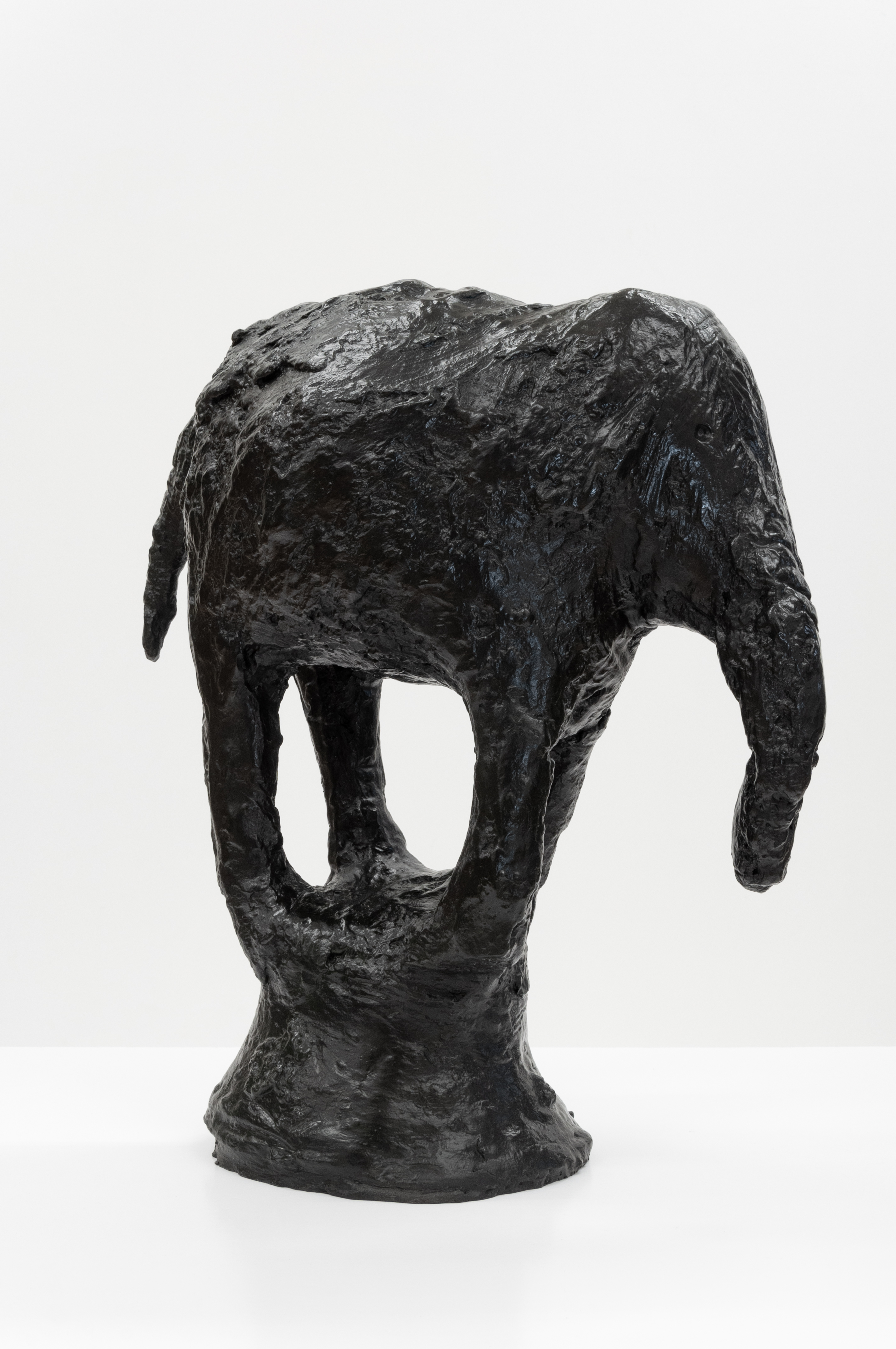
I was very moved by much of the work in this show. I’ve seen Aaron McPeake’s work in various contexts now; notably MIMA and Wellcome and I have come to view the Icelandic Landscapes’ as old friends. The work is utterly gorgeous and always puts me in mind of a happy long weekend in Reykavic a few years ago. I just love the textures, the burnt quality of the work that feels very resonant with the qaulites of fire and ice that sums up Iceland in many respects.
I spent about 3 hours in the exhibition and listened to as much of the audio as possible … the pieces were lengthy but i for one didn’t mind that at all. I really enjoyed the creative description … that was what made the exhibition so unique and stand out in its approach. I think mirroring the objects in the exhibition with such powerful poetic descriptions was genius. It was the thing that made Beyond the Visual such a landmark exhibition in my mind.
I loved the humour and play on identity in Gossiaux’s ‘Doggirl’. For an object that is so unassuming it packs quite a powerful punch. It’s the allusions to Egyptology and Anubis. It may well be completely unintended but there is a theme of many-breasted goddesses in artefacts from ancient civilisations and that was the first reference Doggirl’ put me in mind of. Like McPeake’s work there was something ancient yet contemporary about the work that appealed to me.
Possibly my favorite exhibit in the show was Pass Away by Serafina Min and that was completely to do with the audio … it gave the artwork depth, breadth and significance on so many levels. I loved the fact that the object itself was almost incidental to the atory it told. The poetry of the description of the three deaths made with wax and the accompanying story were profound. The audio gave meaning to an object that in and of itself I might have otherwise walked past without any real clue as to the meditation on life and death that it holds.
Joseph Rizzo Naudi’s approach to interviewing the artists was a key piece of curation that gave the exhibition coherence. If I am honest I was slightly confused by the range of types of object in the show. I wasnt completely wowed by the theme of the senses that seemed to be the central motif. This was largely because which sense was being evoked seemed to be random. If every object had the same range of sensorial meanings it would have worked but it felt to me that sound, smell and movement seemed played a more peripheral role. Obviousely some of the pieces had movement or sound as key objects but it felt a bit fragmented.
Weirdly as much as I loved the fact that you could touch all of the sculptures it almost seemed that you needed a touch workshop to give people permission to be able to move past that cultural limitation of not being allowed the luxury of touch. Liz and I both remarked on how few of the people in the gallery (and it was pretty packed on the Saturday afternoon we were there) actually felt at liberty to touch.
I do hope Aaron McPeake gets an opportunity to curate further exhibitions with the same degree of originality to them.