Crashed plane pilots deserved medals—Air Force Captain
Two senior officers from Malawi Defence Force (MDF) Air Base have vouched for the Dornier 228 aircraft that crashed on June 10 2024 in Viphya Plantation as airworthy and its crew highly experienced. In separate testimonies before the Ad-hoc Committee of Parliament investigating the military plane crash that killed vice-president Saulos Chilima and eight others, … The post Crashed plane pilots deserved medals—Air Force Captain appeared first on Nation Online.
 Black News
Two senior officers from Malawi Defence Force (MDF) Air Base have vouched for the Dornier 228 aircraft that crashed on June 10 2024 in Viphya Plantation as airworthy and its crew highly experienced.
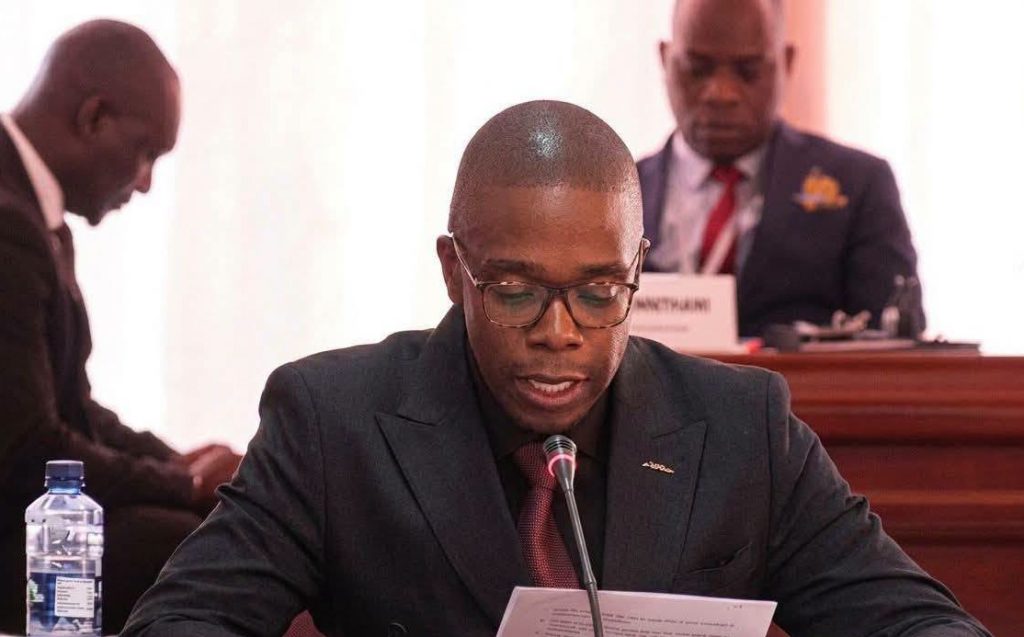
In separate testimonies before the Ad-hoc Committee of Parliament investigating the military plane crash that killed vice-president Saulos Chilima and eight others, including three crew members, Zomba Air Base Commander Colonel Alex Mwachande and pilot Captain Henry Nthani stressed that the aircraft had undergone maintenance checks before undertaking the trip that ended in disaster.
Mwachande, testifying virtually to the inquiry sitting at Parliament Building in Lilongwe, said the aircraft was checked on June 9 2024 at Zomba Air Base prior to setting off for Chileka International Airport in Blantyre to ferry the remains of lawyer Ralph Kasambara to Mzuzu Airport.
He said the aircraft departed Chileka, now named Bakili Muluzi International Airport, at 4pm and landed in Mzuzu at 5.32pm where the crew of Colonel Owen Sambalopa and co-pilot Major Flora Selemani reported encountering severe weather conditions.
Mwachande said despite the bad weather, the aircraft on the morning of June 10 2024 flew from Mzuzu to Kamuzu International Airport (KIA) in Lilongwe to pick Chilima and five other passengers for the return trip to Mzuzu.
He said: “On the night of June 9 2024, I received a request for an aircraft to transport the vice-president from Kamuzu International Airport to Mzuzu. Since there was one aircraft available at Zomba Air Base, the same aircraft that had carried the late Kasambara’s remains was assigned to the mission.”
Mwachande said the aircraft departed KIA at 9.17am on June 10, but failed to arrive in Mzuzu at the expected time of 10.02am.
When asked by committee member Ishmael Mkumba, Blantyre City Ndirande-Malabada-Nyambadwe legislator of United Democratic Front, whether he informed the Office of the Vice-President about the adverse weather conditions, Mwachande said he did not, stating that the weather update was communicated within the military.
Responding to questions about a technical report submitted to the Air Force Commander, he said the aircraft had previously experienced mechanical issues, but these were rectified and it was certified serviceable before the June 9 mission.
On who had authority to abort a flight due to bad weather, Mwachande told the committee that the decision rested entirely with the flight crew.
“That is why execution is decentralised. The decision to abort a mission rests solely with those executing it,” he said.
Mwachande also said the aircraft was airworthy as an Emergency Locator Transmitter (ELT) is not among the minimum equipment required to certify an aircraft as airworthy.
Committee vice-chairperson James Mpunga asked about the competence of the crew to which the base commander, in response, described Sambalopa as an instructor pilot with extensive experience on the Dornier 228 and Selemani as a capable pilot.
“As a team, they were very experienced and fully capable of carrying out the mission,” he said.
On why the experienced crew may have flown at a lower altitude and deviated from their route, Mwachande suggested that they could likely have been attempting to navigate around adverse weather conditions.
Mwachande also highlighted broader challenges facing aviation safety in Malawi, including inadequate funding for pilot simulator training and limited airport infrastructure.
In his testimony, Nthani said the Dornier 228 was one of the safest and most reliable aircraft he had flown.
“I accumulated more than 400 flying hours on that aircraft. It is agile, high-performing and aerodynamically stable. It does not compare with many aircraft I have flown before,” he said.
Nthani said he last flew the aircraft on April 16 2024 and experienced no mechanical problems. He added that he flew the then president Lazarus Chakwera on the same aircraft in March that year.
He also told the committee that the exact circumstances inside the cockpit during the final flight may never be known because it was not equipped with a cockpit voice recorder or flight data recorder.
“I wish I knew exactly what was happening in the cockpit during that ill-fated mission. Unfortunately, it will remain a mystery,” he said.
Nthani praised Sambalopa and Selemani, arguing that their actions likely prevented the aircraft from catching fire after impact.
He suggested that the crew may have switched off critical electrical systems before the crash, reducing the risk of sparks and fire.
“Those pilots tried their best. In fact, they should have been given medals because their actions may have helped preserve the bodies,” said Nthani.
He added that the flight likely encountered extreme weather conditions that forced the crew to deviate from the normal route to Mzuzu, a destination he described as particularly challenging because of rapidly changing weather patterns.
Recalling a previous flight with Sambalopa carrying the President from Lilongwe to Zomba, Nthani said the crew once faced deteriorating weather in multiple directions and relied on limited navigation tools to complete the journey safely.
He described Sambalopa as an exceptionally skilled pilot and decision-maker.
“I am not saying this to cover him. I flew many missions with him. He was what we call a ‘fine hands’ pilot and was very good at handling difficult situations,” said Nthani.
When asked if he would recommend purchasing another aircraft of the same type, Nthani noted that the Dornier 228 is an ageing platform and said Malawi should consider acquiring more modern aircraft.
The final investigative report on the plane crash by the German Federal Bureau of Aircraft Accident Investigation (BFU) attributed the cause of the accident to collision with terrain following adverse weather.
The report said the flight crew operated in adverse weather conditions; leading to the crash.
The BFU report further noted that the Department of Meteorological Services did not provide any meteorological information on the planned route for the crew to use contrary to International Civil Aviation Organisation (Icao) standards.
The report also said contrary to Icao standards and recommendations, radar and radio were not recorded in Lilongwe and the Malawi Air Force did not have up-to-date data on the validity of its flight crew.
Apart from Chilima, Sambalopa and Selemani, others that perished in the accident were former first lady Patricia Shanil Dzimbiri, Chilima’s guard commander Lukas Kapheni, aide-de-camp Chisomo Chimaneni, medical officer Dan Kanyemba, Ministry of Foreign Affairs deputy chief of protocol Abdul Lapukeni and aircraft engineer Major Wales Aidin.
President Peter Mutharika ordered a fresh inquiry in January after Minister of Justice and Constitutional Affairs Charles Mhango’s recommendation upon noting gaps in both reports by the BFU and the commission of inquiry set up by Chakwera.
The post Crashed plane pilots deserved medals—Air Force Captain appeared first on Nation Online.