Dance Remains a Powerful Act of Resistance
Each year, on 29 April, International Dance Day arrives wrapped in celebration – of beauty, of discipline, virtuosity and expressive athletic bodies. Stages are lit up, social media fills with images of bodies in motion, and institutions reaffirm commitments to the arts. But to speak of dance only in these terms of beauty and virtuosity […] The post Dance Remains a Powerful Act of Resistance appeared first on The Namibian.
 Black News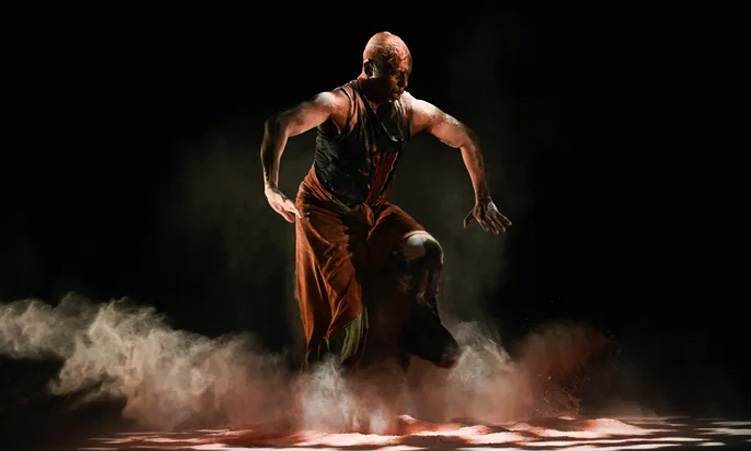
Each year, on 29 April, International Dance Day arrives wrapped in celebration – of beauty, of discipline, virtuosity and expressive athletic bodies. Stages are lit up, social media fills with images of bodies in motion, and institutions reaffirm commitments to the arts.
But to speak of dance only in these terms of beauty and virtuosity is to miss its urgency. In South Africa (and in most parts of Africa), the dancing body is not neutral but evokes deeply felt body politics. Our bodies carry intersectional gendered, racialised and ableist histories where our very flesh is historically situated. To dance, in our context, is not only to move – it is to insist.
Dance is, at its most fundamental, a practice of presence. It asks the body to take space, to be seen, to be felt. Yet presence is never innocent in a society structured by inequality. Who is allowed to be visible, and under what conditions? Which bodies are celebrated, and which are policed, erased, or rendered disposable? These questions haunt every moment of dance training, creation and performance.
For women in particular, the act of occupying space through dance carries a specific charge. In a country grappling with pervasive gender-based violence, freedom of movement is not guaranteed. Women’s bodies are often sites of control and violation. Against this backdrop, the simple act of dancing – of moving without apology, without containment – becomes a form of resistance. It is a refusal to be reduced to the status of victim. It is an insistence on autonomy.
To stand, to step, to gesture expansively in public spaces (theatres being one) is to interrupt a narrative that positions women as perpetually vulnerable. The dancing body declares: I am here, and I will not shrink myself to make others comfortable. This is not to romanticise dance as a solution to systemic violence, but to recognise its capacity to disrupt, to challenge and to re-imagine what embodied freedom might look like. Dance does not replace policy, justice or structural change – but it can shift perception, and perception is never insignificant.
At the same time, the politics of dance in South Africa cannot be separated from the histories that shape it. The legacy of colonialism, racism, patriarchy and ableism continue to inform what is recognised, funded and legitimised within the dance sector.
Despite, for example, a very long, illustrious history of contemporary dance in South Africa, ballet still remains the benchmark of professionalism, while the indigenous searchings for located dance techniques which can speak and move African stories are often relegated to the margins or defined as ‘community-based dance’. Dancers with disabilities are still relegated to arenas of therapy, and their status as professional dance-makers is often never considered – neither in funding nor in access needs.
These inherited hierarchies are not neutral – they are an extension of a broader cultural ordering that privileges certain bodies and ways of knowing and moving over others.
To speak of decolonising dance, then, is not to invoke a fashionable buzzword. It is to undertake the difficult work of dismantling these hierarchies. It asks us to reconsider whose knowledge counts, whose movement vocabularies are deemed worthy of institutional support, and whose histories of exclusion continue to shape contemporary practice. It requires institutions to move beyond symbolic gesture and towards meaningful redistribution – of resources, visibility and power.
Despite its cultural significance, dance in South Africa exists within a landscape of chronic underfunding and instability. Independent artists, small companies and community practitioners often operate in conditions of precarity, carrying immense curative and social labour within limited support. The contradiction is stark: dance is celebrated rhetorically as vital to national identity and cultural expression, yet it remains materially marginal.
And yet, even within these constraints in South Africa dance persists. It persists not only as resistance, but as a practice of repair. In studios, community halls, classrooms and informal gathering spaces, people continue to move together. They do so to process grief, to reconnect with their bodies, to find moments of joy and of community. Dance becomes a site of healing – not in a simplistic or escapist sense, but as a way of re-inhabiting the body after experiences of rupture.
There is something profoundly human in this collective movement. To dance together is to acknowledge interdependence. It is to recognise that bodies do not exist in isolation, but in relation to one another, to history and to place. In this sense, dance offers not only a critique of the world as it is, but a glimpse of what could be: more connected, more responsive, more attentive to the complexities of all divergent lived experiences.– IOL
The post Dance Remains a Powerful Act of Resistance appeared first on The Namibian.