Doyo advocates African-led systems amid global governance debate
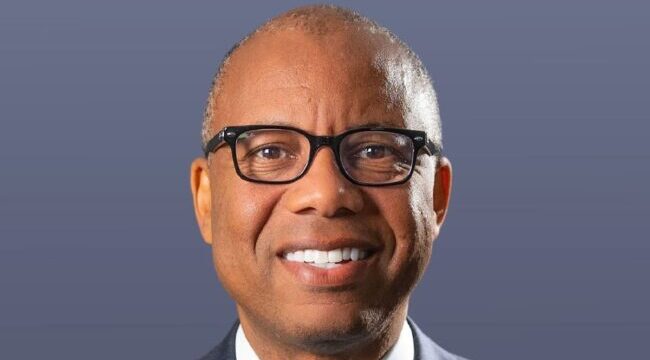
DAR ES SALAAM: Tanzanian opposition politician Doyo Hassan Doyo has called for African countries to strengthen regional political and legal systems while questioning the credibility of global institutions such as the International Criminal Court (ICC) and the United Nations. Speaking in a wide-ranging interview focused on geopolitics, democracy and African sovereignty, Doyo — the 2025 … The post Doyo advocates African-led systems amid global governance debate first appeared on Daily News. The post Doyo advocates African-led systems amid global governance debate appeared first on Daily News.
 Black News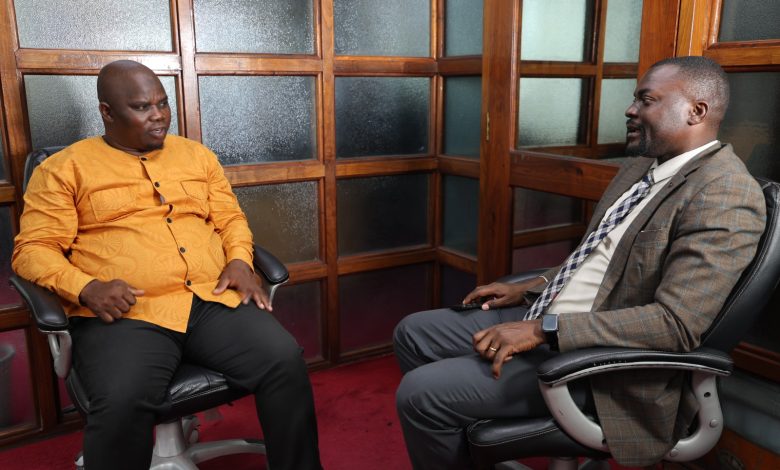
DAR ES SALAAM: Tanzanian opposition politician Doyo Hassan Doyo has called for African countries to strengthen regional political and legal systems while questioning the credibility of global institutions such as the International Criminal Court (ICC) and the United Nations.
Speaking in a wide-ranging interview focused on geopolitics, democracy and African sovereignty, Doyo — the 2025 presidential candidate for the National League for Democracy Tanzania (NLD) — argued that international systems are increasingly viewed across Africa as instruments shaped by powerful states rather than neutral platforms of justice and cooperation.
“The ICC is presented as a court of justice, but many Africans see it differently,” Doyo said. “There is a perception that weaker countries are scrutinised while powerful nations remain beyond accountability.”
The ICC has repeatedly rejected accusations of political bias, maintaining that its investigations are guided by evidence and legal mandate. However, criticism of the court has persisted in parts of Africa for more than a decade, particularly over the concentration of cases involving African leaders and conflicts.
Doyo questioned what he described as inconsistencies in the enforcement of international law, citing conflicts involving civilian casualties where global institutions, in his view, failed to respond decisively.
“When children and civilians die in large numbers and the world only issues statements, people begin asking whether these institutions are truly impartial,” he said.
His remarks reflect a broader shift in African political discourse, where debates over sovereignty, economic independence and institutional autonomy have become increasingly prominent. Several African governments in recent years have advocated reforms to global governance systems, including changes to representation within international institutions.
While Tanzania has not signalled any intention to withdraw from the ICC, Doyo said African countries should invest more heavily in regional legal mechanisms capable of independently addressing major disputes and human rights issues.
“Africa has the capacity to build strong institutions for itself,” he said. “The continent has resources, population and knowledge. The challenge is coordination and political will.”
Push for African-centred systems
During the interview, Doyo repeatedly returned to the issue of African self-reliance, arguing that the continent remains economically vulnerable despite possessing significant natural wealth.
He cited Tanzania’s tanzanite reserves and the mineral wealth of the Democratic Republic of Congo as examples of untapped economic leverage that could strengthen African bargaining power globally.
“You cannot have countries with vast mineral wealth remaining dependent and unstable forever,” he said. “Africa must begin controlling its own economic future.”
The comments come as resource nationalism gains traction across parts of the continent, particularly in mining and energy sectors. Tanzania itself has introduced reforms in recent years aimed at increasing domestic participation and state revenues from natural resources.
Doyo also linked economic independence to political autonomy, arguing that African states should avoid overreliance on governance models imported from Western countries.
ALSO READ: Tanzania’s Doyo questions ICC, urges African legal autonomy
“Democracy does not have one formula,” he said. “Every society develops systems based on its history, traditions and realities.”
The argument aligns with a growing school of thought among some African political figures who advocate for locally adapted governance structures rather than strict adherence to external democratic benchmarks.
During the discussion, Doyo referenced historical East African trade centres such as Kilwa and Zanzibar, saying they demonstrated that African societies had organised economic and governance systems long before colonial intervention.
“We had trade systems, currencies and structures before colonialism,” he said. “Africa should not continue believing that development only comes through Western systems.”
Political analysts say such rhetoric increasingly resonates among younger Africans frustrated by economic inequality, unemployment and perceptions of unequal global power relations. Pan-Africanist narratives centred on sovereignty and resource control have gained visibility across social media and political platforms in recent years.
Criticism of global institutions
Doyo also criticised the effectiveness of the United Nations in responding to major global crises, saying the organisation often appears constrained by the interests of powerful member states.
“The world sees wars continuing while institutions issue statements with little action,” he said. “That creates frustration among developing countries.”
The United Nations has consistently argued that its actions depend on the authority granted by member states and the Security Council, where veto powers held by major nations often shape international responses.
Although Doyo stopped short of calling for immediate disengagement from international institutions, he suggested African countries should reassess the balance between participation in global systems and strengthening continental alternatives.
His comments mirror wider debates within the African Union regarding judicial reform, regional security cooperation and economic integration under frameworks such as the African Continental Free Trade Area.
Analysts caution, however, that reducing engagement with international institutions could create diplomatic and economic risks, particularly for countries dependent on foreign investment, aid and export markets.
Others argue that reforming global institutions from within may be more realistic than abandoning them altogether.
Still, Doyo maintained that Africa’s long-term stability depends on building stronger internal systems capable of reducing external dependence.
“There comes a point where Africa must define its own direction,” he said. “The continent cannot continue relying entirely on structures designed elsewhere.”
The interview is likely to add to ongoing discussions in Tanzania and across Africa over sovereignty, governance and the continent’s position within an increasingly polarised global order.
The post Doyo advocates African-led systems amid global governance debate first appeared on Daily News.
The post Doyo advocates African-led systems amid global governance debate appeared first on Daily News.