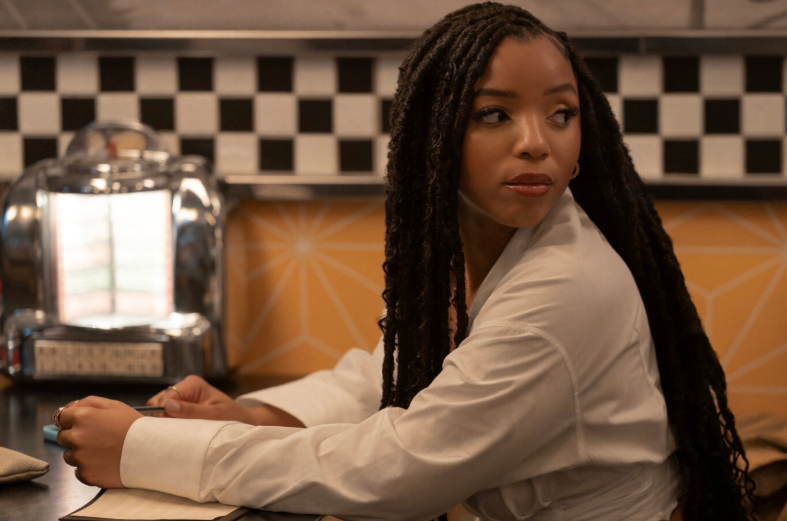
Cherrelle Skeete Talks … The Authenticator
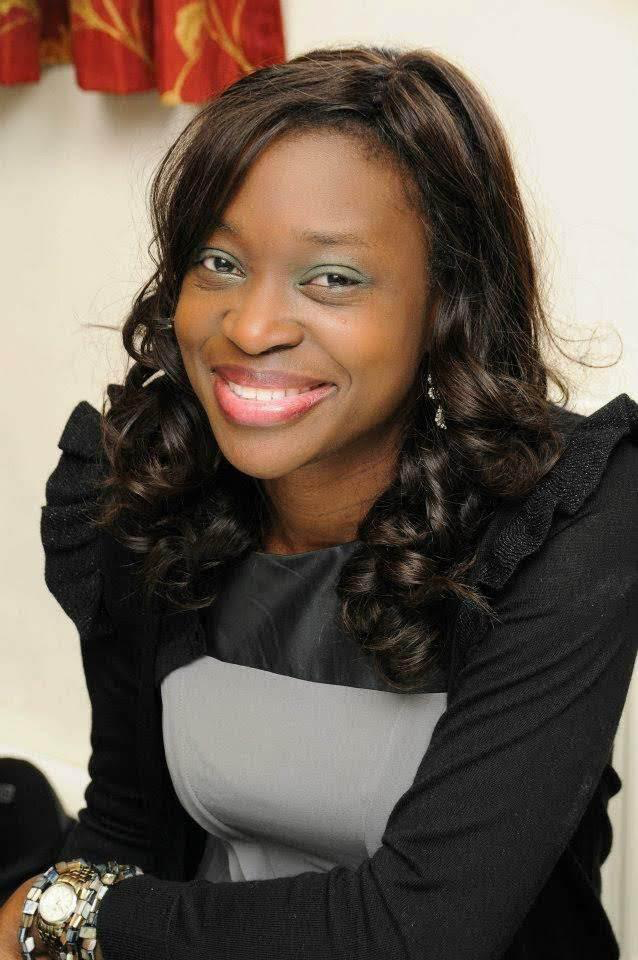
Cherrelle Skeete’s work spans theatre, television and voice, with a consistent focus on stories rooted in identity, history and self-definition. With stage credits including Beneatha’s Place, The Fellowship and Harry Potter and the Cursed Child, alongside screen roles in Hanna and The Sandman, Skeete’s work often explores how characters navigate legacy, belonging and change. She […]
 Black News

Cherrelle Skeete’s work spans theatre, television and voice, with a consistent focus on stories rooted in identity, history and self-definition.
With stage credits including Beneatha’s Place, The Fellowship and Harry Potter and the Cursed Child, alongside screen roles in Hanna and The Sandman, Skeete’s work often explores how characters navigate legacy, belonging and change. She now takes on the role of ‘Marva‘ in Winsome Pinnock’s ‘The Authenticator‘ at the National Theatre, a production that continues Pinnock’s longstanding exploration of memory, authorship and the complexities of Black British life.
Reflecting on her journey as a queer Black creative, Skeete speaks honestly about the importance of self-definition and conviction, drawing on Audre Lorde’s words as a grounding principle. For her, navigating the industry means embracing every part of who she is, even when it isn’t immediately understood, and trusting that clarity will come through the work.
Please introduce yourself …
Cherrelle, Leo, Jamaican/Vincentian, Brum 0121 born and raised but reside in London Town.
Describe your life in one word or a sentence …
Currently, Theatre Mode, and enjoying the spring blossoms and sun. Finally.
Why are we here?
We are here to love and leave it in better state for future generations I hope.
Now, Winsome Pinnock is the Winsome Pinnock “the godmother of Black British playwriting” and this being only her second National Theatre play feels like a moment. What is it about her writing that’s so attractive?
This play is her second at the National Theatre; the first was Rockets and Blue Lights in 2021. My first encounter with Winsome Pinnock’s work was Leave Taking at the Bush Theatre. What immediately drew me in is how she centres women in deeply uncomfortable, intergenerational conversations. The characters often have vastly different lived experiences, and through that tension she reveals the honest, necessary dialogues we could be having in our own lives.
We haven’t seen enough work that truly captures British colonial history and its lasting impact, particularly through this intimate, human lens. Winsome’s writing creates space for those stories to be held, questioned, and felt—both personally and collectively.
In The Authenticator, your character ‘Marva‘ enters this house to do a job, to authenticate something, but it quickly becomes a lot more complicated than that. What was your way into understanding her as a character?
I love the research aspect of any role. I spoke to my academic friends who have similar and different experiences to Marva. An Authenticator is a fictional role so I had to understand where it could sit within the real world. Then understanding Marva’s ‘Why’.
And working with Miranda Cromwell (director)…?
Miranda is a collaborative director and gave lots of room for invention, bringing all that research into the room to even inform how each character interacts with the different objects in the space.
The Authenticator explores questions around who controls history and what gets preserved or erased. At a time when there are ongoing debates about ownership of narratives, whether in academia, politics, or cultural institutions. How do those themes resonate with you beyond the play?
Since I was a child I was fas[t], always asking questions about my environment. I like to know the history of spaces and buildings. I think it helps me understand why we are the way we are. A lot of stories that explore racism or enslavement is often through an American lens. As people of the African diaspora living in England, it is by design we don’t connect the dots to the effects of colonialism. The information is there, you have to be curious enough to learn. It’s gonna challenge our narrow understanding of how we see ourself and our environment. We should know the names of the trailblazers who walked before us.
You’re sharing the stage with Rakie Ayola and Sylvestra Le Touzel, and the relationships between your characters keep shifting. What’s it been like working through that together as a cast?
I admire the talent of these incredible women. The characters are so different and we meet them in the play where there is a lot of underlying tension.i wouldn’t say they are in community with each other, but as a cast we really have to hold each other as we tag team on stage and explore heavy topics in a light way. It required radical honesty and deep trust.
Looking at your work from Beneatha’s Place, The Fellowship and Harry Potter and the Cursed Child on stage, to screen work like Hanna, and The Sandman, there’s often this pull towards stories rooted in identity, heritage and community. What keeps bringing you back to that space?
I think I’m fascinated by stories that allow the characters to interrogate their personal and families history and they get to construct a new identity from that. Do I continue or do I change? We all have to do something with this history.
You also do voice work, including ‘Orisa‘ in the game Overwatch 2. Does moving between stage, screen, and voice change how you think about your approach or is it always the same when building a character?
It’s the same but the audience is placed in different places so you have to make technical adjustments.
You’re working alongside creatives with a strong legacy on stage and behind the scenes. How has being in that space shaped the way you think about your own trajectory not just as an actor, but as a writer and cultural producer?
Allow the work to change you and always always trust the process.
The play is concerned with who gets to author and authenticate history. Does that connect in any way to your experience as a queer Black creative navigating the industry today?
Audre Lorde famously said “If I didn’t define myself for myself, I would be crunched into other people’s fantasies for me and eaten alive“
Fully embracing all aspects of me, my wins and my mistakes and my roots. As a queer black woman coming from Brum, people won’t always understand what you’re doing as you’re building. You have to count on you and your vision with absolute conviction seek out your tribe along the way to build with them. Be loud so your tribe can find you.
GETTING TO KNOW YOU …
If not this, then what? Home furnishing designing with gorgeous fabrics. Think the Black Laura Ashley.
What’s made you sad, mad, & glad this week? Sad I’ve been unable to watch all the amazing shows on because I’m in a play. Shout out the Deep Azure, Ja Ja’s African Hair Braiding, Choir Boy cast. Mad about tube strikes, doctors strikes… pay them. We need them. Glad the sun is here finally. I’m a human sunflower.
What are you watching? Dreaming Whilst Black.
What are you reading? When We Ruled: The Rise and Fall of Twelve African Queens and Warriors by Paula Akpan, and Black Fish: How to Fish, and Stories of the Wata, Kin & Community by Speech Debelle.
The last film you watched? Get Out (can’t believe it’s almost 10 years old).
The last play you saw? All My Sons. The whole cast were mind blowing. Shout out Queen Marianne Jean Baptiste and Paapa Essiedu.
The last live music event? Tawiah at Ronnie Scott’s. An ethereal experience. She makes star dust music.
What’s currently on your playlist? Durand Bernarr – Overqualified, Doechi, Tawiah & Kes.
Which podcast are you listening to? Hidden Histories with Nova Reid.
What’s on your bucket list? I would love to produce a multi-city cultural festival.
Where’s your happy place? Feet in the sand, sun and swimming in a river or the sea with my partner. No phones or emails.
Celebrate someone else … Shiloh Coke who is leading a new channel 4 comedy by Delia-René Donaldson called the Academy. She is also composing for Wendell Pierce’s Othello this spring at Shakespeare Theatre Company in Washington DC. She does it all, a true renaissance woman.
Celebrate yourself … As the founder of Blacktress UK, I have led a movement championing Black actresses and artists since 2017, supporting creative development across all career stages while strengthening community connections. From delivering workshops in leading drama schools to producing a new writing festival of 19 work-in-progress shows, Blacktress UK has become a vital platform for bold, original voices. Our advocacy work continues to drive meaningful change across the industry, addressing
inequity and advancing representation both on and off stage. Central to this mission is the Sage Club, a theatre initiative for African and Caribbean audiences aged 60+, which has introduced many to theatre for the first time while fostering community, connection, and intergenerational exchange.
What’s next? I’ve recently filmed exciting television projects, including Pierre, led by David Harewood, with another project for Netflix soon to be announced. Watch this space.
Where can we find you? @cherrelleskeete
Where can we watch you at work? The Authenticator, Dorfman Theatre, National Theatre Till May 9th.