ECOWAS lawmakers talk tough with new push for economic, security overhaul as Sahel alliance fractures regional unity
Lawmakers from the Economic Community of West African States have called for sweeping reforms to the regional bloc, warning that persistent insecurity, democratic backsliding and economic hardship are threatening the future of integration across West Africa.
 Black News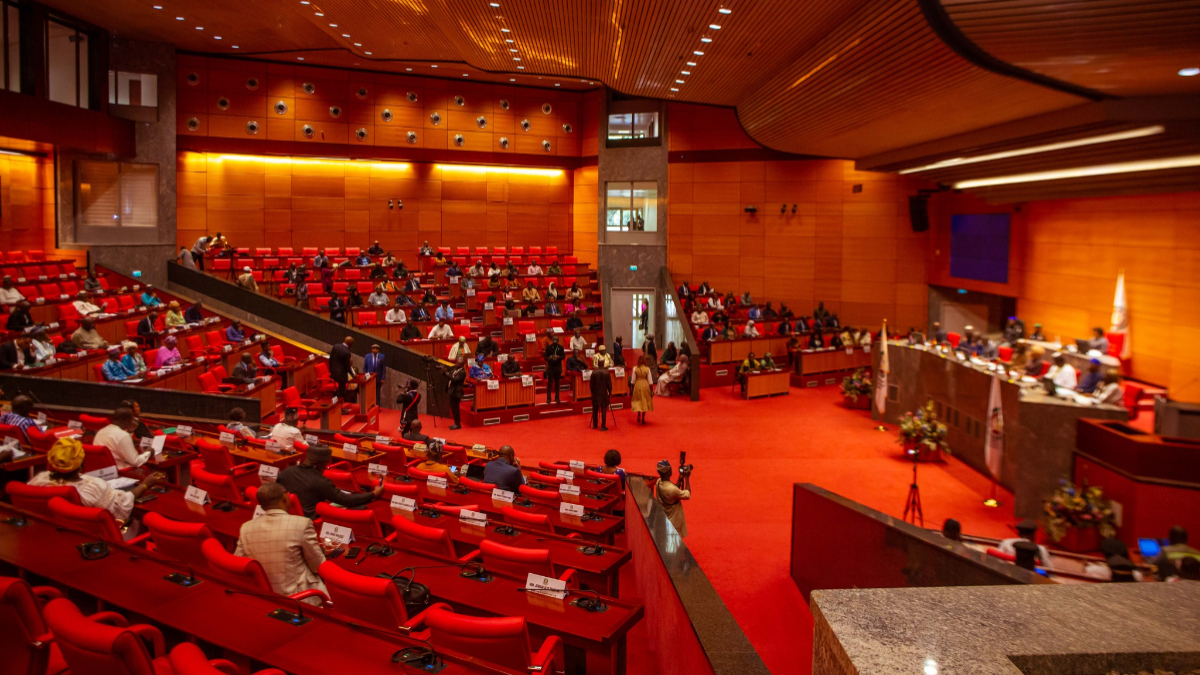

![Delegates at the ongoing ECOWAS Parliamentary session in Abuja as lawmakers debate the possible return of Mali, Burkina Faso and Niger to the regional bloc amid rising concerns over insecurity, xenophobic attacks and regional integration. [X, formerly Twitter/ECOWAS Parliament]](https://ocdn.eu/pulscms/MDA_/551f80477bfca73504f50172afac0536.jpg)
Lawmakers from the Economic Community of West African States have called for sweeping reforms to the regional bloc, warning that persistent insecurity, democratic backsliding and economic hardship are threatening the future of integration across West Africa.
- ECOWAS lawmakers have debated a new reform pact aimed at reshaping regional integration in West Africa amid growing political and security challenges.
- The proposed framework seeks to strengthen democratic governance, economic cooperation, digital transformation and institutional accountability.
- MPs raised concerns over military coups, constitutional amendments by civilian leaders, funding gaps and weak enforcement of regional agreements.
- The discussions come as ECOWAS attempts to rebuild trust and re-engage Sahel states following years of regional tensions.
The debate took place during the ECOWAS Parliament’s First Ordinary Session in Abuja on Tuesday, May 12, 2026, where MPs reviewed a proposed “Compact of the Future of Regional Integration”, a strategic framework aimed at reshaping the bloc’s political and economic direction ahead of a planned summit of regional leaders.
The proposal, presented by ECOWAS Commissioner for Political Affairs, Peace and Security Abdel-Fatau Musah, seeks to reposition the organisation under its Vision 2050 agenda by moving from what he described as an “ECOWAS of States” to an “ECOWAS of the Peoples”.
Musah said the bloc was facing “a convergence of crises”, including terrorism, unconstitutional changes of government, weak implementation of regional agreements, youth unemployment, gender inequality and declining public trust in regional institutions.
“The Pact is both a reform agenda and a survival strategy for regional integration,” Musah told lawmakers, adding that its success would depend on “political will, institutional discipline, sustainable financing, citizens' ownership, parliamentary oversight and effective implementation across Member States”.
The proposed compact outlines plans to strengthen democratic governance, improve regional security coordination, expand intra-African trade, accelerate industrialisation and develop a unified digital market across West Africa. It also seeks to expand opportunities for young people and women while strengthening ECOWAS institutions and enforcement mechanisms.
Lawmakers clash over coups, sanctions and Sahel tensions
![Burkina Faso, Mali and Niger are partnering with Russia to develop the Sahel’s first shared telecommunications satellite, aiming to boost digital connectivity, security and regional economic integration. [X, formerly Twitter]](https://ocdn.eu/pulscms/MDA_/f33a890c313cf6c317a7db4bb6ce40f0.jpg)
The debate comes at a fragile moment for the 15-member bloc following a series of military coups in Mali, Burkina Faso, and Niger, countries that later formed the Alliance of Sahel States (AES) after relations with ECOWAS deteriorated.
Several lawmakers argued that ECOWAS had failed to apply consistent standards to democratic governance, particularly regarding constitutional amendments by civilian leaders seeking to extend their time in office.
One parliamentarian, Hon. Adama, said AES leaders believed ECOWAS condemned military coups while remaining silent when civilian governments manipulated constitutions.
Another MP argued that the regional body needed to create economic opportunities for citizens to discourage dangerous migration journeys to North Africa and Europe.
“It’s time for ECOWAS to stop being the horse that carries others, but one that moves itself forward,” the lawmaker said, while calling for a more federal-style regional structure similar to the European Union.
Lawmakers also questioned the effectiveness of sanctions imposed on member states following political crises. One MP warned that sanctions often hurt ordinary citizens more than political leaders.
“When we sanction states, we sanction the people,” the legislator said, urging the ECOWAS Parliament to become “an actor, not a spectator.”
A recurring theme during the debate was whether the ECOWAS Parliament should transition from an advisory institution into a legislative body with binding powers. Several MPs backed the proposal, arguing that stronger enforcement mechanisms were needed if regional agreements were to be respected.
However, concerns were raised over implementation gaps and the bloc’s historical failure to meet many of its targets.
![Nigerian ECOWAS Parliamentarian Hon. Awaji-Inombek Abiante. [Facebook/ECOWAS Parliament]](https://ocdn.eu/pulscms/MDA_/1a810a908dd94329935f8a4ca6ea8801.jpg)
Hon. Abiante questioned how the new pact would succeed where previous initiatives had struggled.
“This is not the first time,” he said, while also questioning renewed efforts to engage AES countries. “If previous targets of ECOWAS have not been met, how will this Pact succeed?”
Funding also emerged as a major concern, with lawmakers warning that the organisation continued to face financial challenges because several member states were behind on contributions to the regional levy system.
Hon. Keitta reminded colleagues that “some countries owe a lot of arrears in payment of levy”, while other MPs called for ECOWAS to become financially self-sufficient.
Discussions also touched on the stalled plan for a single regional currency, improving investor confidence and increasing representation for women in governance structures. Hon. Fatmata urged lawmakers not to overlook a proposed target for 40% female representation.
Some lawmakers also raised concerns about foreign influence in ECOWAS decision-making and called for greater regional autonomy in global affairs.
Hon. Veronica Kadie Sesay welcomed the proposed reforms, saying citizens wanted to see “reality and visibility” from the regional body. She also appealed for reconciliation with AES countries, warning that instability in the Sahel posed wider security risks across the region.
Musah later assured lawmakers that their concerns would be reflected in the revised document before it is submitted to ECOWAS heads of state for approval.
“Parliament’s role is critical and must not just be advisory,” he said.