Excerpt from ‘A Way Home’ by Cinelle Barnes
Cinelle Barnes, author of 'Monsoon Mansion,' is back with a most-anticipated memoir about remembering and rebuilding. The post Excerpt from ‘A Way Home’ by Cinelle Barnes appeared first on Deep South Magazine.
 Black News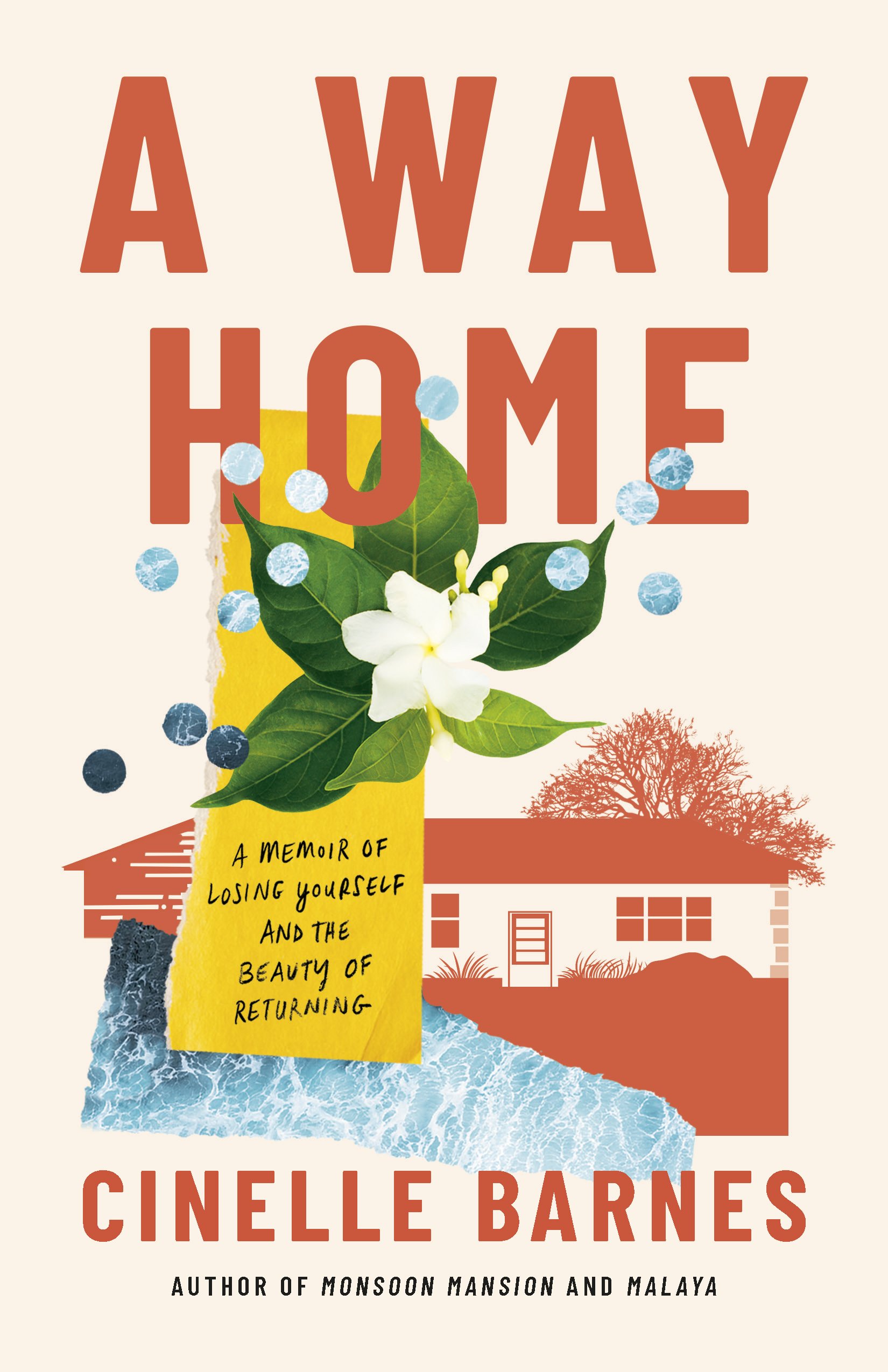
Cinelle Barnes, author of Monsoon Mansion, is back with a most-anticipated memoir about remembering and rebuilding.
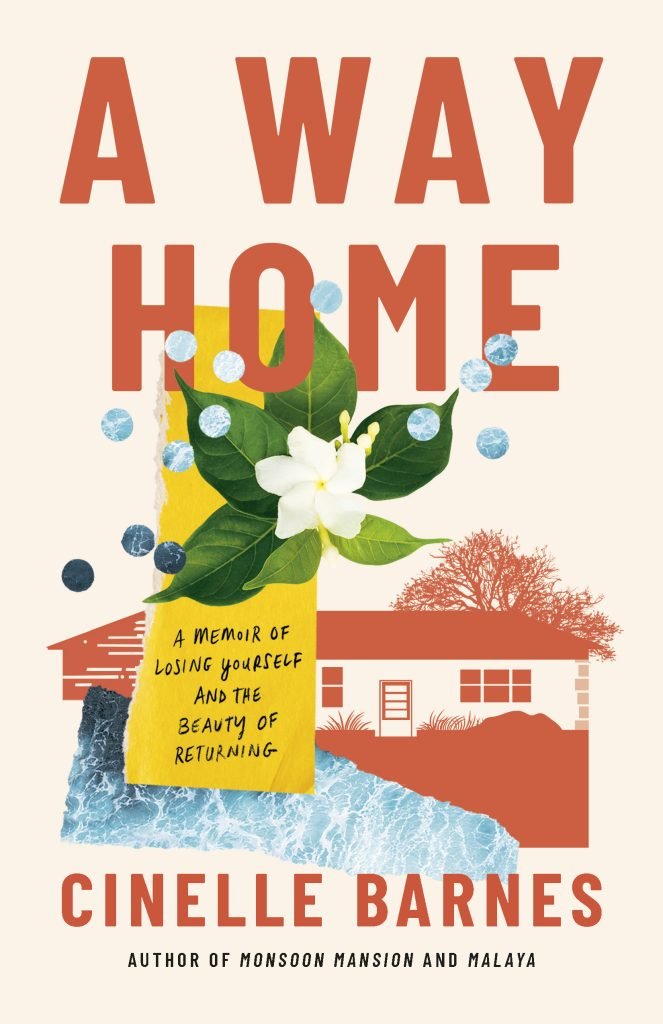
In 2023, Cinelle Barnes was writing a travelogue about journeying home to the Philippines after a 20-year separation when she suffered a traumatic brain injury. Barnes’ story of her adoption and immigration to America as a child is not an easy one to tell to begin with. Suddenly, it seems impossible. Her memories and her connection to her husband and daughter in the Carolinas to her own sense of self and to her past are all erased in the blink of an eye. She has to not only piece together who she used to be, but struggle to learn who she is here and now.
In this memoir of resilience and recovery, Barnes charts her way back to life. Through her unfinished manuscript, she sees a creative and vibrant former self she longs to remember and to know all over again. With the everlasting support of family and friends, she discovers that nobody heals or journeys home alone.
Excerpt From A Way Home
Every inheritance is an accord. We bequeath heirlooms to mark milestones, even celebrate them, and often at the receding borders of a bygone or passing time. When we give it, whatever it is, we know and hopefully accept that the passing of it changes it, that part of it is forever different, if not forever gone. It’s how I felt when Stephen proposed to me with a pearl ring given to him by his mother and given to her by her sister, who’d passed away.
I was surprised by when and how Stephen proposed, sly and sweet and sunset-timed, in an open field next to a peach farm. But I was not surprised that the moment came, finally, because we’d been talking about marriage for a year. We were too young, we both agreed. But unmarried, I would stay undocumented. And while marriage is never the cure for anything, it was at least a way to keep me from further injury, from the unremitting hazards and instability of being without a “valid” identity as defined by the state. So the decision to get married was less curative, more preventive. And again, I was young. I had so much ahead of me that could still be taken from me by the “status.”
That evening, bathed in golden light, I said yes, and when he slid the dainty gold band, a pearl set between two twinkles of mini diamanté, onto my finger, what we were really doing was dressing me for a future not yet with us but that we fully expected to arrive. I was going to become, on paper, American. I was going to have the protections that he had.
The ring fit. Perfectly. There was no fidgeting with it. It slid right on just as quickly as an unfamiliar smugness came upon Stephen’s face, a look I trusted simply because I was grinning in the same way, like we had a plan, some shared foresight, some politics not always conveniently matching with the aesthetics of the life we were beginning to make. We were marrying; he was reSoutherning as I was becoming American. People had started to gift us monogrammed gingham. And yet none of the conventions were going to hold, that we knew, and this knowledge was worth every giggle and snicker under that sherbet sky, the tall pampas and purple cattail blurring the edges of us, as in a watercolor painting.
But, so it goes, the ring was an inheritance, an understanding. It was being changed the moment it started to warm on my hand. Stephen was thrilled that a pearl passed from one generation to another in a farming family hailing from settler-colonists would find its way to the dainty fingers of a dancer, a writer, an artist from the Pearl of the Orient Seas. That the same young lady would have the strong legs and stance of a futbolera. We didn’t yet know the specifics of the reverse migration of the pearl, but we could already feel its power. The ring—the pearl—would find its way back to the very sea from which it was most probably harvested, to Palawan, where pearls of up to fourteen pounds have been found.
On the same evening, on our walk back from the field, he took something from his pocket, something balled up like a tissue holding a child’s baby tooth. I thought he was giving me something like that, a gag gift, and that it was supposed to be funny when all I could take it for was gross. But within seconds, when the ball started to unravel in his hand, it began to show its preciousness: unwrinkled fabric the same color and sheen as the pearl, powder-blue scalloped stitching on the hem, more crisscrossing of pastel threads that together formed a tiny farmer, a tinier carabao, hints of a rice field, a hut, two coconut trees, and these words: SWEETHEART MANILA 1 9 4 5
It was the embroidered handkerchief his paternal grandfather had custom-made for his grandmother in the last year of the Second World War, when he was on his second deployment as an army chaplain and photographer. He was first in Germany, and when Japan’s fury could not be contained in our islands, he was among tens of thousands of American soldiers sent by one empire to vanquish another. It was one slaughter after the other. Camps and weapons were built by both sides, of every kind and for every gruesome purpose. The man never fired a gun. He photographed the many violences.
At times, as I discovered when I digitized images from old negatives he had kept in a box, he photographed children playing in destruction, cows grazing ravaged land, plants sprouting in cracks formed by explosives. With his per diem, Granddad, as Stephen called him, paid for a hand-embroidered silk from a shop somehow still standing among the ruins of what would painfully, slowly grow back into a city that would birth me two generations thereafter. I don’t know if he had it made because he was hopeful for his life, that he would see his sweetheart again, or that he himself would do the dramatic reveal from his pocket. Or if he meant to keep it balled up and stuffed in his green uniform should he be found blasted or slashed or decapitated: proof of a shortened life nonetheless made full by love. Historically, American battles in my homeland are considered the United States’ worst military defeat because of the sheer numbers. No tally is perfect or official, but every tally ever attempted accounts, or recounts, a horrifying figure.
Granddad survived. He went home to his sweetheart, a woman I only got to know when the sweetness in her heart had been snuffed out by old age. But that she would give Stephen the gift and instruct him to pass it on to its new and rightful owner just about eclipsed the moods that swung about erratically after her beloved’s death. The gesture was mostly symbolic—my country remains systemically ruined, naturally depleted, and bound by one-sided treaties. It was, like our marriage, not a cure but a prevention. It would not, on its own, turn things right side up but only show acceptance that there was—is—a right side. It was an act out of step with history, more in step with the times, and dancing along the way, further and further from the impolitic alternative, which is to keep what to one never belonged, and by this I mean less the actual kerchief and more the meaning of art and artifact, especially in times of war. For the centuries Stephen’s paternal side had spent in church work, it was perhaps, in my opinion, the most Christian, or Christlike, thing they’d done.
I always liked the old man. He never looked at me the way some other relatives looked at me and never used an air or a disposition or even gentility to hold me at arm’s length, knowing what he knew about me. When we first met, he held my hand right away and pulled me close to whisper to my ear, “This one’s a good one.” There was half a breath between the handhold and the whisper, an unspoken preface that, sure, Stephen was the least obvious choice for a partner. Why would I ever leave my beloved New York for this Southern boy? But he said those words with a knowing look, like when someone’s light eyes turn deeper in their color and you can see into them. Like the smugness on Stephen’s face the night of our engagement, it was a look I trusted quickly and because the sentiment behind it was something I already shared. Time had already done its job. What our souls knew, our consciousness was already grasping. If we were nervous at all about the prospect that lay before us, it was because we cared and could already feel the weight of the influence at hand.
What I found surprising was how Granddad had taste. He liked to dress, the pictures show. Spiffy in tailored suits that ran forever down his long body, another semblance between him and his grandson, another petty but welcome betrayal, I thought, of their ruralness and Southernness and Americanness. And the colors he chose for the kerchief, the satin he selected, the placement of the simple stitches: very much unlike ruffled embroidery selections at Southern gift shoppes (yes, with the double p and the e—that kind), very much something Stephen would buy for me now. The kerchief was a kerchief, after all—it takes a tasteful person to even know what it is. Its most striking feature was and continues to be its plainness, a simplicity lending so much to a way with grace, a way that I’m attracted to when I browse leather notebooks or ecru earthenware or everyday gold jewelry. Or the black-and-white shotgun house I won with my kindness. Like now, like in this pearl emporium that is the last stop on our last Palawan tour, where I’m looking for inexpensive earrings to bring back to friends and cousins and in-laws and matching rings for me and Anouk. Inevitably, I am thinking about my original pearl and its bequeathal’s original and withstanding meaning. I am thinking of how pearls are made from debris caught in an oyster: trash to treasure. I am thinking of how history can be cruel, and how, in its effort to foil, time gives us coincidences, concurrences, and correlations. Joan Didion said that we tell ourselves stories in order to live. And maybe with all the pain that precedes my and Stephen’s union, all the weight of his country’s and my country’s intertwining, all the wounds that have come from one or the other’s attempt at untangling, I tell myself these stories not to pacify but to allay the pressure to do what’s right, the pressure that no one but myself places on me. I want to recover, and I want the same for my country. I also want it for my love and for his country.
And maybe this is what it means for me to be Filipino American. I don’t go to protests and sign petitions and call my representatives and write all there is to write because I hate my birth and adopted countries. I do it all because, as with anything touched by love and formed in truth, it is worth evading shrapnel for on your way to the battlefield—to find the sole craftsperson and pay for what their hands can make, be it a picture to hang or a hat to don or a kerchief to catch your laughs or your coughs or your tears—and you believe that to undo destruction, to re-create order, like street performers in the Ukraine and fashion designers making gowns from deadstock in the Anthropocene, a belief in goodness and beauty helps get us there.

I’m thankful that Granddad was one of not so many who made it back, that he wasn’t one of 150 wrapped in dynamite here in Puerto Princesa or one of thousands more machine-gunned or bayoneted in Manila, Batanes, too many elsewheres. I do wish he could have commissioned the textile art in something other than the context of war, like how my purchasing heirloom jewelry for Anouk sits in the middle of a lovely two-week vacation. The Philippines, since a generation after the war, became a place of government corruption, poverty, flash floods, deeply eroded soil, shifts in rainfall, even droughts. Irreversible damage left and right, like the body that carries trauma at the cellular level, its chromosomal telomeres altered in length, forever changed and encumbered by what it’s endured. Colonialism’s impacts. But Palawan and its Indigenous keepers and their allies remain. Although not completely spared by storms, the peninsula makes evident that we can choose regeneration where and when available, opt out of garbage, and break from pattern. I won’t resolve everything in my lifetime, and there aren’t enough pearls in the ocean and in this mart to democratize ownership and distribution of them. But I have these four in my hands, a black pearl and a white pearl on each of the matching rings I bargained for, a skill I’m glad to have not lost over two decades with a memory like that of riding a bike headed home. I still got game. My bargaining is a spectacle to no one but my two. What an opportunity to show this side of me, what a chance to be beheld.
The black and white pearls touch but they do not merge. They float on the finger from two ends of a thin and braided wire. They are nimble around each other, like the feet that tread lightly but surely and make right what is in their path.
Everything is still analog here at the emporium. I hand over the cash, and a receipt and customs form are written out with a ballpoint pen. Anouk wants to wear her ring right away. We shake our heads at an offer of an iridescent cardboard box. I anchor my ring on a pinkie. I place hers in the crook of her hand, for her to slide on her own finger. We are already refusing garbage, already breaking pattern. Someone once wrote a review of my first book: “You are chosen. You are breaking generational curses.” I don’t usually look at reviews but that particular one was destined to be found. I read it off my phone, my ring finger curling around the device. The pearl engagement ring was already tight on me eight years after I received it. And it won’t be long until I pass it on.
Excerpted from A Way Home: A Memoir of Losing Yourself, and the Beauty of Returning by Cinelle Barnes. © 2026 Published by Little A, June 9, 2026. All Rights Reserved.
The post Excerpt from ‘A Way Home’ by Cinelle Barnes appeared first on Deep South Magazine.