Herbal tea over pharmaceutical dope
The Bay Area's Tea Man, Gibran McDonaldWhat is Ayurvedic Medicine? The purpose of Ayurveda is to give health to the sick and strength to the strong. The post Herbal tea over pharmaceutical dope appeared first on San Francisco Bay View.
 Black News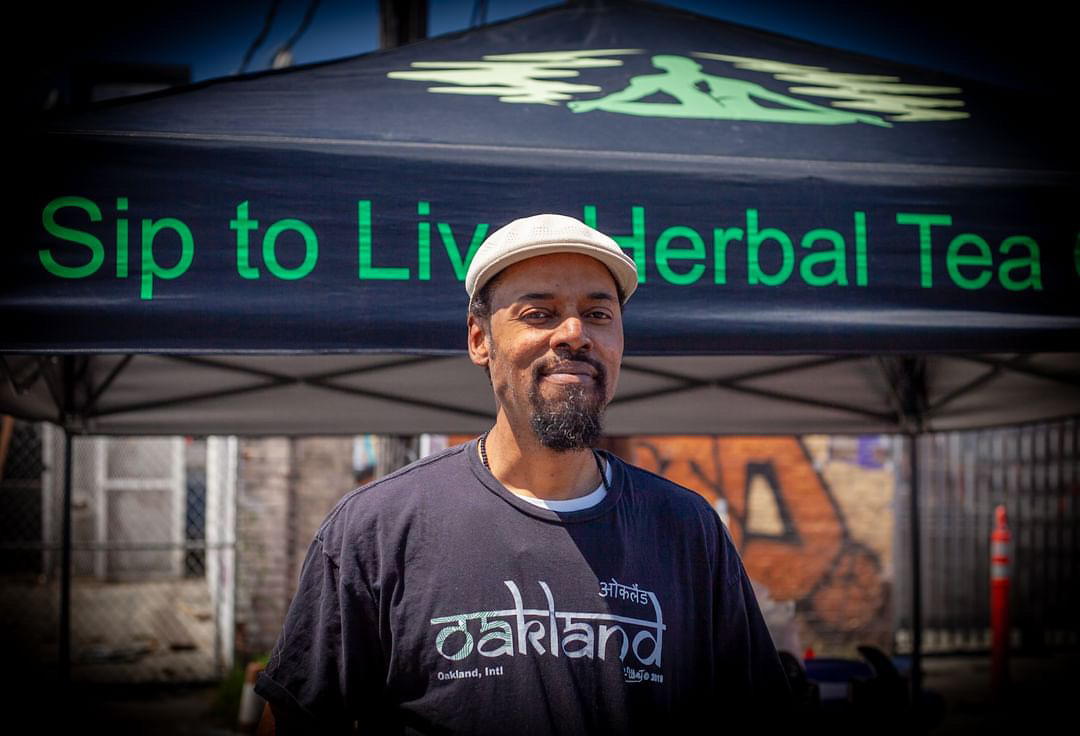
by JR Valrey, the People’s Minister of Information
In a society that promotes for people to think about their health once something goes wrong, we are introducing people to preventative healthy lifestyle choices, like the science and art of drinking tea, which actually is the science of knowing what herbs to ingest to remedy certain ailments and moods. Before there were corporate pharmaceutical drugs, for eons people all over the planet prevented sickness and healed themselves using their knowledge of plants, specifically herbs.
I sat down with the Bay Area’s Tea Man, Gibran McDonald, to talk tea, herbs and Ayurvedic Medicine. Although I have drunk tea throughout my life, this brotha’s knowledge of teas and his use of herbal elixirs for good health and preventative medicine was astounding. It gave a Dr. Sebi vibe, and made me want to learn more to take better control of my own health. I hope this story inspires others in the same way.
JR Valrey: What is Ayurvedic Medicine? Can you tell us a few things about its history and where it is from?
Gibran McDonald: Ayurveda means the Science of Life (Ayus = life, Veda = knowledge/science). It is an ancient indigenous way of living and healing from India and it is the sister science of yoga. It is considered sacred knowledge in India, transmitted from the Creator to the people through the sages. The foundational texts of Ayurveda were written in the form of poetry so the knowledge would be easier for people to remember.
The purpose of Ayurveda is to give health to the sick and strength to the strong. It does this by empowering people to make choices about diet, lifestyle and environment that are best for them based on the understanding that every body is different. Because every body is different, one person’s poison can be the next person’s poison. What is best for a person also depends on time and circumstance. Ayurveda provides a framework for understanding ourselves and how to make choices that promote balance based on that understanding.
Ayurveda is based on a worldview that sees all of reality as one and is similar to Traditional Chinese Medicine, which also describes food, medicine and life through the lens of elements that have attributes. It is a way of knowing oneself and making choices about diet, lifestyle and environment based on that knowledge. According to the Ayurvedic worldview, the physical universe is made up of five elements: Earth, Water, Fire, Air and Ether. These correspond to the solid, liquid, radiant, gaseous and ethereal states of matter, respectively. They each have attributes such as hot, cold, warming, drying, heavy, light etc. Everything and everyone is composed of different proportions of those elements, and aspects of our bodies and minds can be described by those elements.
By understanding the elemental nature of oneself and one’s food, one can make choices that are likely to promote balance, which is the ideal state for growth and the best expression of one’s self.
In addition to being a worldview and way of life, Ayurveda is also a medical system that includes deep knowledge of plant medicine and has been refined by the observations and advances of many generations of Ayurvedic doctors in many branches of medicine. It deals with all stages of life and there are Ayurvedic treatments for many types of imbalances that people face in life. Ayurveda uses many forms of diagnosis including tongue, eye, pulse, and examination of eliminations. Treatments include but are not limited to medicated oil treatments, sometimes with massage, purgation therapy, herbal medicine, yoga and meditation techniques, mineral medicine, and prescriptions for daily routine and diet based on one’s elemental nature and current situation. One can engage with Ayurveda on many levels. My areas of interest are herbs, yoga and meditation.
During the British colonial times Ayurveda was suppressed in India but the knowledge was still applied in homes and villages primarily. Since India broke free from colonization, there has been a resurgence of interest in Ayurveda worldwide because its knowledge helps empower people to live healthier, happier lives.
JR Valrey: Why and how did you get into Ayurvedic medicine?
Gibran McDonald: I got into Ayurveda college as a byproduct of my love of yoga and tea. I spent 1999 and 2000 studying abroad in Seville, Spain. There I met a friend from Morocco who introduced me to tea. Eventually he invited a group of friends to see his country. That trip changed my life because it was there that I really fell in love with tea. I had no idea that there was a tea tradition in Africa, and I really loved the mint tea they drink there and many other teas that I tried. When I came home I was thirsty. I could not find anything close to what I had in Morocco, and I kept it in the back of my mind that one day I would make tea like that, share it with people and maybe change the way we kick it from being alcohol based to being tea based.
Five years passed before I met my first yoga teacher, who taught classes in his basement beginning with and followed by tea. One day I asked him where he got his herbs from and he told me about this herb shop called Smile in College Park, Maryland, close to where I stayed at the time. When I stopped by there, the owner, a Quaker yogi named Tom, recommended that I pick up a book called “The Yoga of Herbs” by Dr. Vasant Lad and Dr. David Frawley. That was my introduction to Ayurveda and herbalism in general. What I read in it blew my mind. I realized that the plants that we use to season our foods and make our drinks are also medicine. The fact that I never learned about this in school was not lost on me.
I became fascinated by plants and I became a regular at the herb shop, always trying things and asking questions. I bought books on herbs and watched documentaries and presentations about Ayurveda. As all of this was going on I was working on my own tea blends, starting with my own version of the Moroccan Mint tea that I love so much. From there I started experimenting with blending my own teas for medicinal benefits and general enjoyment. I first visited Smile around 2006 or so. Sip to Live is the result of the love for tea that I got in Morocco and the information that came from reading about Ayurveda and working with herbs since that time. My intention is to inspire peoples’ curiosity about herbs by providing them with positive experiences with the herbs.
JR Valrey: Why is it important for us to take control over our health instead of depending on doctors, hospitals and pharmaceutical companies?
Gibran McDonald: Most of human history we have relied on plants for medicine. We developed this practice from our own nature and the observation of animals using plants for medicine long ago. Plants have helped people cultivate balance, breathe, digest, and heal from sickness, injury and trauma since the dawn of our existence. Some of my ancestors who relied on plant medicine lived to over 100 years out in the country. The food was different then as well, direct from the Earth and more nutritive than what we find in stores today.
As corporations came to control more of the food system, preservatives were increasingly used to increase shelf life. TV dinners and processed foods were sold as modern and sophisticated but they had the result of making food more difficult to digest. According to Ayurveda, disease comes from the accumulation of toxins, undigested food, and other biological byproducts, which are called amma (blockage). Preservatives and processes used to increase shelf life end up as amma, which accumulates in imbalanced areas of the body where energy is not flowing properly. For this reason, a mindful diet as free as possible from processed foods is a big part of taking control over one’s health. If bacteria can’t digest your food, how can you?
The most important thing to understand about our current healthcare system is that it does not exist to heal people. It exists to make money. There is more money in managing disease than there is in preventing it. When you get sick, they give you expensive medicine with extensive side effects because it generates profit for the pharmaceutical companies. Then they give you more expensive medicine to address the side effects. When there is a profit motive in healthcare, it does not end well for the people.
It is important that we have doctors and hospitals, especially for acute injuries. However, many of the diseases that our people suffer from, such as diabetes, high blood pressure, obesity and some forms of cancer are related to diet. Ayurveda is about the choices, especially dietary, that can keep us balanced and out of the hospital in the first place.
JR Valrey: Can you introduce the audience to a tea that will give them more energy throughout the day? And also please talk about the properties of the herbs involved?
Gibran McDonald: Hibiscus Mint is one of my more popular tea blends. Its foundation is oolong tea, which has caffeine and helps the body metabolize fat more efficiently. It also has hibiscus, a cleansing flower that contains vitamin C and lemongrass, which is also rich in antioxidants. Damiana, an aphrodisiac herb that makes water taste wetter, complements the hibiscus. The blend also includes herbs that are beneficial to digestion such as cardamom, cinnamon, ginger and clove. To support breath, this blend includes mint and thyme. For the brain, this blend has gingko; and it also includes orange peel, an appetite suppressant.
All of my teas are beneficial to the processes of digestion and breath, which are how we receive energy from the world around us. Breath feeds the fire of life and is both a reflection and a controller of one’s state of mind. The more efficiently we breathe, the more energy we receive. This tea energizes by providing caffeine and opening airways. It also tastes great and goes nice on ice.
JR Valrey: Can you introduce the audience to a tea that will help them to calm down and get better rest? Also please talk about the properties of the herbs involved?
Gibran McDonald: The Cool Out is my go-to blend when I get stressed or need help sleeping. Its foundation is chamomile, a calming flower that is bitter, sweet and cooling in its energy and is good for digestion as well. Lemon balm, a relative of mint which has similar properties to chamomile, assists the chamomile in supporting digestion and calm. Tulsi, a sacred herb from India, is an adaptogen (helps the body adapt to stress) and heart opener that also supports immune function. This blend also includes sage, a cooling herb that supports digestion, calms the nerves and is beneficial for women’s lunar cycles and hot flashes. To support clear airways, this blend also includes peppermint. The Cool Out is a sweet, earthy blend that is good for turning the stress dial down so one can rest.
JR Valrey: What is a good tea for people who smoke to clean out their respiratory system as well as kidneys?
Gibran McDonald: Truth be told, all of my teas are good for smokers, as they all support opening the airways in different ways. The Fight from Within is the best one for the lungs. It is an immune support blend that also supports digestive and respiratory function in robust ways. This tea is built on a foundation of echinacea and astragalus root, both of which support immune function. It has a healthy amount of hibiscus, which is a blood cleanser that also provides gentle cleansing to the kidneys, and rosehips, which are packed with vitamin C. For the lungs this blend has mullein, which helps the lungs convert impurities into mucous. Fenugreek is a bitter expectorant that breaks this mucus up, and elecampane root is a rejuvenative for the lungs. Wild cherry bark soothes the throat while peppermint opens the airways. This blend also incorporates cardamom, cinnamon, ginger and fennel seed to support digestion. People tell me that this tea has shortened the length of colds and respiratory problems for them.
JR Valrey: What kinds of things do you teach in your class? When is the class? How long is the class? What’s the cost?
Gibran McDonald: In Herban Yoga I teach basic Ayurvedic concepts through experience with herbs, focusing on one herb per class. The classes happen first and third Tuesdays from 6-7:30 p.m. at Obsidian Healing Camp in West Oakland, and they are donation based.
In class we sip the herb of the day and examine it in the context of Ayurveda – what are the tastes and elements that are predominant in the herb? According to Ayurveda, there are six tastes: sweet, sour, salty, bitter, pungent and astringent. Each one of these tastes is composed of two elements, and each taste has generally predictable effects on the body that correspond with the qualities of its elements. Pepper, for example, is a pungent herb. Pungent taste is fire and air, and it generally promotes digestion, reduces mucus, can cause sweating, and is antibacterial and antiparasitic. There are also three basic types of people, each of which have two dominant elements. By understanding your own elemental composition and the energy of the food and herbs you consume, you can make choices that promote balance. In Herban Yoga we explore these dynamics, practice yoga and then enjoy a Sip to Live blend that includes the herb of the day as an ingredient.
JR Valrey: How do people get more information on your classes?
Gibran McDonald: The best place to get information about Herban Yoga is on my Instagram: @Sip.To.Live.
To find out more about Sip to Live and the teas, you can visit the Sip to Live website at www.SipToLive.com.
JR Valrey is a veteran journalist who can be heard weekly on Wednesdays on 89.5FM KPOO or KPOO.com from noon to 3 p.m. His work can also be heard on www.blockreportradioworld.com.
The post Herbal tea over pharmaceutical dope appeared first on San Francisco Bay View.