How bees are becoming lifeline for rural families survival
SIMIYU: What began as a painful childhood memory in the 1970s has grown into a thriving commercial beekeeping venture that is transforming livelihoods in Simiyu Region while promoting environmental conservation and economic empowerment. For 66-year-old Joseph Sayi, a resident of Somanda Ward in Bariadi District, the journey into beekeeping started after witnessing his younger sister … The post How bees are becoming lifeline for rural families survival first appeared on Daily News. The post How bees are becoming lifeline for rural families survival appeared first on Daily News.
 Black News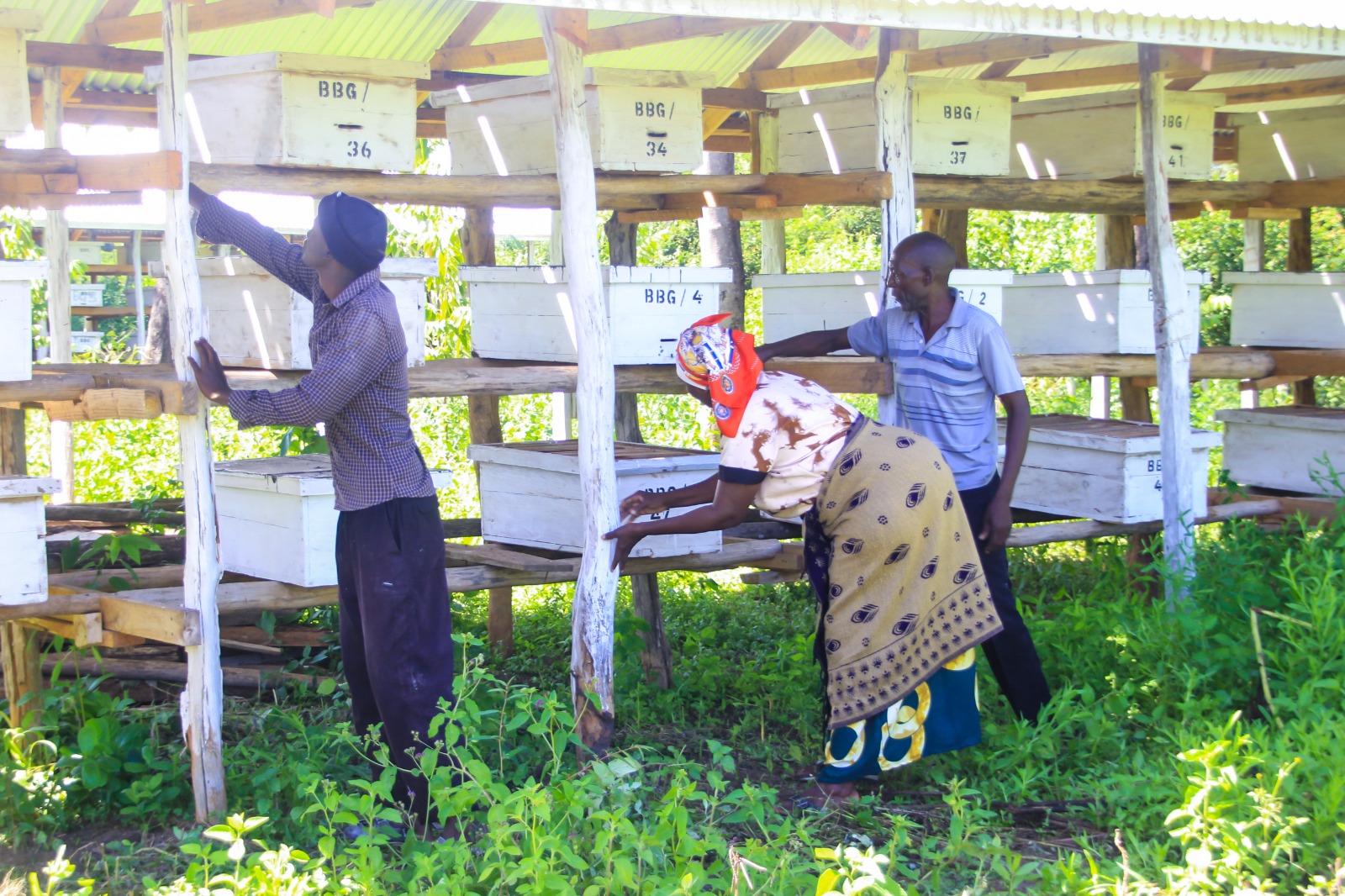
SIMIYU: What began as a painful childhood memory in the 1970s has grown into a thriving commercial beekeeping venture that is transforming livelihoods in Simiyu Region while promoting environmental conservation and economic empowerment.
For 66-year-old Joseph Sayi, a resident of Somanda Ward in Bariadi District, the journey into beekeeping started after witnessing his younger sister suffer severe burns in a fire accident decades ago. The incident became unforgettable, not only because of the injuries involved, but because of the remarkable healing process that followed.
At the time, Sayi’s father, the late Sayi Mhuli, kept honey harvested from wild bees that nested in caves among stones and tree roots in nearby bushes. The honey was applied to the young girl’s wounds, and within approximately two weeks, she had fully recovered without scars.
The experience left a lasting impression on Joseph Sayi.
Recalling the speed at which the wounds disappeared, he began to appreciate the medicinal importance of honey and the value of bees. He believed that lacking honey at home was almost like committing a crime, considering the benefits he had witnessed firsthand.
That realization pushed him to accompany his father during honey harvesting expeditions so he could learn more about bees, their habitats, and how they produce honey.
“It was during that time that I also learned bee larvae are edible,” Sayi recently told the Daily News.
Despite his growing fascination with beekeeping, Sayi remained troubled by the traditional harvesting methods used at the time. His father and many other harvesters relied on setting fire around bee habitats to chase the insects away and simplify the harvesting process.
Unfortunately, the practice caused massive destruction to bee colonies.
“Most of the bees died during harvesting,” Sayi recalled.
As bee populations declined, honey production gradually dropped. Eventually, the caves that once hosted thriving colonies became empty, leading to severe honey shortages and the collapse of the family’s honey business.
For years, the activity disappeared completely from the family until 2010, when Sayi decided to revive the idea with support from his wife, Halima Seleman, and their children.
The family’s first-born child funded the construction of modern beehives, while Sayi, who works as a carpenter, personally built the structures.
“I started with at least 15 hives,” he explained.
Determined not to repeat the mistakes of the past, Sayi sought advice from various beekeeping stakeholders, including the Tanzania Forest Services Agency (TFS), to learn safer and more sustainable beekeeping methods that would protect bee populations.
Through consultations and training, the family learned about improved beekeeping technologies, including the use of double or stacked hives, which allow harvesting on a monthly basis without destroying bee colonies.
Unlike traditional single hives, stacked hives enable harvesting from the upper section while bees continue feeding and protecting their queen in the lower section.
This method prevents destruction of the honeycombs and allows bees to continue producing honey uninterrupted.
“A single hive only provides harvests twice a year because the combs must be dismantled, forcing bees to spend time rebuilding and finding a new queen,” Sayi explained.
He added that the queen bee plays a central role in colony formation and honey production because worker bees gather around her and continuously produce honey while feeding and protecting the colony.
As the family business expanded rapidly, the number of hives reached nearly 150 last year, creating a space challenge at their home compound.
The family later sought assistance from the district council, which offered land free of charge to support the growing venture.
With ambitions of becoming a leading honey producer, the family officially registered the enterprise under the name Bunamhala Beekeeping Group.
Today, the group operates 350 hives, each producing at least 20 kilograms of honey, according to Halima Seleman.
She expressed gratitude to TFS for regular monitoring visits and technical support that have helped the family diversify into other bee-related products, including bee venom, propolis, royal jelly, bee bread, and wax.
The family has also participated in several training programmes that exposed them to the commercial value of bee products beyond honey production.
Through the training, they learned that only 50 cubic centimeters of bee venom, equivalent to one millilitre, can sell for 1.6 million Tanzanian shillings. Propolis sells at 120,000 shillings per kilogram, while wax fetches approximately 10,000 shillings per kilogram.
They also discovered that bee venom is used in manufacturing medicines for various medical conditions, including stroke-related complications.
Despite the progress achieved, the family says limited capital remains a major challenge.
Seleman explained that the business currently depends entirely on family investment estimated at around 58 million Tanzanian shillings. She appealed to the government and development stakeholders for financial and technical support to help the group achieve its expansion targets.
Currently, the group markets its products through trade exhibitions within and outside Simiyu Region, including the annual Nane Nane agricultural exhibitions, where they sell at least 160 kilograms of honey during the events at 18,000 shillings per kilogram.
Meanwhile, in Isanga Ward of Bariadi District, another family has also transformed beekeeping into a source of livelihood.
Eleven members of the Hangaya family now depend on income from beekeeping after inheriting the activity from their late father, Ezekiel Hangaya.
Interestingly, beekeeping was not Hangaya’s original business idea.
According to his son, Samson Hangaya, the late family patriarch initially turned to beekeeping in 2021 after livestock repeatedly invaded and destroyed his tree farms.
To protect the trees, he introduced beehives within the farms as a natural deterrent against trespassers and grazing animals.
“We immediately supported the idea and began producing beehives using timber from our own tree farms, which reduced costs significantly,” Samson explained.
The family later registered the business as Hangaya Beekeeping Group, which currently produces about 600 kilograms of honey.
However, the family continues facing challenges, particularly invasions by aggressive ants that enter the hives and force bees to abandon them, reducing productivity.
They also struggle with persistent livestock intrusion into farms and are calling for government and stakeholder support to fence all four family tree farms.
The Bariadi District Forest Conservationist, Gelard Athanas, said TFS has continued strengthening beekeeping knowledge through demonstration farms established in several forests for both commercial production and environmental conservation purposes.
In Somanda Forest alone, TFS produced approximately 500 kilograms of honey and 25 kilograms of wax during the 2024/2025 season.
“We expect production to reach 630 kilograms of honey during the 2025/2026 season, alongside other bee products,” Athanas said.
In Maswa District, TFS also supports groups such as Thacha Bee Association, whose members describe themselves among the leading honey producers in the area.
The association, established in 2010, initially faced major challenges with honey curdling. However, TFS later educated members that poor filtering techniques contributed to the problem.
The association also learned that honey curdling is natural and often occurs when bees collect pollen from a single tree species.
Members further discovered that even unfiltered honey remains safe for human consumption at household level because substances removed during filtering, including pollen and bee larvae, are edible.
Last year, Thacha Bee Association, which operates at least 2,330 hives, produced five tonnes of honey, according to its chairperson, Charles Mhene.
He assured consumers that the group’s honey meets international quality standards.
Although operating independently, the three beekeeping groups in Simiyu share a common vision of transforming the region into a major honey production hub within the Lake Zone.
However, they also face similar obstacles, particularly inadequate capital and limited infrastructure.
The Vicent Anney commended beekeeping stakeholders for their efforts, noting that the sector contributes not only to economic growth and environmental conservation but also to food security because bees play a critical role in crop pollination.
“Bees are humanity’s best friends,” he said, calling for collective efforts to protect the insects and support the growth of the beekeeping industry.
The post How bees are becoming lifeline for rural families survival first appeared on Daily News.
The post How bees are becoming lifeline for rural families survival appeared first on Daily News.