Meet the Indian founder who turned $50,000 into a $120 million retail supply chain platform for Africa’s informal economy
More than a decade after leaving India for Africa, Deepankar Rustagi turned an initial $50,000 and later about $300,000 from family and friends into a $120 million retail supply chain platform after discovering that millions of small retailers across the continent were still invisible to the digital economy.
 Black News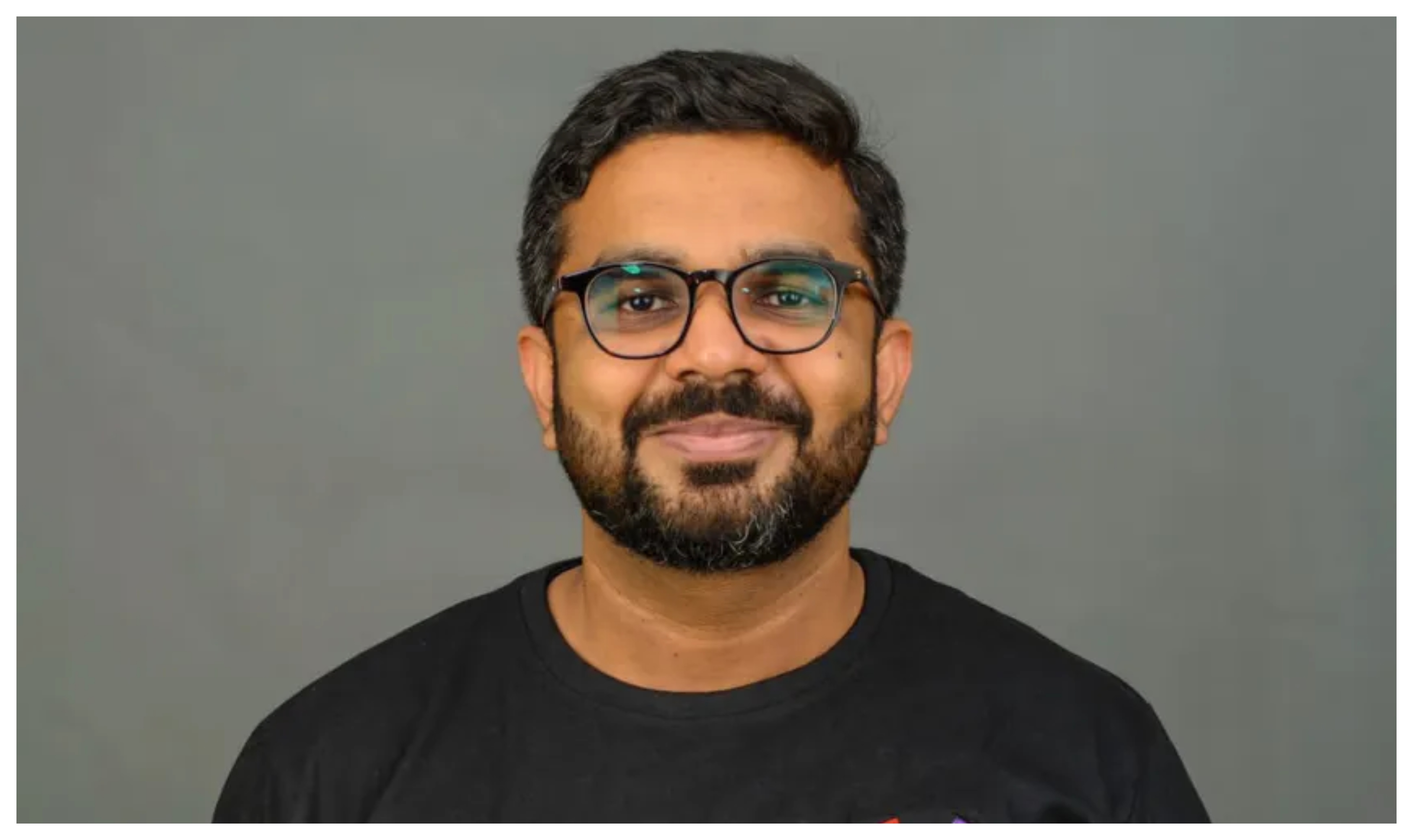

More than a decade after leaving India for Africa, Deepankar Rustagi turned an initial $50,000 and later about $300,000 from family and friends into a $120 million retail supply chain platform after discovering that millions of small retailers across the continent were still invisible to the digital economy.
- Deepankar Rustagi transformed an initial $300,000 into Omnibiz, a $120 million supply chain platform connecting African small retailers to the digital economy.
- The company's rapid growth was fueled by addressing inefficiencies in traditional African trade rather than just securing $29 million in funding.
- Omnibiz, launched in 2019, allows retailers in Nigeria and Ghana to order products directly from manufacturers using digital tools and partners with over 200 brands and 70+ logistics partners.
- Omnibiz operates an asset-light model focusing on digitizing supply chains, offering data-driven inventory, warehousing, logistics, and financial solutions without owning delivery assets.
For many global entrepreneurs and investors, African markets present both enormous opportunity and complex operational challenges, from infrastructure gaps and currency volatility to regulation and logistics bottlenecks that have tested even some of the world’s biggest startups.
But when Deepankar Rustagi first studied Nigeria’s business environment years ago, he saw something many global founders were missing: one of the world’s largest informal trade economies operating almost entirely without digital visibility or operational efficiency.
In a recent interview with Business Insider Africa, the Indian entrepreneur recalled how a simple internet search helped shape his understanding of the opportunity in Africa.
At the time, searching online for businesses in Lagos often redirected users to Lagos in Portugal instead of Lagos, Nigeria, despite Nigeria’s commercial capital having a population above 20 million people.
“The problem became very personal for me,” Rustagi said. “You had millions of small businesses operating daily, employing huge numbers of people, but there was almost no structured digital data around them. These businesses were effectively invisible to the online world.”
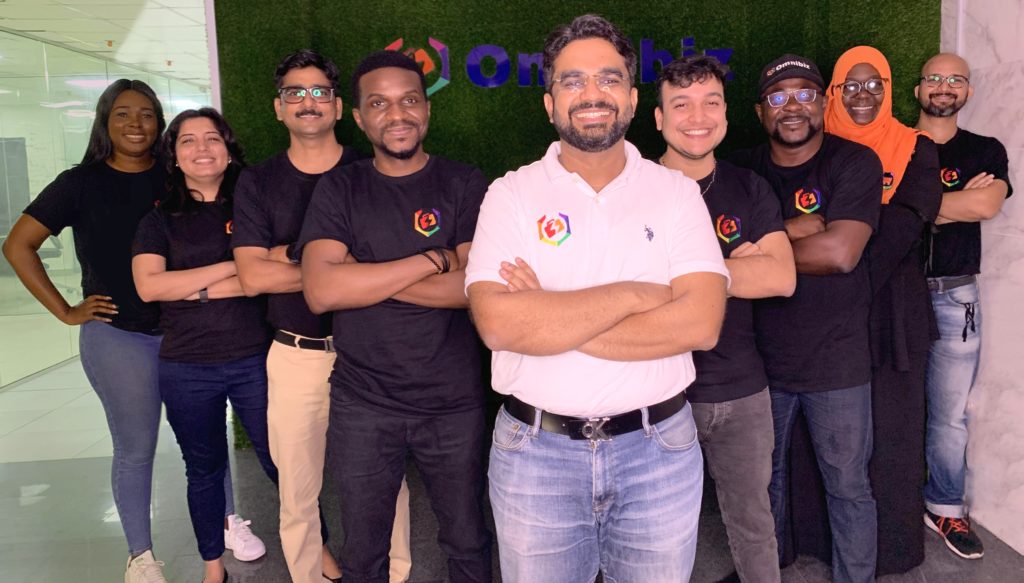
That experience would go on to inspire the creation of Omnibiz, the B2B commerce and retail technology platform Rustagi founded in 2019 to help manufacturers, distributors and retailers digitise trade operations across Africa.
Today, the platform connects retailers across Nigeria, Ghana and Ivory Coast with more than 200 brands through digital ordering systems, embedded finance tools and logistics coordination supported by dozens of delivery partners.
But the founder insists the company’s ambitions extend far beyond deliveries.
“Our objective is not to become the DHL of the world,” he told Business Insider Africa. “We would rather become the backbone of trade in the countries where we operate by helping small businesses across Africa scale themselves more efficiently.”
Africa’s biggest trade problem is inefficiency, not size
According to the Indian founder, Africa’s traditional trade economy remains one of the continent’s largest employers, particularly within FMCG distribution and retail.
However, he believes the sector continues to operate far below its full economic potential because of fragmented logistics systems, poor inventory visibility and weak data infrastructure.
“Traditional trade and FMCG already employ a huge number of people across Africa,” he said. “The challenge is that the efficiency levels remain significantly lower than what you see in other parts of the world.”
Rustagi believes improving those inefficiencies could unlock wider economic growth across the continent.
“When trade becomes more efficient, you generate more jobs, more products, more brands and stronger economic activity,” he said. “That is where we believe the future of Africa’s growth story sits.”
Before launching Omnibiz, Rustagi worked in software, consulting and FMCG sectors, including with Tolaram Group, makers of Indomie noodles in Nigeria.
He also founded We Connect, a local search engine focused on helping small businesses become digitally discoverable.
“We combined the learnings from both businesses,” he explained. “One helped us understand technology adoption among small businesses, while the other exposed us directly to the realities of distribution and retail trade in Africa.”
Why Omnibiz rejected the traditional logistics model
One of the startup’s most unusual decisions was choosing not to own trucks, warehouses or delivery fleets despite operating in Africa’s supply chain sector.
Rustagi said the company deliberately adopted an asset-light model because the problem it wanted to solve was not the absence of physical infrastructure, but poor utilization of existing assets.
“The currently available fleets are operating at lower efficiency,” he said. “If we simply buy more trucks, then we are not solving the actual problem.”
Instead, Omnibiz focused on building technology infrastructure capable of digitizing and coordinating already existing supply chain networks.
“We are a data company rather than a logistics company,” Rustagi said. “People see supply chain on the surface, but what we are really doing is managing inventory data, warehousing data, logistics data, pricing data and financial services infrastructure across the ecosystem.”
That model has also helped the company scale rapidly while avoiding the heavy capital burden associated with owning large fleets.
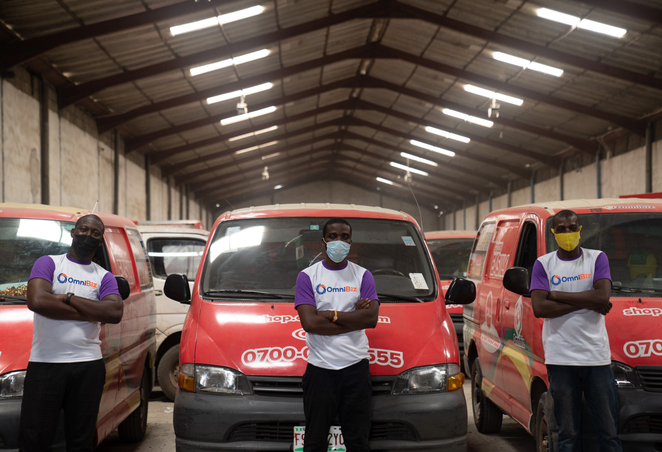
From $50,000 to a $120 million valuation
Like many companies that grew into multimillion-dollar businesses, Omnibiz began with modest capital.
Rustagi told Business Insider Africa that the company initially started with roughly $50,000 before additional support from family and friends helped build an early operating pool of about $300,000.
“For entrepreneurs asking how much capital they need, there is no single number,” he said. “The right amount is the amount required to convince your first customers to consistently use your product.”
The company remained bootstrapped during the COVID-19 period before raising a $3 million seed round in 2021.
It later secured around $5 million in pre-Series A funding and another $20 million in Series A financing, bringing total funding to roughly $29 million.
According to the Indian founder, the company’s last major funding round valued Omnibiz at approximately $120 million.
Still, he appears more focused on long-term operational depth than rapid geographic expansion.
“We are not looking at going wide,” he said. “We are looking at going deeper into the markets where we already operate.”
Rising costs, regulation and Africa’s next growth markets
Like many companies operating across Africa’s retail ecosystem, Omnibiz has faced pressure from inflation, rising fuel prices and global supply chain disruptions linked to geopolitical tensions, including the ongoing conflict involving the United States and Iran.
However, founder Deepankar Rustagi said the company’s asset-light structure has helped limit direct operational exposure because it focuses on managing trade and supply chain data rather than owning fleets.
“We are managing the data of the supply chain, warehousing, logistics and manufacturers,” he told Business Insider Africa. “We intermediate between buyers and sellers at different stages, so the direct impact on us is limited.”
Still, he acknowledged that rising logistics and fuel costs have squeezed margins across Africa’s FMCG sector, particularly for distributors and retailers handling last-mile delivery.
“What really happened is the margins in the trade got squeezed,” he said. “The prices of products have not increased significantly, but the cost of delivering those products has increased.”
Despite the pressures, the company plans to continue investing in Nigeria, Ghana and Ivory Coast while exploring expansion into Senegal, Cameroon and the Democratic Republic of Congo.
“We are not looking at going wide,” he said. “We are looking at going deeper.”
Rustagi added that one of Africa’s biggest operational barriers remains fragmented regulation across the continent.
“There are 54 countries in Africa, and every market has different requirements for payments, lending, trade and partnerships,” he said. “Sometimes you are solving one business problem but need multiple licences just to operate efficiently.”
Despite those challenges, he remains optimistic about Africa’s long-term business outlook and believes more Indian entrepreneurs will continue investing across the continent.
For young African founders, however, his advice is less about valuations and fundraising, and more about patience and problem-solving.
“Entrepreneurship is not for publicity or simply raising capital,” he said. “It is a long-term game built around solving genuine problems, and anyone entering that journey should be ready to commit at least 10 years to it.”