Namibia moves to position itself as the next major force in critical minerals and rare earths
The Southern African country of Namibia, possessing substantial reserves of critical minerals, including uranium, lithium, graphite, rare earths, copper, manganese, and zinc, seeks to leverage these resources to secure a position within the global supply chain.
 Black News

The Southern African country of Namibia, possessing substantial reserves of critical minerals, including uranium, lithium, graphite, rare earths, copper, manganese, and zinc, seeks to leverage these resources to secure a position within the global supply chain.
- Namibia is aiming to secure a position in the global critical minerals supply chain by leveraging its significant reserves of uranium, lithium, graphite, rare earths, and other vital minerals.
- The country is prioritizing local value addition, attracting long-term investors, skill and technology transfer, and integration into global value chains, especially with the EU.
- A strategic partnership has been established between Namibia and the European Union to develop renewable hydrogen and raw material value chains, supported by EU technical assistance.
- Recent exploration activities have revealed new high-grade mineral sites and extensive deposits, attracting strong investor interest and resulting in over 800 new exploration licence applications.
This was made known by the country’s Minister of Mines and Energy, Modestus Amutse, at the critical raw materials industry session of the European Union-Namibia business forum in Windhoek on Wednesday.
The minister disclosed that Namibia's move into global value chains will be made possible by the country’s vital raw minerals, which will serve as the basis for its modern industry.
DON’T MISS THIS: Namibia’s IMF debt vanishes on paper in major fiscal update
Given their essential technological applications, critical raw materials such as uranium, lithium, graphite, and rare-earth elements are gaining heightened international significance.
Concurrently, ongoing exploration activities continue to reveal extensive deposits of these critical resources throughout the African continent.
An example of this is the Australian mining company Aldoro Resources Ltd, announcing the discovery of rare minerals at the site of its Kameelburg project in Namibia.
The minerals, identified as niobium and strontium, were found in high-grade quality in central Namibia between Otjiwarongo and Omaruru.
“For Europe, the priority is secure, diversified, and sustained supply. For Namibia, the opportunity is to use our mineral wealth to advance industrialisation, employment creation and long-term development,” the Namibian Mines minister noted.
The Minister went on to reveal that the country’s current administration is prioritizing the advancement of local value addition, attracting long-term investors, transferring skills and technology, promoting inclusive growth, and integrating into international supply chains, as seen in Namibia.
“We aim to integrate Namibia into European and global supply chains linked to batteries, renewable energy technologies, advanced manufacturing and nuclear fuel markets,” he stated.
Amutse restated his notion that partnership with the European Union (EU) can be beneficial to both parties and stated that since the first EU-Namibia business forum in 2023, progress has been made.
A strategic partnership concerning renewable hydrogen and raw material value chains has been formally established between Namibia and the EU.
Furthermore, the EU is providing technical assistance to Namibia in the development of a comprehensive national strategy for critical raw materials.
Namibia’s recent mineral exploration
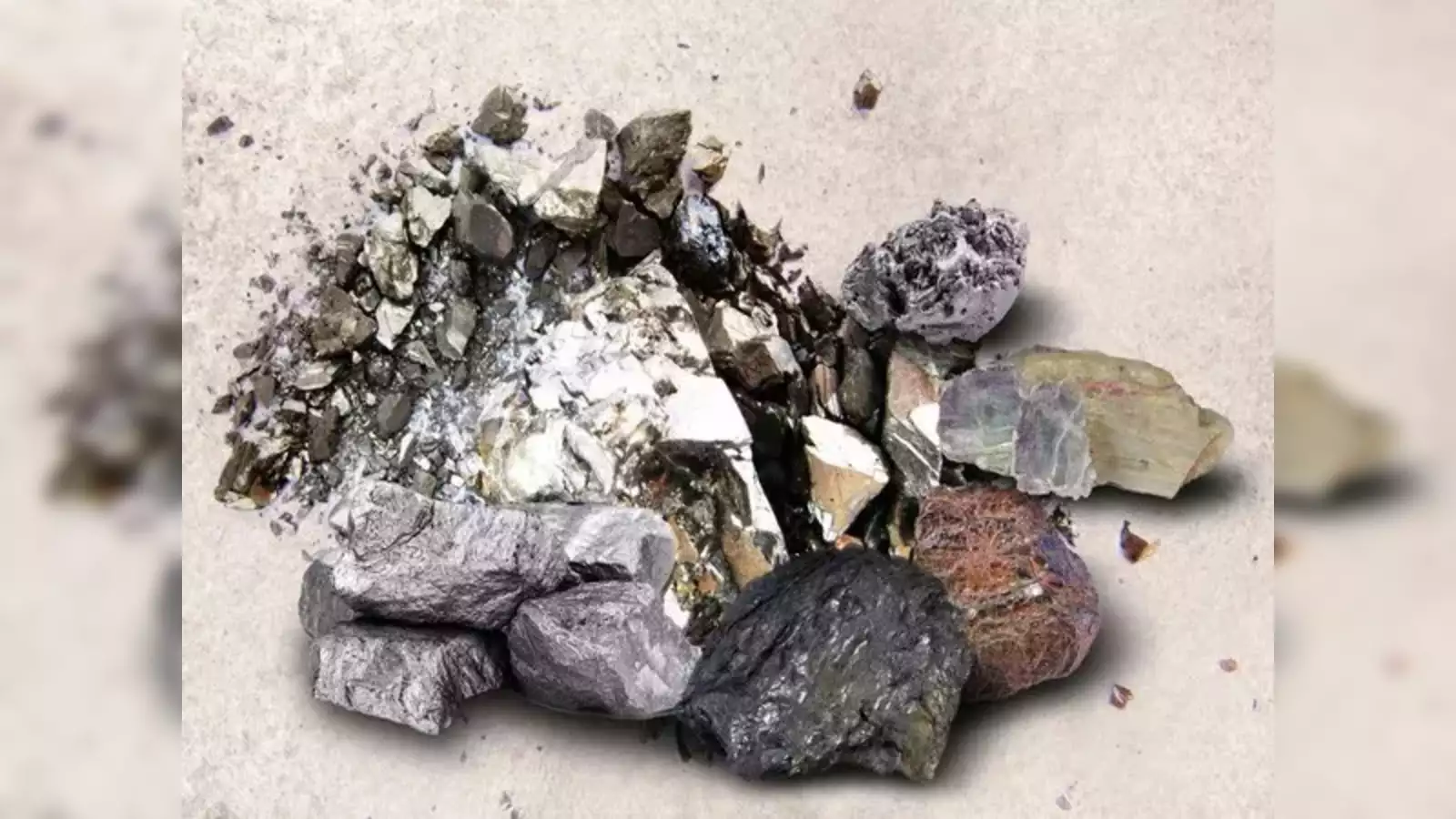
Last month, Namibia unveiled a new high-grade critical mineral site after Australian-listed Askari Metals reported Phase 1 trenching results at its 100%-owned Uis Project, confirming extensive polymetallic mineralisation.
Trenching was completed on roughly 40-metre spacing to guide follow-up drilling in the second half of 2026.
Peak results included 8,340 ppm tin, 0.57% lithium oxide, 299 ppm tantalum, and 2,380 ppm rubidium, with lithium grades exceeding commonly used cut-off thresholds for spodumene pegmatites.
According to Mining Commissioner Isabella Chirchir, Namibia, as of March this year, had received over 800 fresh exploration licence applications, indicating increased rivalry for access to minerals required for renewable energy technology.
Namibia is currently reforming its licensing system, using digital tools to reduce administrative backlogs and expedite approvals.
More than 600 environmental petitions are still waiting, coupled with an infusion of fresh bids, highlighting both the breadth of investor interest and the regulatory strain on authorities.
Namibia already has 588 active exploration permits and is looking to diversify beyond its traditional strengths in uranium and diamonds into a more comprehensive critical minerals ecosystem.