New national budget rewards teachers, secures Uganda’s future
Ugandans will welcome this Financial Year 2026/27 budget as one that puts people first, especially through the long-awaited enhancement of salaries for teachers. For many families across the country, that is the most exciting part of the budget because it speaks directly to dignity at work, better morale in schools, and renewed hope in the […] The post New national budget rewards teachers, secures Uganda’s future appeared first on The Observer Media Ltd.
 Black News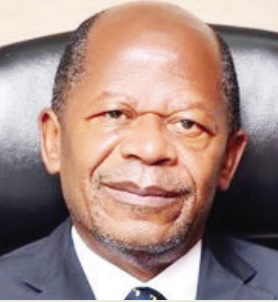


Ugandans will welcome this Financial Year 2026/27 budget as one that puts people first, especially through the long-awaited enhancement of salaries for teachers.
For many families across the country, that is the most exciting part of the budget because it speaks directly to dignity at work, better morale in schools, and renewed hope in the education sector. This decision reflects the continued commitment of President Museveni to investing in the people who build the nation.
Under his leadership, government has remained clear that education is not a luxury. It is the foundation of transformation, productivity and long- term prosperity. A country that is serious about development must be serious about its teachers, because teachers are the custodians of the knowledge, values and skills that shape the next generation.
The enhancement of salaries for primary school teachers and arts teachers in secondary schools and BTVET institutions sends a powerful signal. It shows that government has listened. It shows that the welfare of teachers matters.
And it shows that when Uganda plans for growth, it must also plan for the men and women who prepare our children and young people to drive that growth. A motivated teacher creates a better classroom. A better classroom produces a more confident learner. A more confident learner becomes a more productive citizen.
That is why this intervention is not only about salaries; it is about the future quality of Uganda’s human capital. It is about strengthening the chain that links the school, the home, the community and the national economy. In many parts of Uganda, teachers have continued to serve with great commitment despite difficult conditions.
They have shaped lives quietly and faithfully. They have mentored future doctors, engineers, lecturers, business leaders, public servants and innovators. They have kept the education system moving even when resources were stretched. A budget that recognises them is therefore not only timely; it is just.
The significance of teacher welfare must also be understood in the context of access and quality. When teachers are better facilitated, absenteeism reduces, retention improves, and classroom delivery becomes more stable. Parents gain confidence in the education system. Learners receive more consistent attention.
Over time, the gains are reflected in improved learning outcomes, stronger discipline, and greater trust in public education. The budget also confirms that education remains central to national development. Government continues to support the education, skills and sports sector because our country cannot achieve full monetisation of the economy without an educated, skilled and innovative population.
From primary schools to universities, from technical colleges to research institutions, education remains the bridge between policy ambition and national transformation. This is why the education sector deserves to be viewed not simply as a social service, but as a strategic investment.
Every road, factory, hospital, innovation hub, irrigation scheme and digital platform that government is financing will depend on educated Ugandans to design it, manage it, maintain it and improve it. The more our country invests in people, the stronger the return across every other sector of the economy.
In higher education, this budget reinforces the strategic importance of public universities and tertiary institutions. These are the centres where Uganda trains doctors, engineers, teachers, scientists, entrepreneurs, lawyers, ICT specialists and researchers.
They are also the institutions that generate the ideas, innovations and professional skills needed to serve a modern economy. If Uganda is to compete effectively in a fast-changing regional and global environment, the university must remain central to our national project.
As the higher education subsector expands, the role of government becomes even more critical. Public investment in universities is not simply expenditure. It is a deliberate investment in national capacity.
When government supports university teaching, research, infrastructure and quality assurance, it is investing in the workforce that will strengthen our hospitals, industries, schools, laboratories, courts, farms and public institutions. This year’s budget points in the right direction by maintaining support for public universities and research institutions.
It supports institutions such as Makerere University, Mbarara University of Science and Technology, Kyambogo University, Gulu University, Busitema University, Muni University, Kabale University, Soroti University, Lira University, Mountains of the Moon University and the Uganda Management Institute. These institutions are not just campuses.
They are engines of national capability, regional inclusion and social mobility. Their work goes beyond graduation ceremonies. They produce teachers for our schools, health professionals for our hospitals, agricultural experts for our farms, engineers for our infrastructure, and innovators for our industries.
They also serve as centres of research and policy thought. In a developing country like Uganda, that role is indispensable. Continued support to regulatory bodies such as the National Council for Higher Education is equally important. Quality assurance is vital if Uganda’s graduates are to remain credible, competitive and relevant.
As more institutions emerge and student demand continues to grow, the country must protect standards, strengthen accreditation, and ensure that expansion does not come at the expense of quality. President Museveni deserves praise for maintaining a strategic understanding of education as part of a wider economic mission.
The country’s development priorities in agro-industrialization, tourism, science, technology, innovation, mineral development and digital transformation all depend on a strong education system. None of these sectors can flourish without well-trained Ugandans.
That is why investment in education should never be separated from the national development conversation. The budget’s emphasis on science, technology and innovation is especially important for higher education. Universities and tertiary institutions are expected not only to teach, but also to innovate, incubate enterprise, support industrialisation and respond to society’s practical challenges.
The future belongs to countries that can combine knowledge with production, research with enterprise, and education with problem-solving. Uganda must be one of those countries. This budget must therefore be seen as part of a bigger vision. It is not only about numbers in an appropriation schedule.
It is about preparing Uganda for the next phase of growth. It is about ensuring that as the economy expands, our people are equipped to participate meaningfully in that growth. It is about making growth more inclusive by giving ordinary Ugandans the tools to benefit from national progress.
The focus on salaries is especially important because it speaks to what ordinary Ugandans feel immediately. When teachers are better facilitated, schools become more stable. When schools are more stable, parents regain confidence. When parents regain confidence, the nation moves closer to a more equitable and productive future. In this way, a salary intervention in education becomes a national development intervention.
There is also a strong moral argument here. A nation cannot expect excellence from educators while ignoring their welfare. Respect for teachers must be reflected not only in speeches and ceremonies, but also in public policy and resource allocation. This budget shows that government appreciates that truth.
That is why this budget deserves to be welcomed. It rewards teachers. It protects learners. It strengthens education. And it affirms the principle that national progress begins with investment in people. It also reminds us that education remains one of the surest ways to build a united, skilled and self-confident nation.
Above all, it reflects the steady leadership of President Museveni, whose long- standing commitment to peace, stability, human capital development and economic transformation continues to guide Uganda forward. In this budget, Ugandans can see a government that is not merely planning for growth, but planning for inclusive growth anchored in education.
As a country, we should therefore receive this budget with both gratitude and determination. Gratitude, because it recognises the teacher and strengthens the education system. Determination, because the work of transforming Uganda through education is far from over. But with sustained leadership, clear priorities and continued investment in people, Uganda is firmly on the right path.
The author is acting minister of Education and Sports.
The post New national budget rewards teachers, secures Uganda’s future appeared first on The Observer Media Ltd.