Nolan Wells’ Case is Closed. His Family Still Demands Answers
A Mississippi grand jury found no evidence of criminal conduct in Wells’ death. His family says unexplained injuries and an undetermined cause of death leave questions that still deserve answers. The post Nolan Wells’ Case is Closed. His Family Still Demands Answers appeared first on Word In Black.
 Black News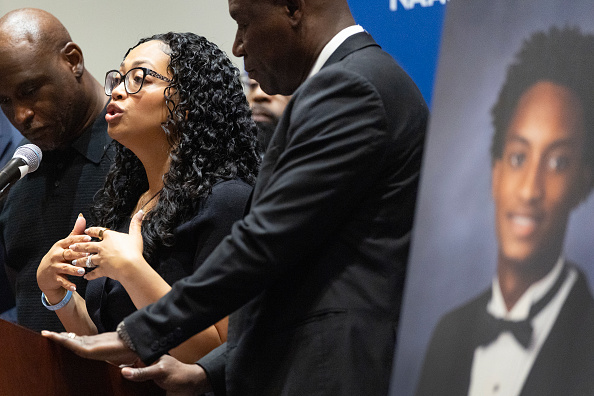

Christine Wonsley has spent nearly three months publicly asking the same agonizing question: What led to the drowning of her 18-year-old son, Nolan Wells, after a Fourth of July boat outing with a group of teenage friends on a Mississippi island park?
On Tuesday — after a grand jury heard witness testimony and reviewed autopsy reports that noted he had injuries on his body, yet declined to charge anyone in Wells’ death — Wonsley said she is no closer to an answer.
LEARN MORE: When a Black Child Dies Without Answers, Grief Has Nowhere to Go
“How can a jury come to the conclusion of drowning, despite knowing that there was trauma to his body, and despite hearing many inconsistencies?” Wonsley said at a news conference.
A Jackson County, Mississippi, grand jury unanimously found insufficient evidence of criminal wrongdoing in Wells’ death, ending — at least for now — a closely watched investigation that has drawn national attention, including the involvement of civil rights leaders and relentless speculation online.
But the decision did not resolve the central mystery lingering over the case since Wells’ body was recovered July 6: what were the exact circumstances of his death?
Friends Left Him Behind
The grand jury concluded the location, condition, and position of Wells’ body were “consistent with drowning.” Yet both Mississippi’s chief medical examiner and an independent forensic pathologist hired by Wells’ family classified his cause and manner of death as undetermined.
For Wells’ family, that distinction is everything.
The grand jury’s verdict “was a reminder that our son’s life does not matter to those who hold positions that are supposed to serve and protect the public,” Wonsley said through tears. “Nolan is loved. He is cherished. He is honored. And he did not deserve to have his life taken away so suddenly.”
Wells, an incoming college freshman and former high school football player, traveled to Horn Island off the Mississippi Gulf Coast on July 4 with white friends. Wells, who is Black, did not return with them.
[The grand jury’s verdict] was a reminder that our son’s life does not matter to those who hold positions that are supposed to serve and protect the public.
Christine wonsley, mother of nolan wells
His friends have said Wells chose to remain on the island to socialize after the boats carrying the group departed. His cellphone returned to shore without him. Wells’ parents have questioned that account, saying it was out of character for their son to be separated from his phone.
After his family reported him missing, searchers found the teenager’s body two days later.
Dozens of Subpoenas and Witnesses
The grand jury issued 132 subpoenas and considered testimony, sworn statements or recorded interviews from 43 witnesses. The evidence also included cellphone and GPS data, videos, forensic reports, and the Jackson County Sheriff’s Office investigative file.
Jurors found no credible evidence that Wells’ death resulted from criminal conduct or was racially motivated.
Though Wells was the only Black person among the group of friends that day, Jackson County District Attorney Angel Myers McIlrath rejected speculation that Wells’ death was racially motivated. She said there is “not a shred of evidence” to support it.
Nevertheless, questions about Wells’ injuries remain.
Dr. Roger Mitchell Jr., the former chief medical examiner for Washington, D.C., performed a second autopsy at the family’s request. He found blunt-force injuries to the back of Wells’ head and other areas of his body. Their significance remains unclear.
The grand jury acknowledged the head injury but concluded it was not fatal. A witness said Wells had slipped awkwardly from the side of a boat earlier that afternoon but continued socializing and appeared unhurt. Jurors said they could not determine whether that fall caused the bruising.
‘The Pursuit of Truth’
Civil rights attorney Ben Crump, who represents the family, said those unanswered questions are precisely why the investigation should continue.
“We don’t know how Nolan died, and neither does the State of Mississippi,” Crump said.
Crump and the family are again calling for a federal Justice Department investigation into his death and the release of the complete investigative file, including the state’s autopsy report.
Others are also trying to ensure the grand jury decision does not become the final word.
Houston rapper and commentator Willie D, a member of the legacy hip-hop group Geto Boys who has repeatedly called attention to Wells’ death, announced Tuesday that he is launching a UniteGive campaign to help answer questions about Wells’ death.
The goal is a $1 million reward to anyone with information that could lead to the arrest and conviction of anyone found criminally responsible. The campaign is specifically seeking verifiable evidence — including original video, photographs, messages, location data or firsthand information — rather than rumors and online speculation.
“The grand jury reached a decision based on the information currently available, but the pursuit of truth remains ongoing for Nolan’s family,” Willie D said.
Because Mississippi has no statute of limitations for murder, any credible new evidence could matter years from now. The grand jury itself left that possibility open. If new evidence suggests Wells’ death was not accidental, the case can be presented again.
The post Nolan Wells’ Case is Closed. His Family Still Demands Answers appeared first on Word In Black.