NSSF assets hit Shs 32.8 trillion, eye Shs 80 trillion by 2035
The National Social Security Fund grew its asset base by Shs 6.8 trillion in the year to June 2026, taking total assets under management to Shs 32.8 trillion. The increase, which represents a 26 per cent jump, cements the fund’s position as East Africa’s largest financial institution by value and puts it roughly one-eighth the […] The post NSSF assets hit Shs 32.8 trillion, eye Shs 80 trillion by 2035 appeared first on The Observer Media Ltd.
 Black News

The National Social Security Fund grew its asset base by Shs 6.8 trillion in the year to June 2026, taking total assets under management to Shs 32.8 trillion.
The increase, which represents a 26 per cent jump, cements the fund’s position as East Africa’s largest financial institution by value and puts it roughly one-eighth the size of Uganda’s entire economy.
The Fund’s income rose even faster. Revenue climbed 85 per cent to a record Shs 6.51 trillion, driven by a 21 per cent rise in interest income to Shs 3.49 trillion, a 55 per cent jump in dividend earnings to Shs 369 billion, and gains on regional equity holdings.
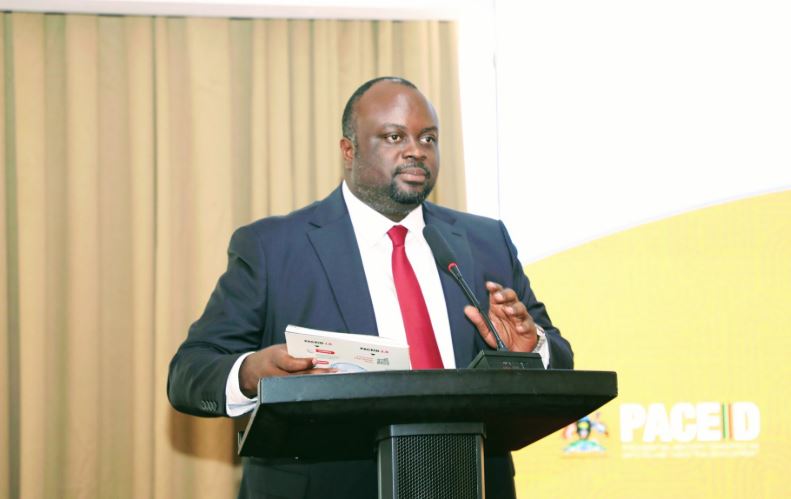
Speaking at the Fund’s annual media dialogue, managing director Patrick Ayota said the results give NSSF a “strong platform” for its Vision 2035 target of Shs 80 trillion in assets, and reflect a strategy of matching long-term member savings with stable, long-duration assets – chiefly government securities, which still account for the bulk of the portfolio even as the Fund tilts further into equities.
NSSF’s portfolio remains anchored in fixed income – 76.5 per cent of assets, mostly treasury bills and bonds – even after a deliberate shift toward equities (up to 18.4 per cent of the book from 13.3 per cent) and a slight pullback in real estate.
This means a large share of members’ savings is doing double duty: funding government borrowing at a moment when domestic bond yields have been falling – Uganda’s 10-year yield dropped from 16.86 per cent to 15.23 per cent over the year – which lowers the country’s cost of borrowing even as the Fund still delivers competitive returns to savers.
The scale of this asset base makes NSSF one of the few domestic institutions capable of financing big infrastructure or absorbing shocks that would otherwise fall on the state or foreign capital.
Chief Investments Officer Kenneth Owera said construction of the Pension Towers, the Fund’s flagship real estate project, is now 83 per cent complete and on track for handover in the first quarter of 2027, with commercial letting expected to begin within the current financial year.
Construction of the Pension Towers started in 2008, and has missed a number of completion deadlines. The project has been hit hard by investigations in the procurement of the contractor, adjustments in designs, and bureaucratic hurdles. NSSF remitted Shs 301.5 billion in taxes this year alone, and Shs 1.216 trillion cumulatively since FY2020.
Ayota said cost discipline underpinned the overall results of the Fund’s performance: administration costs fell to 0.84 per cent of assets from 0.88 per cent, and the cost-to-income ratio improved to 7.7 per cent from 7.9 per cent – meaning every shilling spent running the Fund generated roughly Shs 27 in value for members, up from Shs 24 a year earlier.
The Fund also flagged strong early traction on Smartlife Flexi, its voluntary savings product for workers outside mandatory coverage, which has drawn Shs 180 billion in contributions since its November 2024 launch.
Members will learn what this performance means for their pockets on September 24 when Finance Minister Henry Musasizi announces the annual interest rate at NSSF’s 14th Annual Members’ Meeting. The Fund said it expects to keep its “Return Promise” of paying a rate above the 10-year average inflation rate plus two percentage points.
The post NSSF assets hit Shs 32.8 trillion, eye Shs 80 trillion by 2035 appeared first on The Observer Media Ltd.