Rantšeli refuses to let early retirement end his passion for sport
FORMER long jumper and 400m athlete, Pule Rantšeli, is proof that early retirement does not have to mark the end of a journey in sport, but can instead open doors to new opportunities beyond competition. Today, he serves as a coach developer, competitive trainer, strength and conditioning coach, FIFA football medic, and sports administrator. Rantšeli flourished... The post Rantšeli refuses to let early retirement end his passion for sport appeared first on Lesotho Times.
 Black News
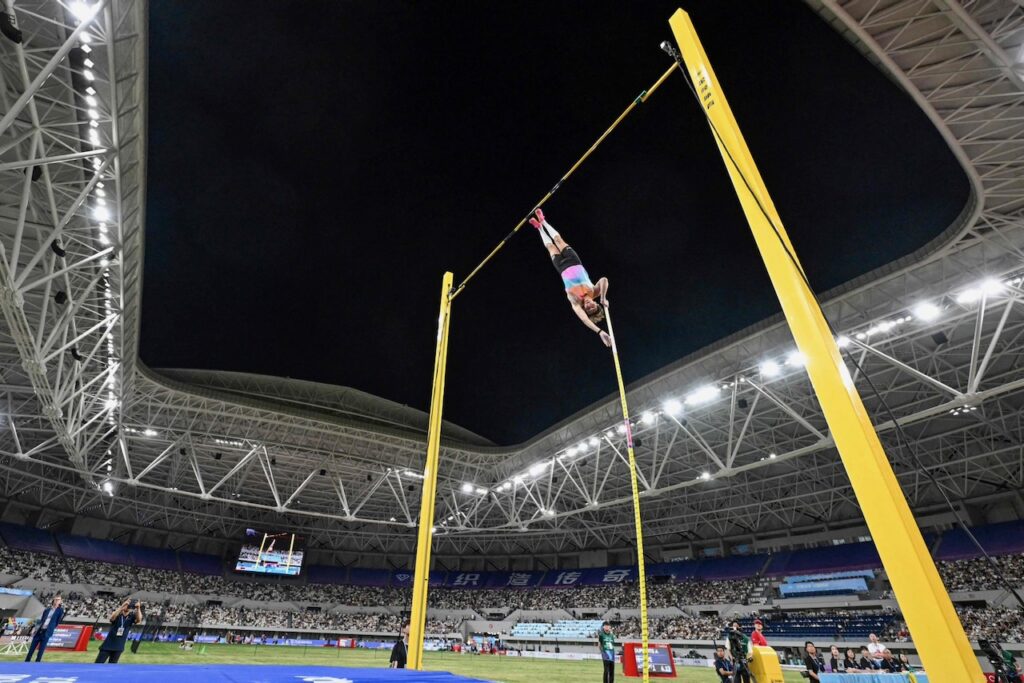
FORMER long jumper and 400m athlete, Pule Rantšeli, is proof that early retirement does not have to mark the end of a journey in sport, but can instead open doors to new opportunities beyond competition.
Today, he serves as a coach developer, competitive trainer, strength and conditioning coach, FIFA football medic, and sports administrator.
Rantšeli flourished during his years at the National University of Lesotho, representing the country at the 2006 African Student Championships in Bambous, Mauritius, where he finished fourth in the long jump.
He continued to excel in athletics, winning silver at the 2009 Free State Provincial Track and Field Championships in South Africa. He also became the first Mosotho student-athlete to qualify for the 26th World University Games in Shenzhen, China.
Although injuries cut short his promising athletics career, Rantšeli refused to walk away from sport. Instead, he transitioned into coaching, sports medicine, strength and conditioning, and sports administration.
He has since shared his expertise across Africa and Asia while mentoring young athletes and contributing to sports development.
The Lesotho Times (LT) senior reporter, Leemisa Thuseho, sat down with Rantšeli to discuss his journey, his role in sports development, and the challenges facing sport in Lesotho.
LT: After your playing career ended, what inspired you to take other routes to remain involved in sport?
Rantšeli: After my playing career was cut short by injuries, my passion for sport and athlete development inspired me to remain actively involved in the industry.
I realised that while my time on the field may have ended, there were still many ways I could contribute to the growth of sport and the development of athletes.
That is when I ventured into coaching, coach education, strength and conditioning, football medicine, and sports communication, using my experience to mentor young athletes and contribute to sports development in Lesotho and beyond.
Sport has always been more than just participation for me; it is a platform for empowerment, education, discipline, and community development.
LT: As a coach developer, competitive trainer, strength and conditioning coach, FIFA football medic, and sports administrator, how do these different roles complement each other?
Rantšeli: These different roles complement each other because they all focus on athlete development and the growth of sport. As a coach developer, I mentor coaches on modern training methods, while my work in strength and conditioning helps athletes improve performance and discipline.
My role as a FIFA football medic has also given me valuable knowledge in injury prevention and player safety. Together with sports administration, these roles have given me a holistic understanding of sport.
Although balancing them has not been easy, continuous learning, practical experience, and passion for sport continue to drive me.
LT: With sport not yet recognised as a profession in Lesotho, is it easy to apply your expertise? What do you think is holding the country back from reaching professional standards?
Rantšeli: Applying my expertise in Lesotho comes with both opportunities and challenges. While sport is gaining recognition, it is still not fully professionalised because of limited funding, inadequate facilities, and the lack of structured career pathways.
There is also a need for continuous education and stronger institutional support within the sports industry.
I believe Lesotho should move beyond physical education and establish dedicated faculties of sport to develop professionals in areas such as coaching, sports medicine, administration, and sports science.
Stronger collaboration between government, federations, schools, and the private sector is also needed to build sustainable systems that support athletes and coaches.
Despite these challenges, Lesotho has immense sporting talent and potential. With proper investment, education, and leadership, the country can develop a more professional and sustainable sports industry.
LT: Do you think the country is doing enough to create sustainable careers for coaches, trainers, medics, and other sports practitioners? If not, what needs to be done?
Rantšeli: Sport is still not fully recognised as a profession in Lesotho, making it difficult for coaches, trainers, medics, and other practitioners to build sustainable careers. Many work on a voluntary or part-time basis with limited financial security and few opportunities for career growth.
There is a need for stronger policies, better funding, and collaboration between government, educational institutions, federations, and the private sector to professionalise the industry.
Institutions should also introduce dedicated sports programmes to develop skilled professionals in coaching, sports science, medicine, and administration.
With better investment in infrastructure, education, and sponsorship, Lesotho can create sustainable career opportunities and fully unlock its sporting potential.
LT: How important is education and continuous learning for coaches and sports professionals in modern sport?
Rantšeli: Education and continuous learning are extremely important in modern sport because the industry is constantly evolving through advancements in sports science, technology, athlete management, and performance analysis. Coaches can no longer rely on playing experience alone; they must also invest in education and professional development.
Modern athletes need coaches who understand areas such as psychology, conditioning, communication, and injury prevention. Continuous learning also helps coaches adapt to new trends and professional standards while improving their credibility and opportunities.
In a developing sports environment like Lesotho, education is critical in helping raise standards and closing the gap with international sport. Good coaches never stop learning, and the willingness to adapt is what separates successful coaches from average ones.
LT: As an accredited FIFA football medic, how would you assess the state of sports medicine and player welfare in Lesotho football?
Rantšeli: I believe sports medicine and player welfare in Lesotho football are improving gradually, as there is growing awareness about injury prevention, rehabilitation, and player health.
However, many clubs still lack qualified medical personnel, proper rehabilitation facilities, and modern medical equipment, especially at grassroots level.
There is also a shortage of trained sports medicine professionals such as football medics, physiotherapists, and rehabilitation specialists. Stronger collaboration between clubs, federations, medical institutions, and government is needed to improve player safety, emergency response, and athlete welfare.
Although progress is being made through increased medical training and awareness, sports medicine must become a central part of football development if Lesotho is to meet modern international standards.
LT: Many talented athletes in Lesotho struggle to reach professional levels. In your view, what is missing in the country’s athlete development structures?
Rantšeli: Many talented athletes in Lesotho struggle to reach professional levels because the country’s sports system is still underdeveloped and not fully professionalised. Limited funding, poor infrastructure, lack of high-performance training centres, and inadequate support systems make it difficult for athletes to fully develop their talent.
There is also a weak transition from school sport to elite competition, while administrative instability and lack of long-term planning continue to slow progress. Many athletes are forced to prioritise employment over sport because the industry does not yet provide sustainable careers.
However, Lesotho has immense talent. With better investment, improved facilities, stronger development programmes, and support from government, federations, and the private sector, the country can create a more professional and sustainable sporting environment.
LT: How can schools and grassroots programmes help transform sport in Lesotho in the long term?
Rantšeli: Schools and grassroots programmes are very important because they form the foundation of athlete development. They help identify and nurture talent from a young age while teaching discipline, teamwork, and competition.
Grassroots structures also help bridge the gap between recreation and elite sport through coaching, mentorship, and regular competition.
To strengthen sport in Lesotho, there must be better collaboration between schools, federations, clubs, and government, alongside greater investment in facilities, coach education, and development programmes.
Ultimately, transforming sport in Lesotho starts at grassroots level. With proper support and structured pathways, schools and community programmes can help build a stronger and more professional sporting culture.
LT: What lessons has sport taught you personally about discipline, leadership, and resilience?
Rantšeli: Sport has taught me that discipline is built through consistency, showing up and committing to the process regardless of circumstances.
It has also shaped my understanding of leadership as service, responsibility, and leading by example rather than by position.
Most importantly, it has strengthened my resilience by teaching me how to handle setbacks, adapt, and keep moving forward despite challenges.
LT: What advice would you give to young Basotho who want to pursue careers in sport beyond being athletes?
Rantšeli: My advice to young Basotho is to understand that sport is a broad industry with many career paths beyond playing, including coaching, sports science, medicine, administration, journalism, and sports management.
Education is key, so they should invest in formal qualifications and combine them with practical experience through volunteering at clubs, schools, and community programmes.
They must also commit to continuous learning, build strong professional relationships, and maintain discipline and integrity because success in sport requires both knowledge and experience.
LT: How can government and private companies better support the sports industry in Lesotho?
Rantšeli: The government and the private sector can better support sport in Lesotho by working together to build a structured and sustainable sports system.
The government should strengthen policy recognition, invest in infrastructure, and improve funding for both grassroots and elite sport, while also developing clear pathways for athlete and coach development.
Private companies, on the other hand, should move beyond short-term sponsorships and invest in long-term programmes such as academies, youth development, and infrastructure.
True progress will come through collaboration between all stakeholders to create a professional sports industry that develops talent and supports sustainable careers.
LT: Looking ahead, what is your vision for the future of sport in Lesotho?
Rantšeli: My vision for sport in Lesotho is a fully professional and sustainable industry that creates real career opportunities for athletes, coaches, and sports practitioners.
I see a system where sport is properly recognised as an economic sector, supported by strong policies, consistent funding, and quality infrastructure.
I also envision clear development pathways from schools and grassroots programmes to elite levels, with strong support from institutions of higher learning through dedicated sports programmes.
Ultimately, I want to see a collaborative system where government, the private sector, and federations work together to develop talent and allow Basotho athletes to compete confidently at regional and international level.
LT: Finally, what message do you have for stakeholders who still do not view sport as a serious profession in Lesotho?
Rantšeli: Sport should be viewed as more than recreation, but as a serious industry capable of creating jobs, developing youth, and contributing to national growth.
Although progress takes time, those in the industry must remain patient, resilient, and committed because sport is not for the faint-hearted.
With proper investment, education, and collaboration, Lesotho can build a professional and sustainable sports industry.
The post Rantšeli refuses to let early retirement end his passion for sport appeared first on Lesotho Times.