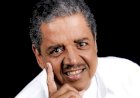
Rwanda is still hunting down 1000 genocide renegades
The prosecutor reminded the Council that more work remains to be done, as Rwandan authorities are still seeking more than 1,000 génocidaires, while in the countries of the former Yugoslavia, more than 2,000 suspects still need to be investigated.
 Black News

Rwandan authorities are still seeking more than 1,000 fugitives who were involved in the country’s Genocide which claimed nearly 1 million lives.
Addressing the United Nations Security Council, the Prosecutor of the International Residual Mechanism for Criminal Tribunals, Serge Brammertz reminded that more work needs to be done.
The Prosecutor focused his remarks on the future of the Mechanism and its residual functions.
He highlighted the three issues he considers most essential: first, the enforcement of sentences of those convicted by the Tribunals and Mechanism; second, supporting national efforts to achieve more justice for more victims of crimes committed in Rwanda and the former Yugoslavia; and third, promoting truth, reconciliation and education through public access to the Mechanism’s archives.
Prosecutor Brammertz began by recalling what has been achieved in the last three decades, stating that “Through the ad hoc Tribunals and Mechanism, the Security Council and the United Nations achieved an unequaled record of accountability and justice. 254 persons indicted, and 154 convicted. No fugitives at large.”
This record, the Prosecutor noted, is “a testament to the United Nations’ commitment to justice and accountability.”
Regarding enforcement of sentences, the Prosecutor emphasized the core principle of criminal justice.
“The Tribunals and the Mechanism were mandated to prosecute individuals and hold them personally responsible for their crimes. Their guilt is theirs alone. Their punishment is for what they did, the crimes they committed. Not collective responsibility, but individual criminal responsibility.”
Focusing on the present work of the Office of the Prosecutor (OTP), Prosecutor Brammertz highlighted that “one of the most important achievements of the Completion Strategies has been that Member States fully assumed responsibility to continue the accountability process.”
He reminded the Council that more work remains to be done, as Rwandan authorities are still seeking more than 1,000 génocidaires, while in the countries of the former Yugoslavia, more than 2,000 suspects still need to be investigated.
He reported, “Member States consistently underscored the practical indispensability of my Office in supporting their work. Achieving justice in their courts depends on the evidence and expertise my Office provides.”
Finally, Prosecutor Brammertz reflected on the value of the Mechanism’s archives.
He explained, “It is critical that the stories of the victims and survivors live on. It is by remembering them that we honor them.”
He further emphasized, “This truth is needed now more than ever. Unfortunately, the denial of the crimes and glorification of war criminals persists. Reconciliation depends on full respect for the suffering of all victims from all groups.”
He also noted that the lessons of Rwanda and the former Yugoslavia remain vitally relevant, as “education about what occurred helps identify warning signs for the future. And it contributes to preventing future atrocities.”
In sum, Prosecutor Brammertz offered three important recommendations based on his experience as Prosecutor of the ICTY and now the Mechanism.
The Mechanism should continue to bear responsibility for enforcing the sentences of those convicted by the Tribunals and the Mechanism.
The Office of the Prosecutor’s mandate to assist national jurisdictions prosecuting crimes committed in Rwanda and the former Yugoslavia should be transferred to the United Nations Secretariat, together with its evidence collection and some staff.
And the Mechanism’s archives should be transferred to the United Nations for long-term management and access by the public.
The Prosecutor concluded: “The Council has provided its steadfast support to the Tribunals and Mechanism since their establishment. Thanks to that support, so many victims in Rwanda and the former Yugoslavia have received the justice they deserve.”

Mechanism President Santana addresses UN Security Council
Meanwhile the President of the International Residual Mechanism for Criminal Tribunals, Judge Graciela Gatti Santana, also addressed the United Nations Security Council, which is currently reviewing the Mechanism’s work and progress.
During her briefing, she presented the Mechanism’s sixth review report and twenty‑eighth progress report to the Council.
At the outset, President Gatti Santana recalled the significant contributions to international justice made by the ad hoc Tribunals and the Mechanism – achievements made possible through decades of committed bilateral and multilateral cooperation and the Council’s enduring support.
She emphasized that accountability for international crimes through trials that adhere to the highest standards has become an essential component of reconciliation and durable peace.
Noting that only limited, yet still essential, work remains for the Mechanism, the President stressed that the Security Council’s forthcoming decisions on the Mechanism’s mandate will have important implications for the United Nations’ continuing responsibilities towards those within its duty of care, as well as for the future of international criminal justice.
President Gatti Santana then elaborated on the ambitious Strategic Plan for the future of the Mechanism and its operations, which the Mechanism’s Principals have developed and shared with the Council.
This Plan builds on two reports issued by the United Nations Secretary-General on 1 December 2025 regarding the transferability of certain functions of the Mechanism, as well as the recent evaluation of the Mechanism’s work and methods by the Office of Internal Oversight Services.
The Strategic Plan presents concrete proposals, which if adopted by the Council, will result in the completion and transfer of several Mechanism functions and the institution’s substantial downsizing, re-organization and physical consolidation.
The President explained that, in line with the Secretary-General’s recommendations, the Strategic Plan proposes that the prosecutorial assistance to national jurisdictions and the preservation and management of the archives can be transferred to the United Nations Secretariat, and that the function of day-to-day supervision of conditions of imprisonment can be transferred to enforcement States, provided that international standards are maintained.
With respect to the latter, the President expressed the Mechanism’s profound thanks to the Member States that have demonstrated their willingness to take over this responsibility, acknowledging their essential role and substantial contribution to international justice.
She further noted that the Strategic Plan recommends the termination of certain resource-intensive prosecutorial and judicial functions, including in-court proceedings, that can effectively be carried out by States.
President Gatti Santana indicated that there are, however, a number of limited but key judicial functions –related to transfer and release of prisoners, witness protection, non bis in idem, and the power to refer, monitor, and revoke cases – that remain essential to the conclusion of the justice cycle and should remain at the international level.
These functions implicate core principles of legality, equality and due process.
These particular functions, she said, cannot feasibly be transferred to States or to the United Nations Secretariat, and their retention at the international level supports the consistent application of the law, legal certainty and fairness.
By way of example, the President highlighted the importance of ensuring the continuous and active ability to adjudicate requests for release submitted by the 38 convicted persons currently serving their sentences under the Mechanism’s supervision.
She noted that applications for early release from prisoners who have reached the eligibility threshold, as well as requests for release on humanitarian grounds, constitute an ongoing judicial responsibility that cannot be allowed to lapse.
The President further emphasized that retaining this function at the international level, and specifically within the Mechanism, as proposed by the Secretary-General and the Strategic Plan, is the most cost-effective and efficient option and guarantees continuous oversight and consistent application of the law.
President Gatti Santana also underscored that, while durable justice does not conform to clear or finite timelines, the Strategic Plan provides a viable path towards the responsible completion of the justice cycle that recognizes that this final phase cannot be completed by relinquishing the guarantees that give international justice its legitimacy in the first place.
In closing, President Gatti Santana extended her profound gratitude to the dedicated and exemplary staff of the Mechanism, who have, time and again, reaffirmed their commitment to implementing the international community’s will to achieve durable justice notwithstanding continuous professional insecurity.