South Africa follows Trump’s immigration playbook, plans to charge countries for deportation of their citizens
South Africa will begin charging foreign governments for the cost of deporting their nationals who violate immigration laws, in a policy shift signaling a tougher stance on undocumented migration and mirroring hardline approaches seen in the United States under President Donald Trump.
 Black News

South Africa will begin charging foreign governments for the cost of deporting their nationals who violate immigration laws, in a policy shift signaling a tougher stance on undocumented migration and mirroring hardline approaches seen in the United States under President Donald Trump.
- South Africa will begin charging foreign governments for the deportation costs of their nationals who violate immigration laws, reflecting a tougher stance on undocumented migration.
- The new policy is part of broader measures announced by President Ramaphosa, including harsher penalties for employers of undocumented workers and the establishment of a national biometric register.
- Tensions have escalated in some regions, causing hundreds of African migrants to flee or be repatriated amid fears of violence, with several African countries facilitating returns.
- Disputes have arisen between South Africa and Ghana over allegations of mistreatment, which South Africa denies and claims have been addressed diplomatically.
The Department of International Relations and Cooperation (DIRCO) confirmed the plan as the government steps up immigration enforcement amid rising anti-immigration sentiment, protests against undocumented foreign nationals and pressure to tighten border control.
In an interview with the South African Broadcasting Corporation (SABC), DIRCO spokesperson Chrispin Phiri said the government believes countries have sufficient capacity to manage the return of their nationals, making it reasonable to recover associated costs.
“Moving forward we will also be billing countries for their foreign nationals who have to be deported or who are in our criminal detention facilities and have to be deported back into their countries. At least now we can see that there’s capacity for countries to extract the foreign nationals who have fallen foul of the law,” said Phiri.
South Africa disputes Ghana allegations
Separately, Phiri said South Africa was disappointed with how the Ghanaian government had handled recent allegations, adding that the issues had repeatedly been addressed through diplomatic channels.
“We must say we are quite disappointed by how the Ghanaian government continues to articulate these problems. We do believe we have been speaking to them through the diplomatic channels that we have with them, including the High Commission, where we have consistently seen them repeating issues that have been clarified, but most disconcertingly, not providing evidence for their own claims,” he said.
Phiri cited claims made by Ghana’s High Commissioner in South Africa, including an allegation that an individual was in intensive care after being beaten.
“We have seen the High Commissioner saying that there is an individual in South Africa hospital in ICU who has been beaten to a pulp. We have asked the High Commissioner for further evidence around where the individual is and the circumstances leading to them ending up in hospital. Nothing has come forward,” he added.
Ramaphosa tightens immigration policy
The policy shift comes as President Cyril Ramaphosa announced a raft of new measures earlier this week to tighten immigration control amid rising anti-foreigner marches and frustration over unemployment.
The measures include jail terms for employers who hire undocumented workers, dedicated courts to speed up deportations and a national biometric register for every person in the country to curb identity fraud.
Ramaphosa also urged South Africans not to take the law into their own hands.
Rising tensions and migrant displacement
According to the BBC, tensions have escalated in parts of South Africa. Last weekend, several hundred African migrants fled their homes in the Overberg region of the Western Cape following reports of intimidation and the killing of two Mozambicans in Mossel Bay.
Many of those affected sought shelter in community halls, beaches and nearby mountains, while others returned to their countries of origin.
About 140 migrants also joined organised departures, boarding buses to Malawi and Mozambique.
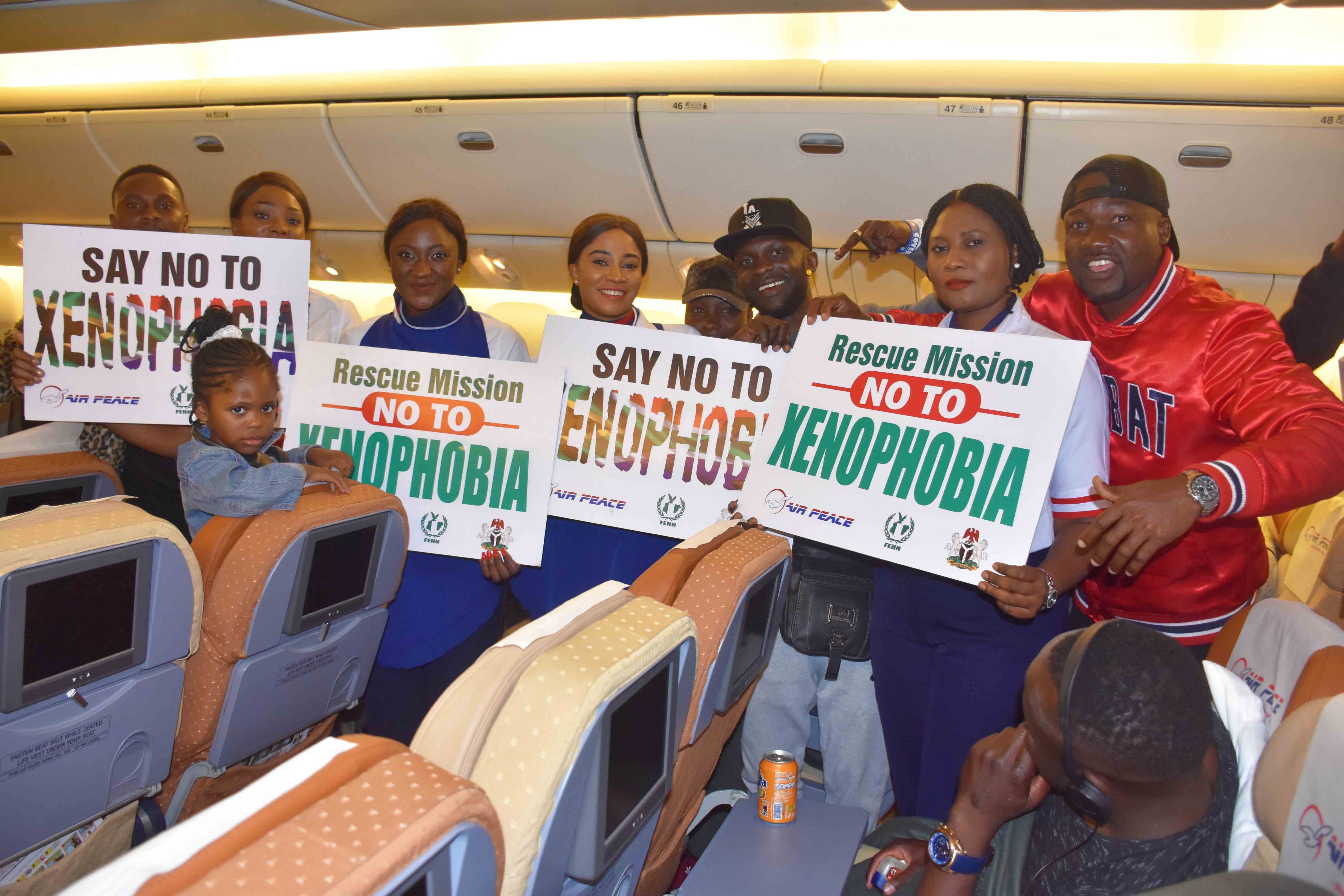
In recent weeks, several African countries have launched evacuation and repatriation programmes for their nationals in South Africa amid rising fears of violence.
Anti-migrant groups have also set a June 30 deadline for undocumented migrants to leave the country.
Nigerian repatriation programme expands
The Department of Home Affairs (DHA) confirmed that 268 Nigerians left South Africa on Wednesday night under a voluntary return programme coordinated between Pretoria and Abuja.
Officials said around 500 Nigerians have already been processed, with at least 1,000 expected to return home as more flights are arranged in the coming days.
Nigeria’s consul general in Johannesburg, Ambassador Ninikanwa Okey-Uche, said additional flights are being prepared. “What we're doing is getting our people home. We have four or five flights planned. Tonight is the first one,” he said.
Wider African returns, including Ghana
The developments came as tensions rose ahead of Africa Day commemorations held in May, with reports that African ambassadors to South Africa may have considered boycotting the annual celebrations.
Ghana’s High Commissioner to South Africa, Benjamin Quashie, said there was currently nothing to celebrate, noting that the decision on whether to boycott Africa Day events rested with the dean of the diplomatic corps.
“What is there celebrating as Africans in South Africa when South Africans are saying Africans are not welcomed. It's difficult for us to agree that we are not going to participate in any of these things, but I believe it should be a wakeup call that we should continue to respect each other as Africans and continue to work as a community of nations,” he said.
Similar repatriation and assisted return exercises have also been reported involving Zimbabweans, Mozambicans, Malawians, Lesotho nationals, Eswatini citizens and Ghanaians.
Several hundred Ghanaian nationals have already been repatriated or assisted to return home in recent weeks through embassy-coordinated programmes and enforcement actions.