South Africa fuel prices surge as oil tops $100 on Middle East tensions
South Africa will sharply raise fuel prices from Wednesday, May 6, as oil surged above $100 per barrel amid escalating tensions in the Middle East, exposing the country’s vulnerability to global energy shocks.
 Black News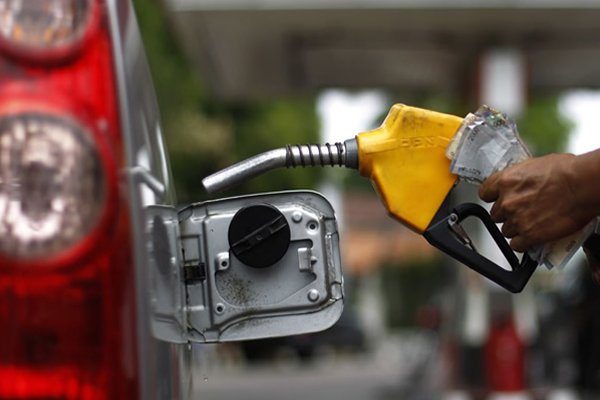

South Africa will sharply raise fuel prices from Wednesday, May 6, as oil surged above $100 per barrel amid escalating tensions in the Middle East, exposing the country’s vulnerability to global energy shocks.
The increase follows a jump in the benchmark Brent crude oil to $101 (R1,697) per barrel, up from $93.67 (R1,575), driven by supply disruptions linked to tensions between the United States and Iran and constraints along the Strait of Hormuz, a critical global oil route.
As a major importer of both crude and refined fuel, South Africa directly absorbs global price swings through its regulated pricing system.
Petrol prices will rise by $0.19 (R3.27) per litre, while diesel will jump more sharply by $0.37 (R6.19) per litre. Illuminating paraffin will increase by $0.25 (R4.22) per litre at the wholesale level, with retail prices climbing further.
Diesel and paraffin recorded steeper increases due to tighter global supply and stronger demand, particularly as exports from the Persian Gulf weakened.
International market pressures added about $0.12 (R2.04) per litre to petrol and $0.30 (R4.96) per litre to diesel before final adjustments.
The rand’s relative stability offered little relief, contributing less than $0.01 per litre to the overall increase.
To soften the impact, the government approved temporary tax cuts of $0.18 (R3.00) per litre on petrol and $0.23 (R3.93) per litre on diesel, effective from May 6 to June 2.
“Due to the ongoing US-Iran conflict, which continues to affect fuel prices globally, the Minister of Finance… announced a further temporary reduction in the general fuel levy,” the ministry said.
However, part of the relief will be offset by a slate levy of $0.07 (R1.23) per litre, introduced to recover an under-recovery of $842 million (R14.17 billion) in the fuel pricing system.
Other fuels were also affected. LPG prices will rise by about $0.30 (R5.07) per kilogram in Gauteng and $0.34 (R5.78) in the Western Cape. The refinery gate price for LPG imports through Saldanha Bay was set at $1,093 (R18,375.72) per metric ton.
South Africa adjusts fuel prices monthly based on global oil prices, exchange rates and domestic costs. The latest increase shows how quickly geopolitical disruptions translate into higher fuel costs in import-dependent economies.
Across Africa, the shift reflects a broader reality. Countries that have removed fuel subsidies, including Nigeria, are increasingly exposed to global oil volatility, with direct implications for inflation, transport costs and household spending.
With tensions in the Middle East persisting, analysts expect fuel prices to remain elevated in the near term.